 Easy care
 Shared by a Gardeno user
San Pedro cactus
Echinopsis pachanoi
Also known as: Bolivian torch cactus, Trichocereus pachanoi
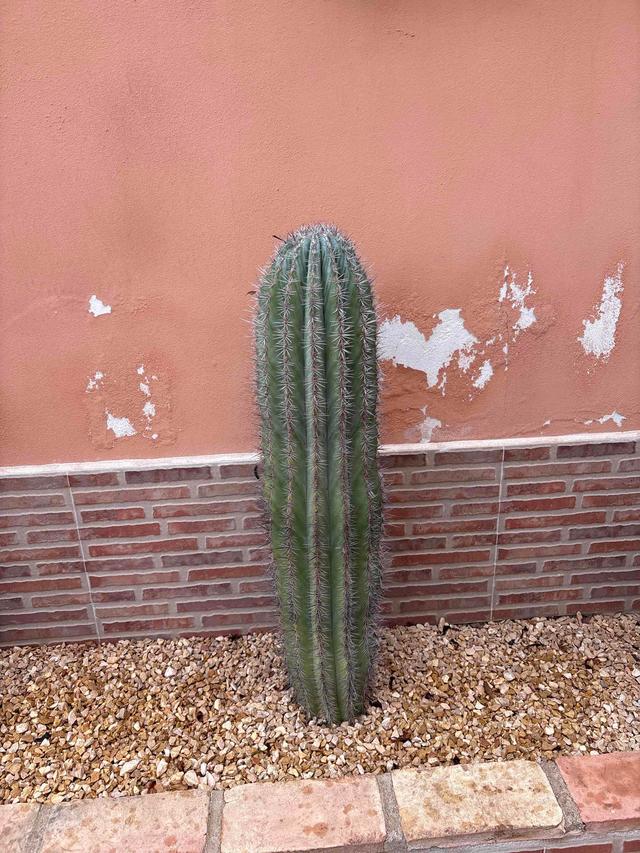
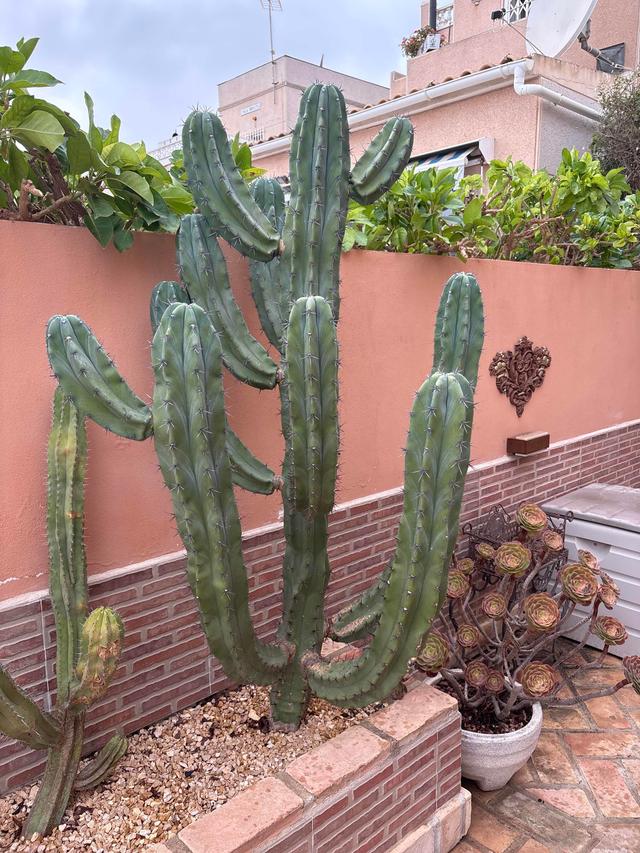
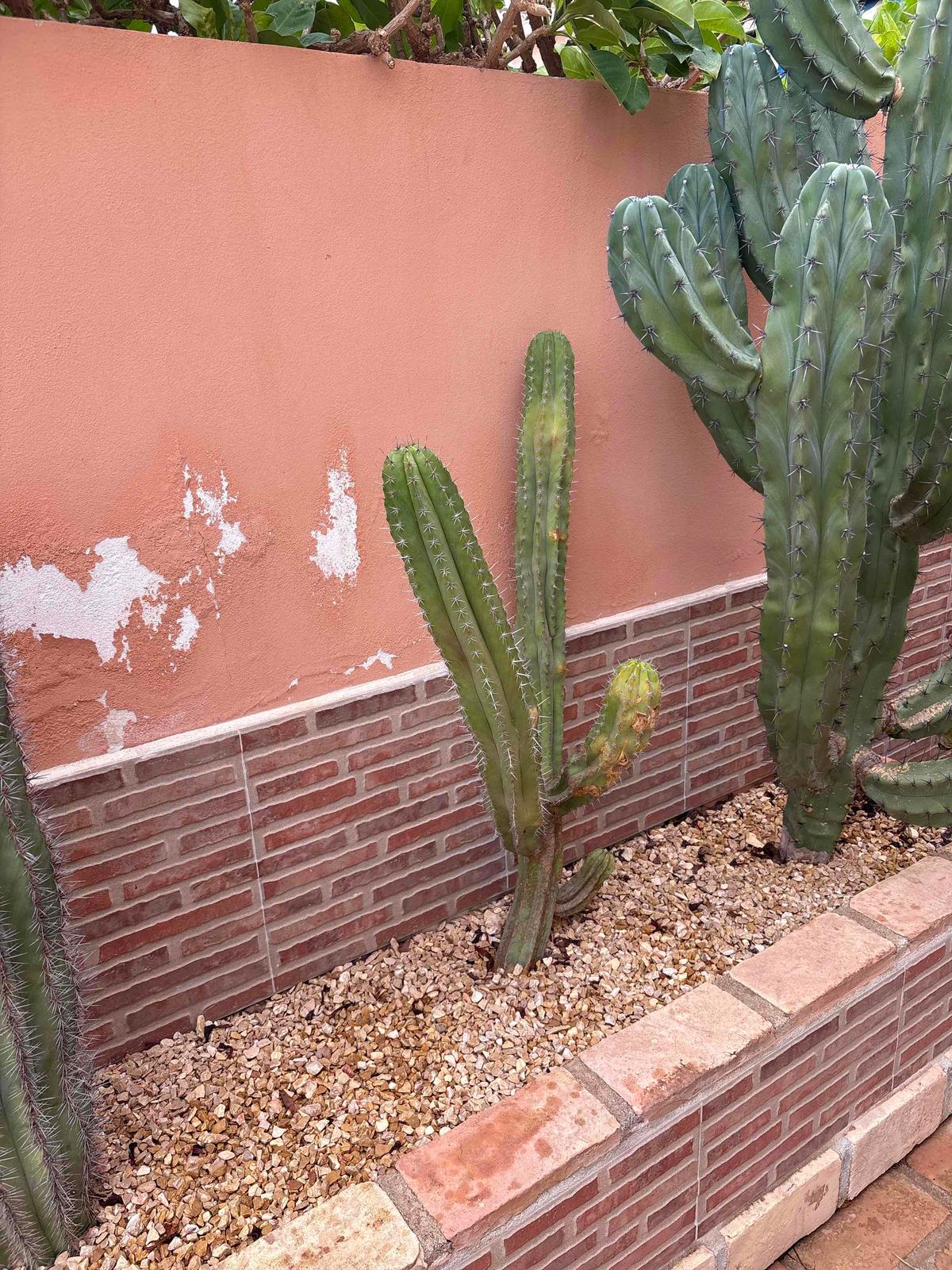
San Pedro cactus is a fast-growing, columnar cactus with blue-green stems and small clusters of spines along its ribs. It can form tall, branching clumps and is often used as a dramatic landscape specimen in warm, dry climates.
Safety
Toxicity information is AI-generated and may be inaccurate. Always check with a vet or doctor before relying on it around children or pets.
Perks
Basic info
- Family
- Cactaceae
- Genus
- Echinopsis
- Plant type
- Cactus
- Native region
- Andes Mountains, South America
- Difficulty
- Easy
Fun fact
It can grow surprisingly fast for a cactus, sometimes adding multiple inches in a single growing season.
Care profile
Difficulty
Easy
Toughness
High
Maintenance
Low
Watering
Every 2-4 wks
Care tips
- 1
Plant in very well-draining soil to prevent root rot.
- 2
Water deeply, then let the soil dry out completely.
- 3
Protect from hard frost and prolonged cold, wet weather.
Common problems
Root rot Severe
Usually caused by overwatering or poor drainage; move to a gritty cactus mix and water less often.
Read our root rot guide →Sun scorch Moderate
Sudden exposure to intense sun can bleach or brown the stems; acclimate gradually to full sun.
Read our leaf scorch guide →Mealybugs Moderate
White, cottony pests may hide in ribs and joints; treat with insecticidal soap or alcohol swabs.
Read our mealybugs & scale guide →History
San Pedro cactus has been cultivated in the Andes for centuries and is closely associated with traditional ceremonial use in parts of South America. It is now widely grown around the world as an ornamental landscape cactus because of its bold form and rapid growth.
Popular questions
How often should I water a San Pedro cactus?
Water only when the soil has dried out fully, which is usually every 2-4 weeks in warm weather and much less in winter. In pots, make sure excess water drains away quickly so the roots never sit wet.
Why is my San Pedro cactus turning yellow or soft?
Yellowing or a soft, mushy stem often points to overwatering or root rot, especially if the plant is in dense soil. Reduce watering immediately, check for damaged roots, and repot into a fast-draining cactus mix if needed.
How do I propagate San Pedro cactus?
It is commonly propagated from stem cuttings. Let the cut end callus for several days to a couple of weeks, then place it in dry, well-draining soil and water sparingly until roots form.