 Shared by a Gardeno user
Cherry Tree
Prunus species
Also known as: Stone Fruit Tree, Fruit Tree
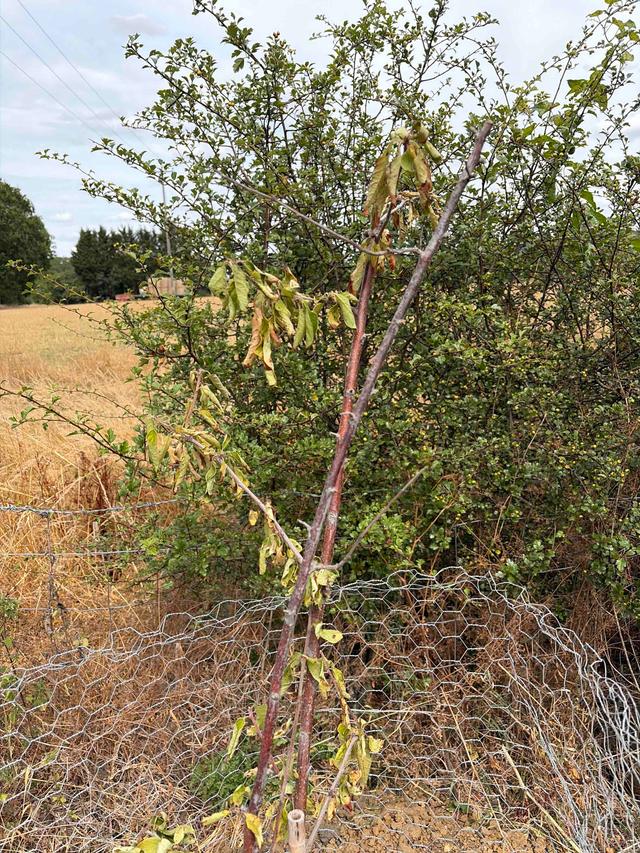
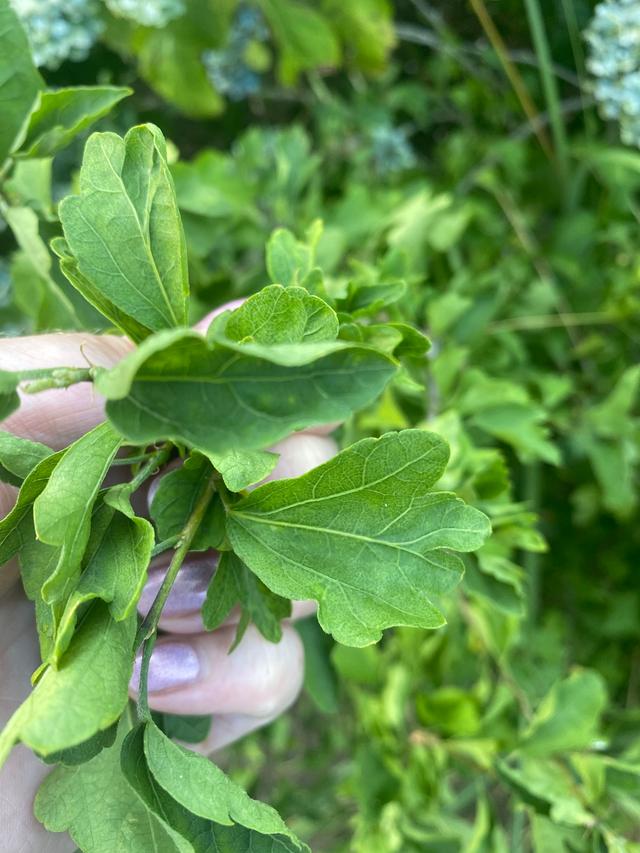
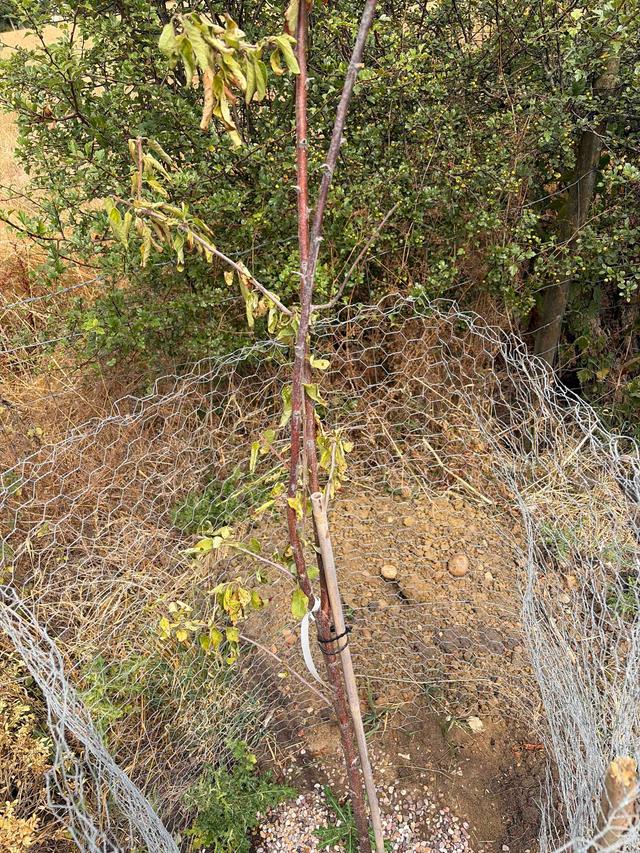
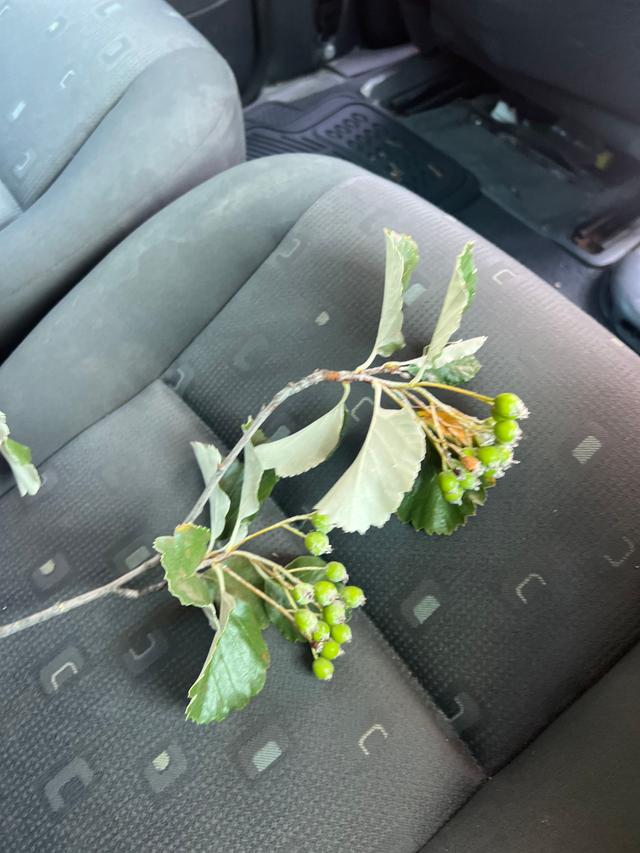
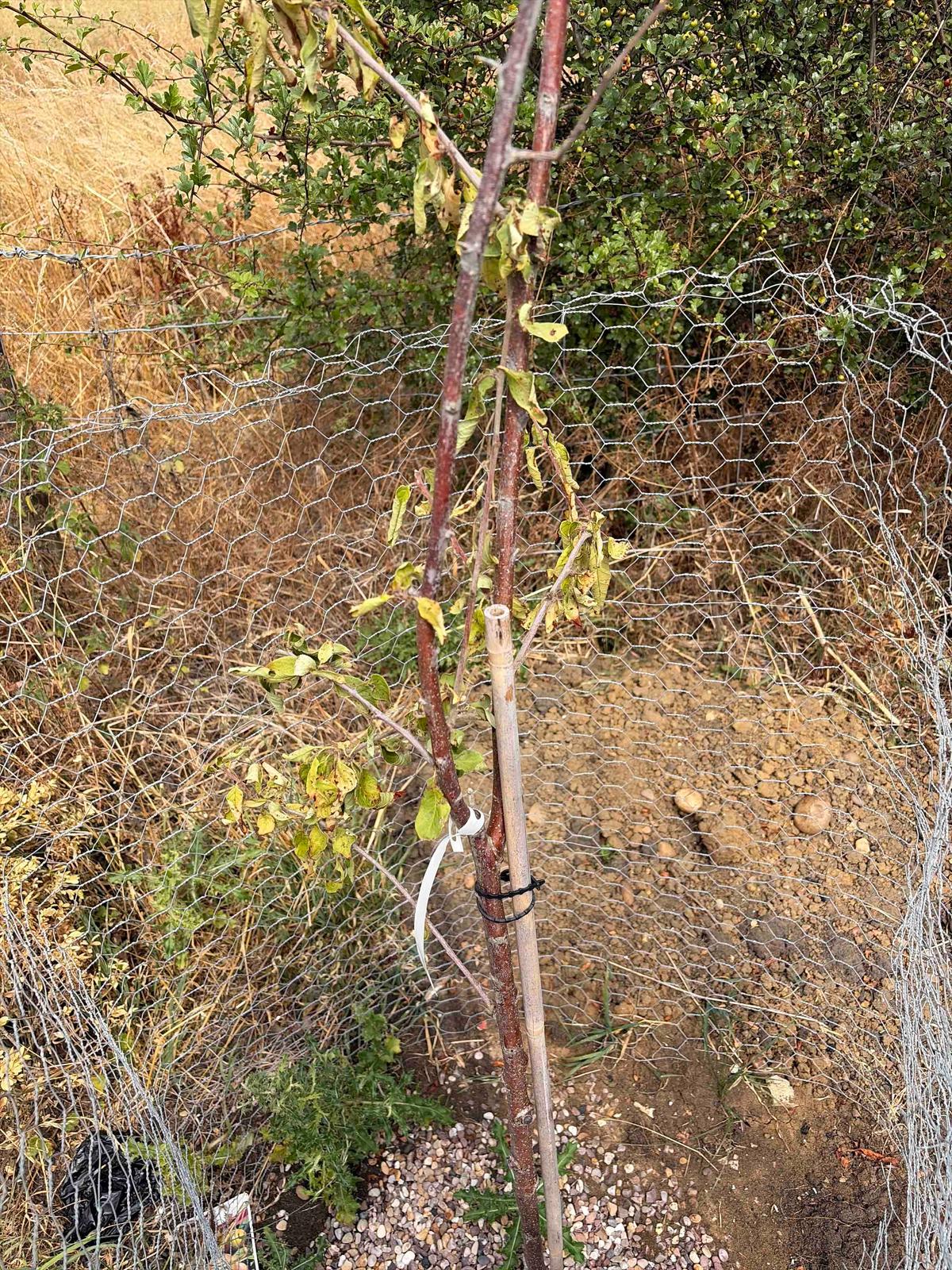
This image shows a young, staked deciduous tree with reddish-brown bark and simple, serrated leaves that appear stressed. While its exact species is difficult to determine due to its immature state and condition, it exhibits characteristics common to many fruit-bearing trees.
Safety
Toxicity information is AI-generated and may be inaccurate. Always check with a vet or doctor before relying on it around children or pets.
Perks
Basic info
- Family
- Rosaceae
- Genus
- Prunus
- Plant type
- Tree
- Native region
- Northern Hemisphere
- Difficulty
- Moderate
Fun fact
Many cherry varieties require a specific number of 'chill hours' during winter to produce fruit in spring.
Care profile
Difficulty
Moderate
Toughness
Medium
Maintenance
Medium
Watering
Weekly (when young)
Care tips
- 1
Ensure consistent watering
- 2
Protect from pests
- 3
Prune for health
Common problems
Leaf Spot Moderate
Fungal diseases can cause spots and premature leaf drop. Improve air circulation and remove infected leaves.
Aphids Mild
Small insects that feed on new growth, causing distorted leaves. Treat with insecticidal soap or strong water spray.
Read our aphids guide →Transplant Shock Moderate
Common in newly planted trees, leading to wilting and yellowing leaves. Ensure proper watering and minimal root disturbance.
History
Cherry trees, belonging to the Prunus genus, have been cultivated for thousands of years, with evidence of their consumption dating back to the Stone Age. They were spread across continents by early civilizations and explorers, valued for their delicious fruits and ornamental beauty.
Popular questions
How often should I water a newly planted young tree like this?
A newly planted young tree requires consistent moisture to establish its root system. Water deeply 1-3 times per week, depending on soil type and weather, ensuring the top few inches of soil dry out slightly between waterings.
Why are the leaves on my young tree turning yellow and drooping?
Yellowing and drooping leaves often indicate stress, which can be due to overwatering, underwatering, or nutrient deficiencies. Check the soil moisture level, ensure good drainage, and consider a soil test to identify any nutrient imbalances.
What is the best way to propagate a fruit tree like this?
Fruit trees are commonly propagated by grafting or budding onto a suitable rootstock to ensure desired fruit quality and disease resistance. While some can be grown from seed, they may not produce fruit true to the parent plant.