 Shared by a Gardeno user
Cherry Tree
Prunus sp.
Also known as: Sweet Cherry, Sour Cherry, Wild Cherry
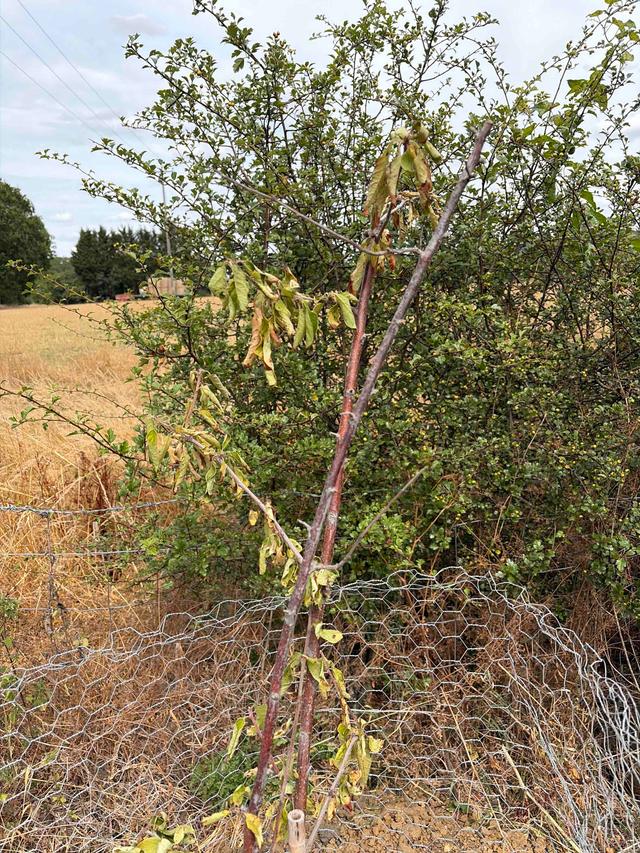
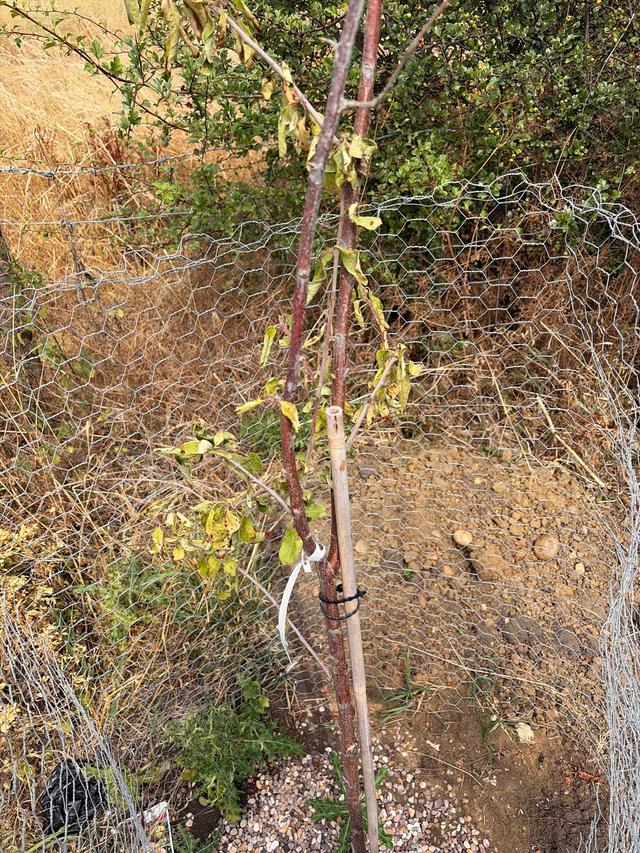
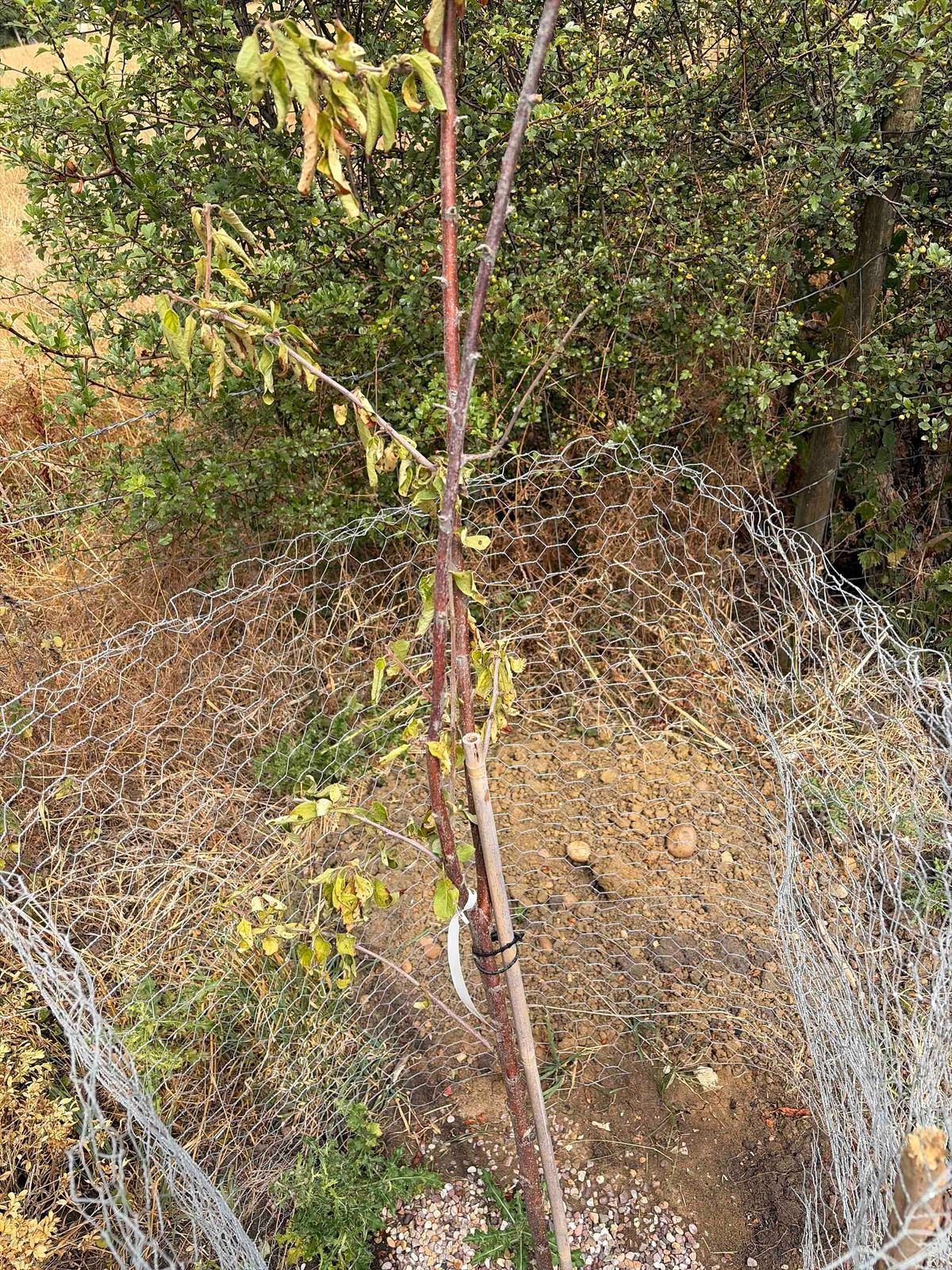
This image shows a young deciduous tree, likely a cherry tree, characterized by its reddish-brown stem and simple, alternate leaves. The leaves appear stressed, showing signs of yellowing and curling, possibly due to environmental factors or initial transplant shock. It is supported by a stake and protected by a wire fence.
Safety
Toxicity information is AI-generated and may be inaccurate. Always check with a vet or doctor before relying on it around children or pets.
Perks
Basic info
- Family
- Rosaceae
- Genus
- Prunus
- Plant type
- Tree
- Native region
- Europe, Western Asia
- Difficulty
- Moderate
Fun fact
While the fruit of cherry trees is a popular treat, the pits, leaves, and stems contain cyanogenic glycosides, which can be toxic if ingested in large quantities by humans or pets.
Care profile
Difficulty
Moderate
Toughness
Medium
Maintenance
Medium
Watering
Weekly
Care tips
- 1
Ensure consistent watering, especially during the first few years after planting, keeping the soil moist but not waterlogged.
- 2
Provide full sun exposure for optimal growth and future fruit production, and protect young trees from strong winds.
- 3
Prune annually in late winter or early spring to maintain shape, remove dead or diseased branches, and encourage fruiting.
Common problems
Leaf Spot Moderate
Fungal diseases like cherry leaf spot cause small, dark spots on leaves, leading to yellowing and premature defoliation. Improve air circulation, remove fallen leaves, and apply fungicides if severe.
Aphids Mild
Small, soft-bodied insects that cluster on new growth, sucking sap and causing distorted leaves and stunted growth. Treat with insecticidal soap or introduce natural predators like ladybugs.
Read our aphids guide →Lack of Fruit Moderate
Young trees may not fruit for several years. Mature trees might lack fruit due to insufficient pollination, improper pruning, or inadequate sunlight. Ensure proper cross-pollination for varieties that require it.
History
Cherries have a rich history, with evidence of cultivation dating back to ancient Roman times. They are believed to have originated in regions around the Black and Caspian Seas and were spread globally by birds, traders, and explorers, becoming a beloved fruit and ornamental tree.
Popular questions
How often should I water a newly planted cherry tree?
A newly planted cherry tree requires consistent moisture to establish its root system. Water deeply 1-2 times per week, especially during dry periods, ensuring the top 6-12 inches of soil remain moist. Reduce watering frequency as the tree matures and during cooler, wetter weather.
What causes the leaves on my young cherry tree to turn yellow and curl?
Yellowing and curling leaves on a young cherry tree can indicate several issues, including overwatering, underwatering, nutrient deficiencies, or pest infestations. Check the soil moisture, ensure good drainage, and inspect the undersides of leaves for pests. A soil test can help identify nutrient imbalances.
What is the best way to propagate a cherry tree?
Cherry trees can be propagated through various methods, including seeds, cuttings, and grafting. For propagating specific fruit varieties, grafting onto a suitable rootstock is the most common and effective method, ensuring the new tree retains the desired characteristics of the parent plant.