 Easy care
 Shared by a Gardeno user
African spear plant
Dracaena angolensis
Also known as: Cylindrical snake plant, Elephant's toothpick
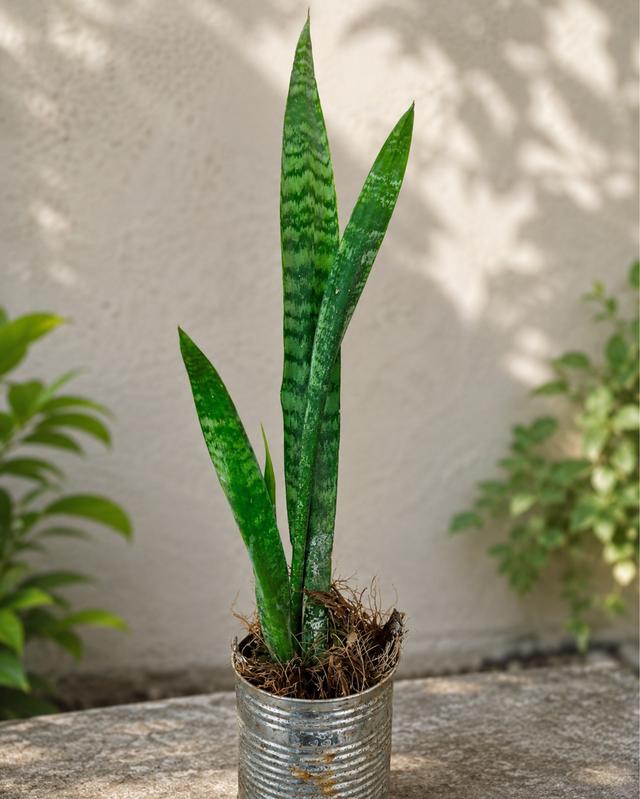
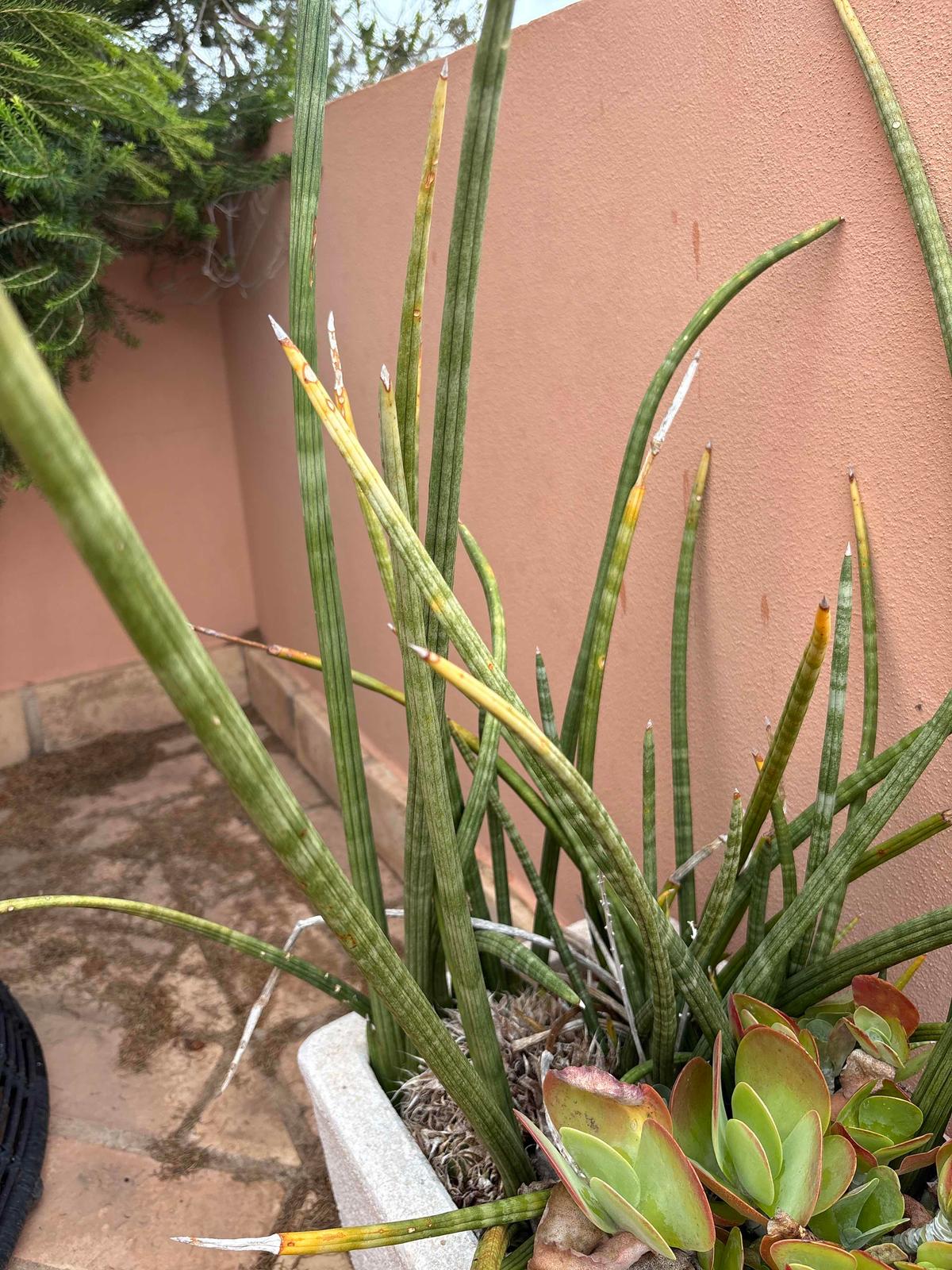
This plant has stiff, upright, cylindrical leaves with a mottled green pattern that store water efficiently. It is a hardy, architectural succulent often grown indoors or in warm outdoor climates. The white cut tips on your plant are commonly seen on sold leaves and do not indicate a flower.
Safety
Toxicity information is AI-generated and may be inaccurate. Always check with a vet or doctor before relying on it around children or pets.
Perks
Basic info
- Family
- Asparagaceae
- Genus
- Dracaena
- Plant type
- Succulent
- Native region
- Southern Africa
- Difficulty
- Easy
Fun fact
It is closely related to the classic snake plant and can tolerate long periods of neglect thanks to its water-storing leaves.
Care profile
Difficulty
Easy
Toughness
High
Maintenance
Low
Watering
Every 2-4 wks
Care tips
- 1
Let soil dry fully before watering
- 2
Use a fast-draining cactus mix
- 3
Protect from hard frost and soggy soil
Common problems
Root rot Severe
Usually caused by overwatering or poor drainage; repot into dry, gritty soil and water less often.
Read our root rot guide →Leaf yellowing Moderate
Often from too much water or not enough light; move it to brighter light and extend watering intervals.
Read our yellow leaves guide →Sun scorch Mild
Leaves can bleach or brown in intense direct sun; acclimate gradually and provide filtered light in very hot climates.
Read our leaf scorch guide →History
Dracaena angolensis comes from arid parts of southern Africa and was once placed in the genus Sansevieria. It became popular worldwide as a modern indoor plant because of its sculptural shape and extreme tolerance for neglect.
Popular questions
How often should I water my African spear plant?
Water only after the potting mix has dried out completely, which is often every 2 to 4 weeks indoors and even less in cooler months. When in doubt, wait longer rather than watering early, because this plant stores water in its leaves and hates soggy roots.
Why are my leaves turning yellow or soft?
Yellowing or softness is usually a sign of overwatering or root rot, especially if the soil stays wet for days. Check the roots, remove any mushy sections, and repot into a very well-draining mix with a pot that has drainage holes.
How do I propagate this plant?
It can be propagated by division of offsets or by leaf cuttings, though division is faster and more reliable. Let cut leaf sections callus for a few days before placing them in dry, gritty mix, then water sparingly until roots form.