 Easy care
 Shared by a Gardeno user
Snake Plant
Dracaena trifasciata
Also known as: Mother-in-law's tongue, Saint George's sword
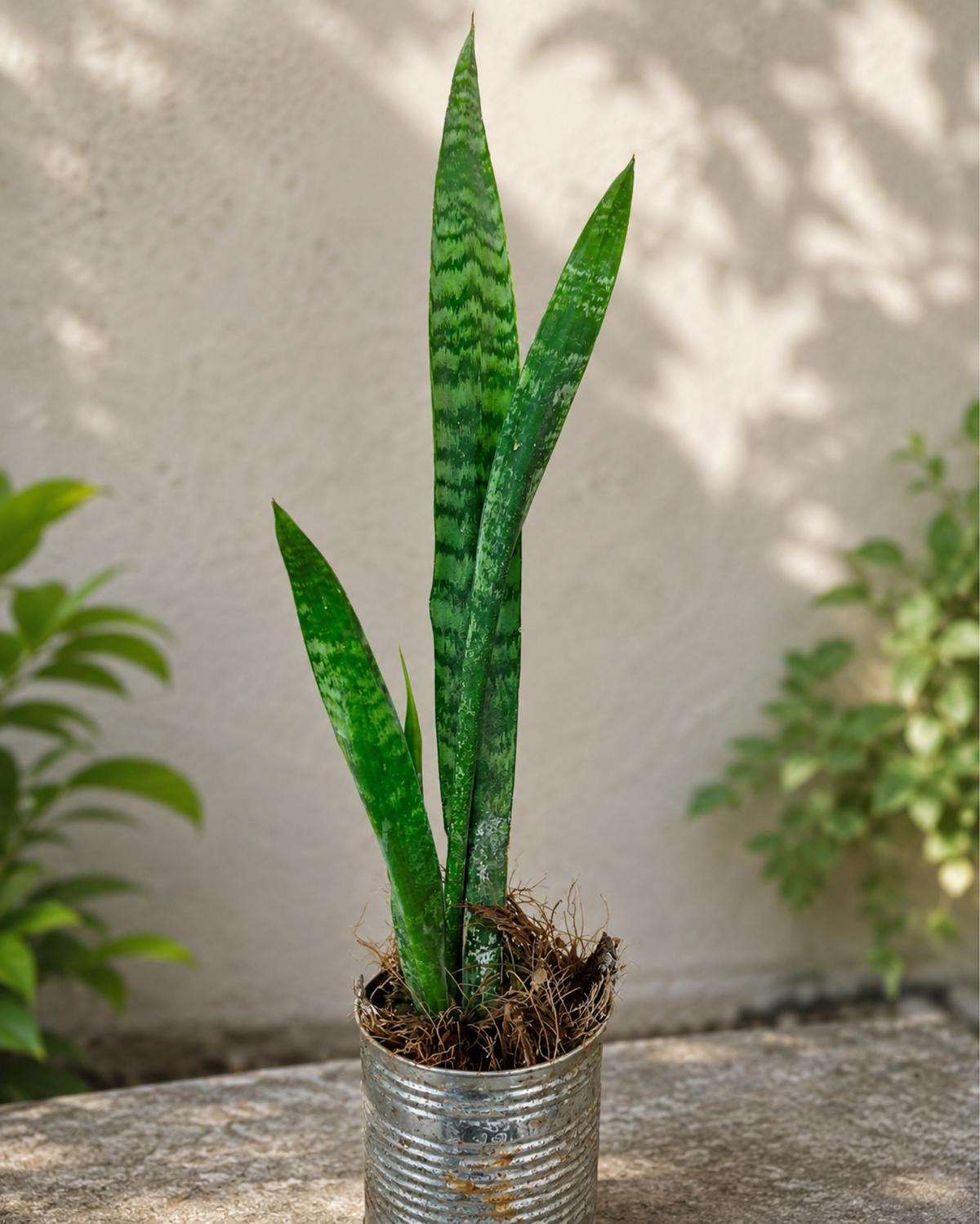
Snake plant is a tough, upright houseplant with stiff, sword-shaped leaves marked by green banding and yellow edges on many cultivars. It stores water in its leaves, making it highly drought tolerant and ideal for beginners.
Safety
Toxicity information is AI-generated and may be inaccurate. Always check with a vet or doctor before relying on it around children or pets.
Perks
Basic info
- Family
- Asparagaceae
- Genus
- Dracaena
- Plant type
- Succulent
- Native region
- West Africa
- Difficulty
- Easy
Fun fact
Snake plants are among the few houseplants that can tolerate very low light and infrequent watering for long periods.
Care profile
Difficulty
Easy
Toughness
High
Maintenance
Low
Watering
Every 2-4 wks
Care tips
- 1
Let soil dry out fully before watering
- 2
Use a fast-draining potting mix
- 3
Place in bright indirect light or low light
Common problems
Root rot Severe
Usually caused by overwatering or poor drainage; repot into dry, well-draining soil and water much less often.
Read our root rot guide →Leaf curl or wrinkling Moderate
Often a sign of underwatering or extreme heat; water thoroughly after the soil has fully dried and check that the plant is not rootbound.
Browning tips Mild
Can result from low humidity, fluoride/salt buildup, or inconsistent watering; trim tips and use filtered water if needed.
History
Snake plant has long been cultivated as an ornamental and practical houseplant because of its extreme resilience. In many cultures it has been associated with protection and good fortune, and it became especially popular worldwide as an easy indoor plant during the houseplant boom.
Popular questions
How often should I water my snake plant?
Water only when the potting mix has dried out completely, which is often every 2-4 weeks indoors and even less in winter. When you do water, soak the soil and let excess drain away completely so the roots do not stay wet.
Why are my snake plant leaves turning yellow or mushy?
Yellow, soft leaves usually mean overwatering or poor drainage, and this can quickly lead to root rot. Remove damaged leaves, check the roots, and repot into a dry, gritty mix in a pot with drainage holes if needed.
How do I propagate a snake plant?
Snake plants can be propagated by leaf cuttings or by division of the rhizomes. Division is fastest and keeps the new plant true to the parent cultivar, while leaf cuttings are slower but easy.