Leggy plants: why they stretch and how to make them fuller
Leggy growth is a plant reaching for light it isn’t getting. It’s one of the problems we see most in Gardeno, and one of the easiest to turn around.
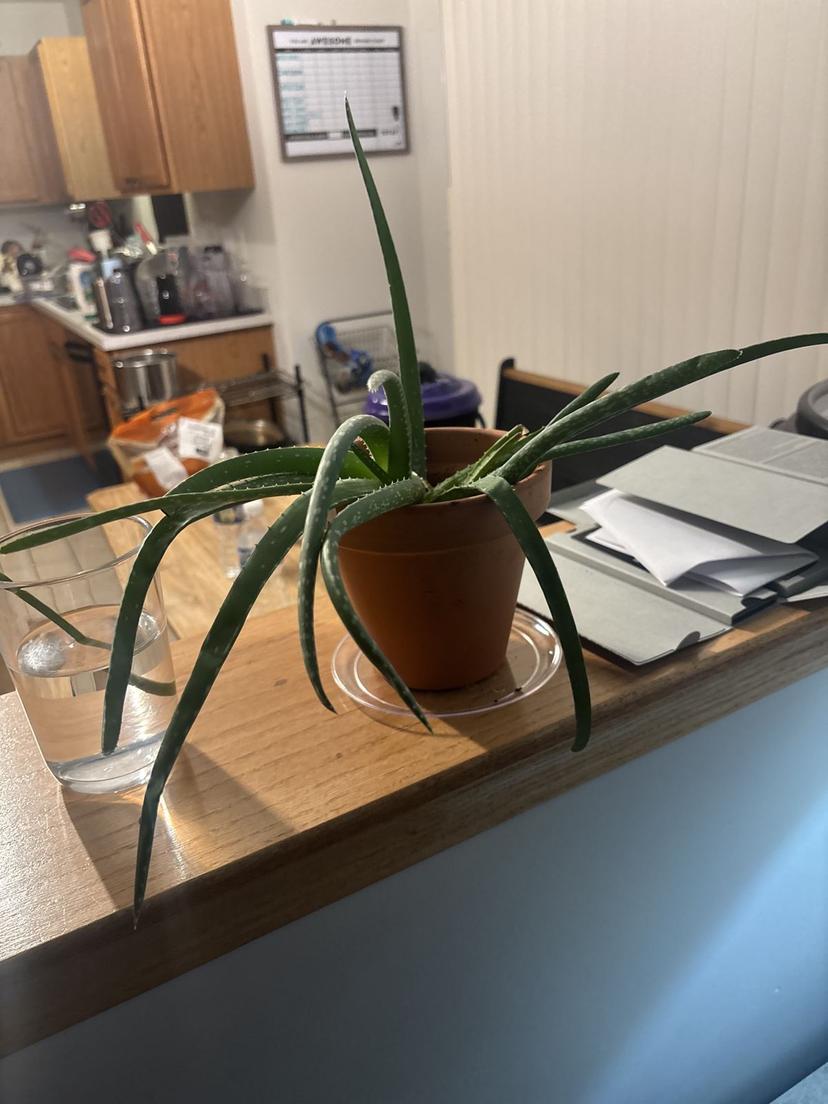 Aloe vera · from a Gardeno health check
The short answerA plant goes leggy when it doesn’t get enough light: it stretches its stems towards the brightest spot, leaving long bare gaps between small, pale leaves. Move it somewhere brighter, turn it regularly, and prune the long stems back just above a leaf node to make it branch and fill out. Stretched stems won’t shorten, but the new growth will be compact.
Signs of leggy growth
Leggy plants look sparse rather than sick. Compare new growth with the old.
Succulents show it most clearly:
What causes leggy growth
Too little light. By far the main cause. A spot that looks bright to us is often dim for a plant, especially a few metres from a window.
Light from one side. A plant that’s never turned grows lopsided towards the window.
Winter. Shorter, duller days make even well-placed plants stretch.
Too much warmth or feeding in low light. Warmth and fertiliser push fast growth that the light can’t support, so it comes out thin.
No pruning. Trailing and climbing plants naturally get long and bare without an occasional trim.
How to fix a leggy plant, step by step
- Move it into more lightBring it closer to a bright window. Sun lovers like succulents want direct sun; most tropical plants want bright, indirect light.
- Acclimatise it graduallyMove a plant from a dim spot to strong sun over a week or two to avoid scorching it.
- Prune the long stemsCut each leggy stem back just above a leaf node. The plant will branch from below the cut.
- Root the cuttingsMost cuttings root in water or moist soil. Plant them back in the same pot to make it fuller.
- Turn the pot every week or twoSo every side gets its share of light and the plant grows evenly.
- Add a grow light if neededIn a dark room or in winter, a simple LED grow light a short distance above the plant makes a big difference.
Stretched stems stay stretched. Judge success by the new growth: shorter gaps between leaves and better colour within a few weeks.
How to prevent leggy growth
Plants that often go leggy
36 plants in our encyclopedia list leggy growth as a common problem. Here they are, with the advice for each; photos marked “Health check” show the problem itself.
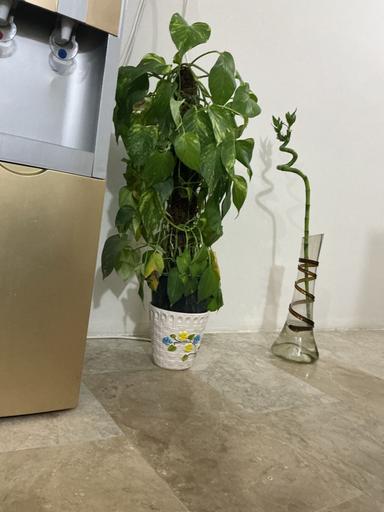 Health checkGolden PothosEpipremnum aureummildLong bare stems happen in low light; move it brighter and prune back stems to promote fuller growth.
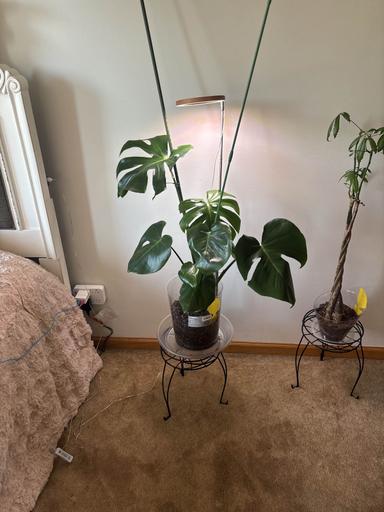 Health checkSwiss Cheese PlantMonstera deliciosamildToo little light can cause stretched stems and smaller leaves; move it closer to a bright window with indirect sun.
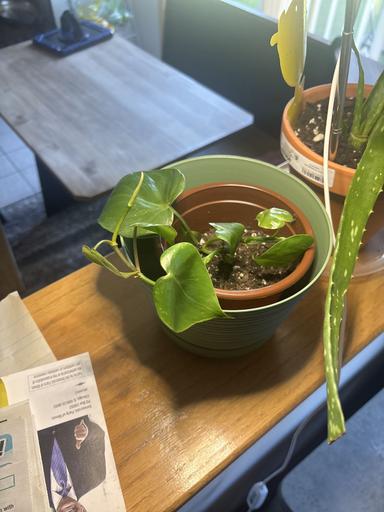 Health checkHeartleaf PhilodendronPhilodendron hederaceummildLow light can stretch the stems and space the leaves apart; move it to brighter indirect light and prune back long vines.
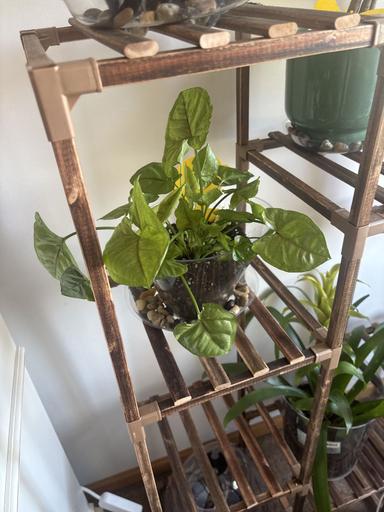 Health checkArrowhead plantSyngonium podophyllummildToo little light can make stems stretch and leaves space out; move it closer to bright indirect light and prune back stems.
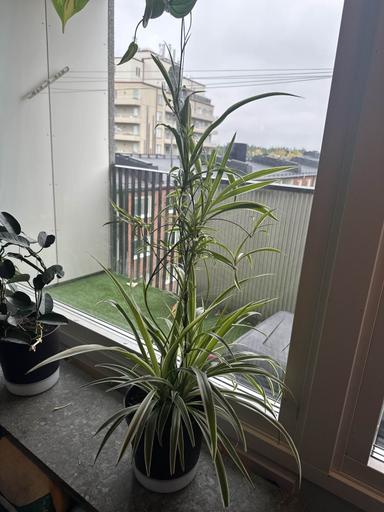 Spider PlantChlorophytum comosummildCaused by too little light; move it to a brighter spot with indirect sun.
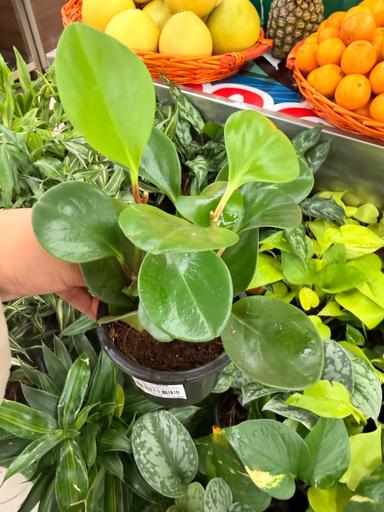 Baby Rubber PlantPeperomia obtusifoliamoderateUsually from too little light; move it closer to bright indirect light and rotate the pot regularly.
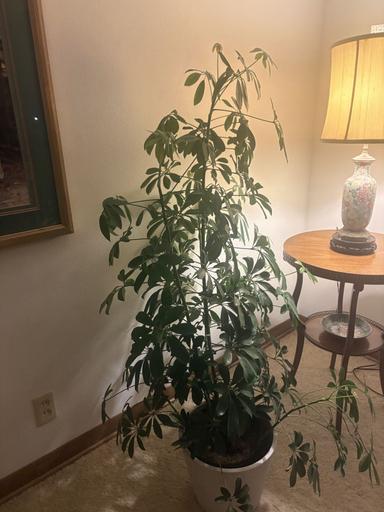 Dwarf Umbrella TreeSchefflera arboricolamildOften caused by insufficient light; move it to brighter indirect light and prune back long stems to stimulate branching.
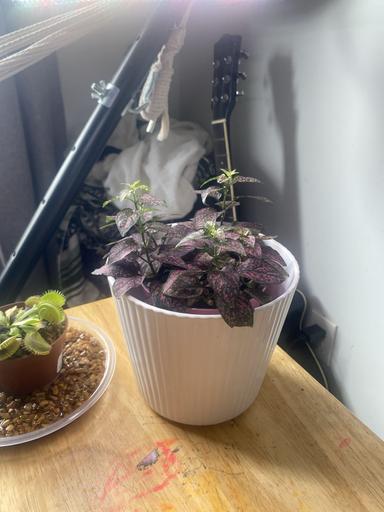 Polka Dot PlantHypoestes phyllostachyamoderateToo little light can cause long, sparse stems; move it to brighter indirect light and pinch it back.
From Gardeno’s plant health checks
Leggy growth FAQ
Can a leggy plant be fixed?
Yes. The stretched stems won’t shrink, but pruning them back makes the plant branch, and more light keeps the new growth compact. Root the cuttings to fill the pot out.
Where should I cut a leggy plant?
Just above a leaf node, the small bump where a leaf joins the stem. New shoots grow from the nodes below your cut.
Do grow lights help leggy plants?
Yes. In a dim room or over winter, an LED grow light keeps new growth compact. Leave it on for around 12 hours a day.
Why is my succulent growing tall?
It’s stretching for light. Succulents need several hours of direct sun. Move it to your sunniest window gradually, and behead and replant the stretched top if you like.
This guide is for general plant care. Per-plant advice is AI-generated from Gardeno scans and may be inaccurate; check with an expert for valuable plants.
