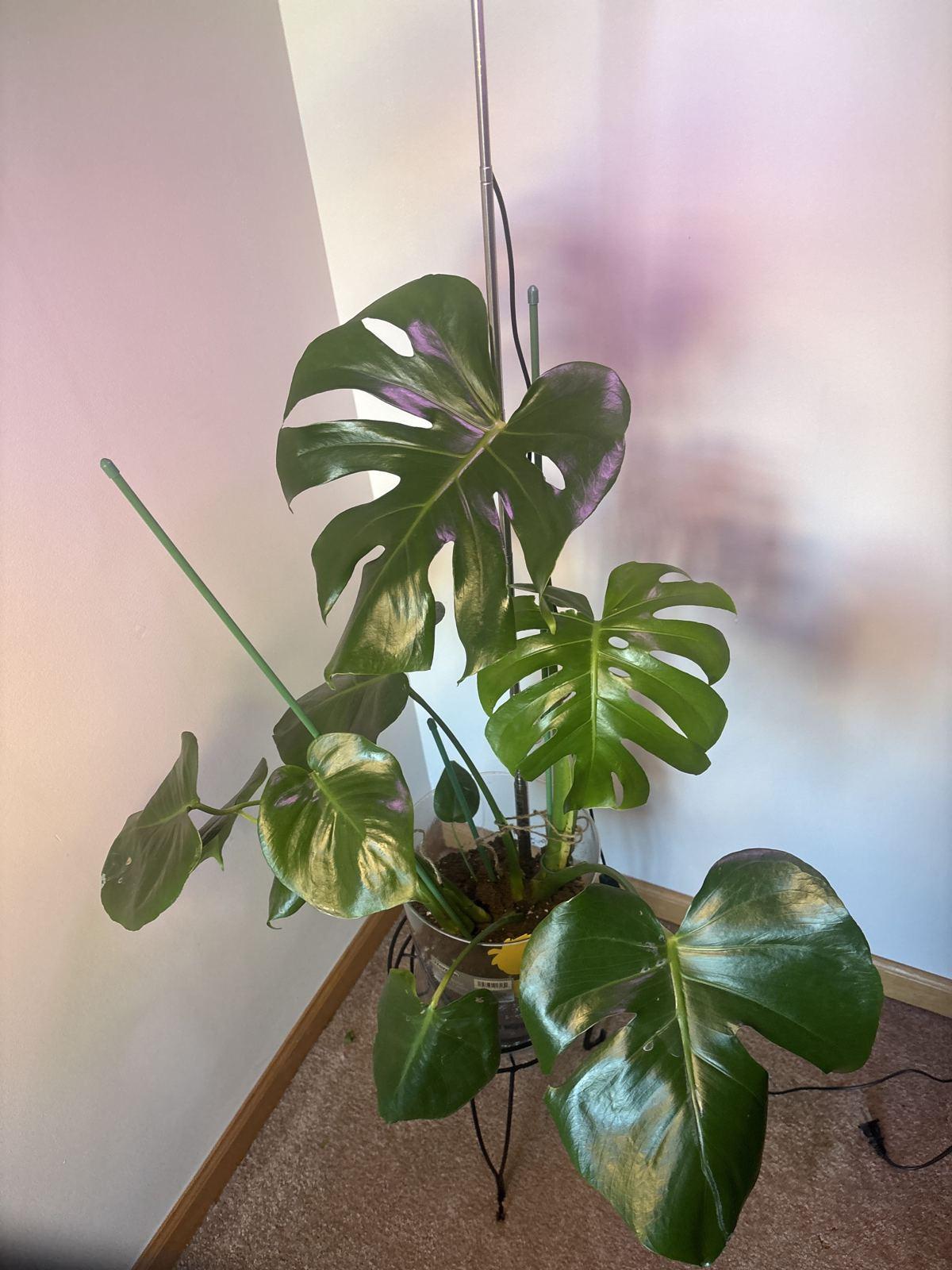
 Easy care
 Shared by a Gardeno user
Swiss Cheese Plant
Monstera deliciosa
Also known as: Monstera, Split-leaf philodendron
Monstera deliciosa is a popular tropical houseplant with large, glossy, split leaves that develop fenestrations as the plant matures. It grows as a climbing vine and looks best with a moss pole or support. This plant is prized for its dramatic foliage and fast, vigorous growth indoors.
Safety
Toxicity information is AI-generated and may be inaccurate. Always check with a vet or doctor before relying on it around children or pets.
Perks
Basic info
- Family
- Araceae
- Genus
- Monstera
- Plant type
- Tropical vine
- Native region
- Southern Mexico
- Difficulty
- Easy
Fun fact
Its scientific name deliciosa comes from the edible fruit it can produce in the wild, which tastes like a mix of pineapple and banana when fully ripe.
Care profile
Difficulty
Easy
Toughness
High
Maintenance
Medium
Watering
Every 1-2 wks
Care tips
- 1
Give it bright, indirect light for larger leaves and stronger fenestrations.
- 2
Water when the top 1-2 inches of soil dry out, then drain excess water.
- 3
Use a chunky, well-draining aroid mix and provide a moss pole or stake.
Common problems
Yellow leaves Moderate
Usually caused by overwatering or poor drainage; let the soil dry a bit more and make sure the pot drains freely.
Read our yellow leaves guide →Leggy growth Mild
Too little light can cause stretched stems and smaller leaves; move it closer to a bright window with indirect sun.
Read our leggy growth guide →Brown leaf edges Mild
Low humidity, underwatering, or salt buildup can cause crisp edges; increase humidity and water consistently.
Read our brown leaf tips guide →History
Monstera deliciosa became widely popular as a houseplant during the 20th century, especially in interior design for its bold tropical look. It is native to the rainforests of southern Mexico and Central America, where it climbs trees in warm, humid conditions. The plant's iconic split leaves have made it a symbol of modern indoor jungle styling.
Popular questions
How often should I water my Monstera deliciosa?
Water when the top layer of soil has dried out, rather than following a strict schedule. In brighter light or warmer rooms it may need water more often, but it should never sit in soggy soil.
Why are my Monstera's leaves turning yellow or drooping?
Yellowing and drooping are often signs of overwatering, poor drainage, or insufficient light. Check the roots and soil moisture, then adjust watering and move it to a brighter spot if needed.
How do I propagate Monstera deliciosa?
Take a cutting that includes at least one node and ideally an aerial root. Root it in water, damp sphagnum moss, or perlite, then pot it up once roots are several inches long.