 Easy care
 Shared by a Gardeno user
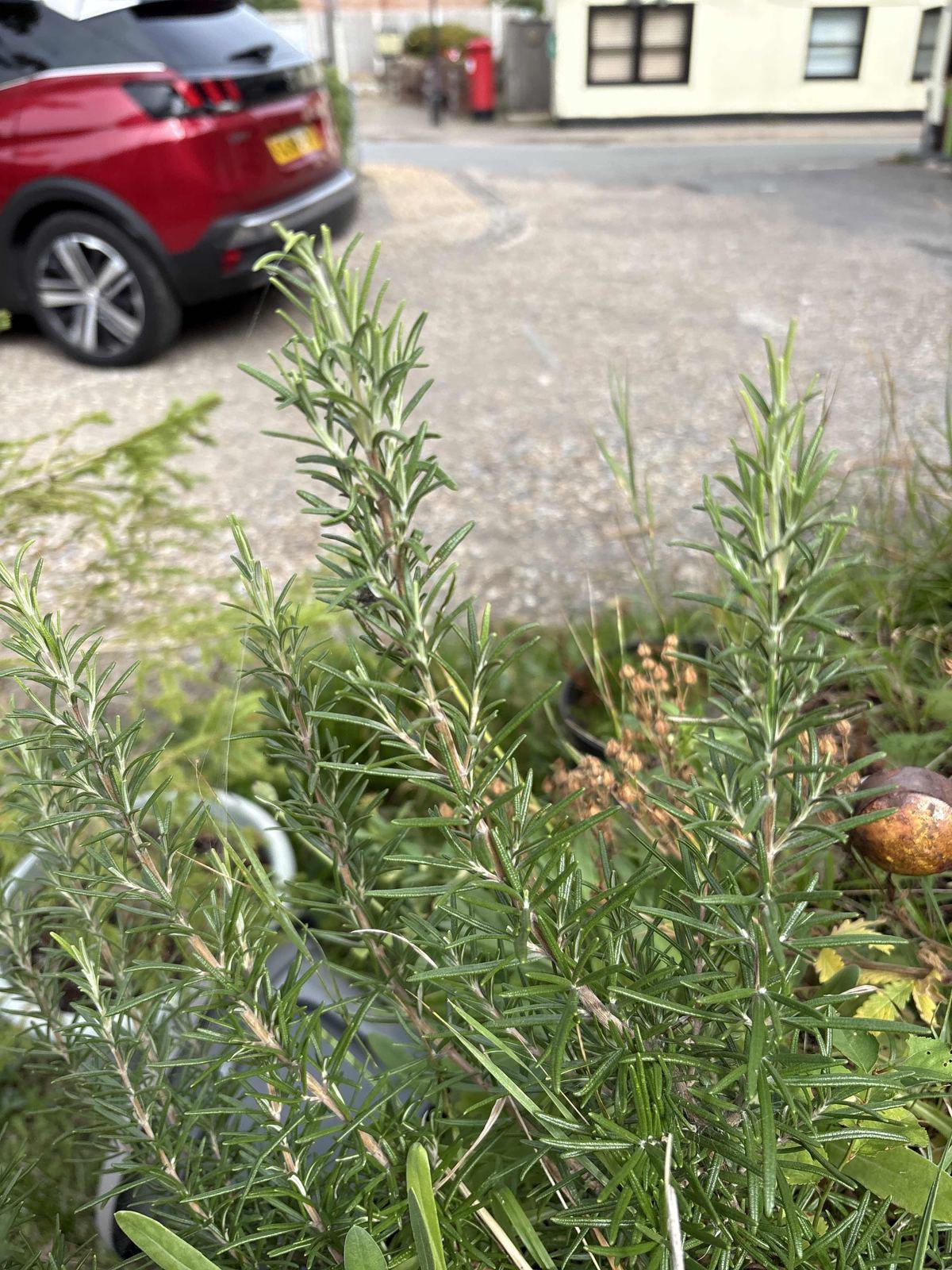
Rosemary
Salvia rosmarinus
Also known as: Garden rosemary, Compass plant, Dew of the sea
Rosemary is an aromatic, woody evergreen herb with narrow needle-like leaves and a strong piney scent. It is commonly grown in gardens, containers, and herb beds for cooking as well as ornamental use.
Safety
Toxicity information is AI-generated and may be inaccurate. Always check with a vet or doctor before relying on it around children or pets.
Perks
Basic info
- Family
- Lamiaceae
- Genus
- Salvia
- Plant type
- Herbaceous shrub
- Native region
- Mediterranean region
- Difficulty
- Easy
Fun fact
Rosemary has long been associated with remembrance and has been used in traditional celebrations and rituals for centuries.
Care profile
Difficulty
Easy
Toughness
High
Maintenance
Low
Watering
Every 1-2 wks
Care tips
- 1
Plant in very well-draining soil
- 2
Let soil dry between waterings
- 3
Prune lightly to keep bushy
Common problems
Root rot Severe
Caused by overwatering or poorly drained soil; improve drainage and water only when the soil dries out.
Read our root rot guide →Powdery mildew Moderate
A white fungal coating can appear in humid, crowded conditions; increase airflow and avoid wetting the foliage.
Read our powdery mildew guide →Aphids Mild
Tiny sap-sucking insects can cluster on new growth; spray off with water or use insecticidal soap.
Read our aphids guide →History
Rosemary is native to the dry coastal areas of the Mediterranean, where it evolved in sunny, rocky habitats. It has been cultivated since ancient times for cooking, medicine, and symbolic uses in weddings, memorials, and religious ceremonies.
Popular questions
How often should I water rosemary?
Water rosemary deeply, then allow the top few inches of soil to dry before watering again. In containers it may need water more often than in the ground, but it still dislikes constantly wet soil.
Why is my rosemary turning brown and dropping leaves?
This is often caused by too much water, poor drainage, or not enough light. Check that the pot or soil drains well, move it to a brighter spot, and trim away dead growth if needed.
How do I propagate rosemary?
Rosemary is usually propagated from semi-ripe stem cuttings. Take a healthy non-flowering stem, remove the lower leaves, and root it in a moist, well-draining mix until new growth appears.