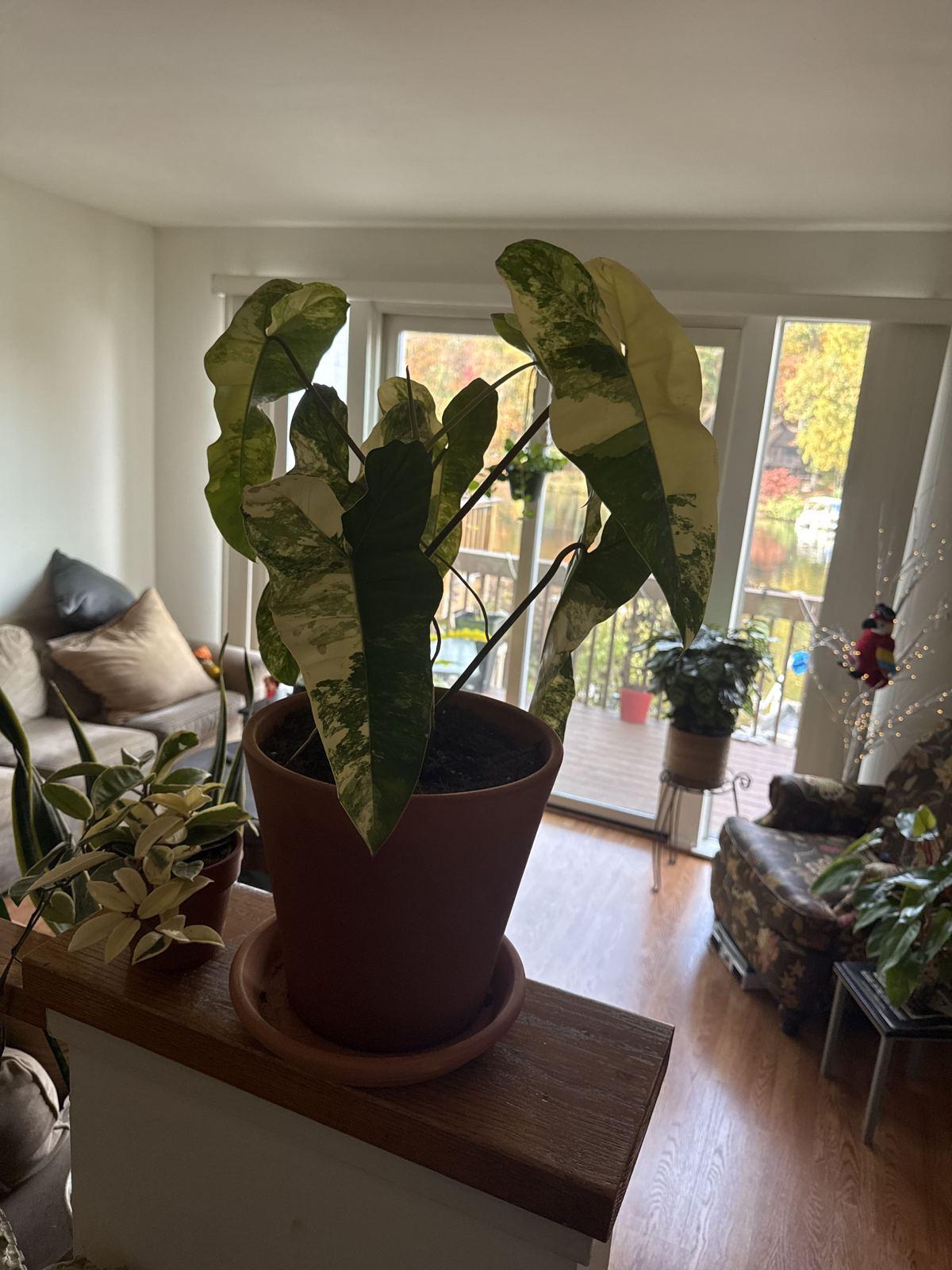
 Shared by a Gardeno user
Variegated Elephant Ear Philodendron
Philodendron domesticum 'Variegata'
Also known as: Variegated Philodendron, Variegated Elephant Ear, Domino Philodendron
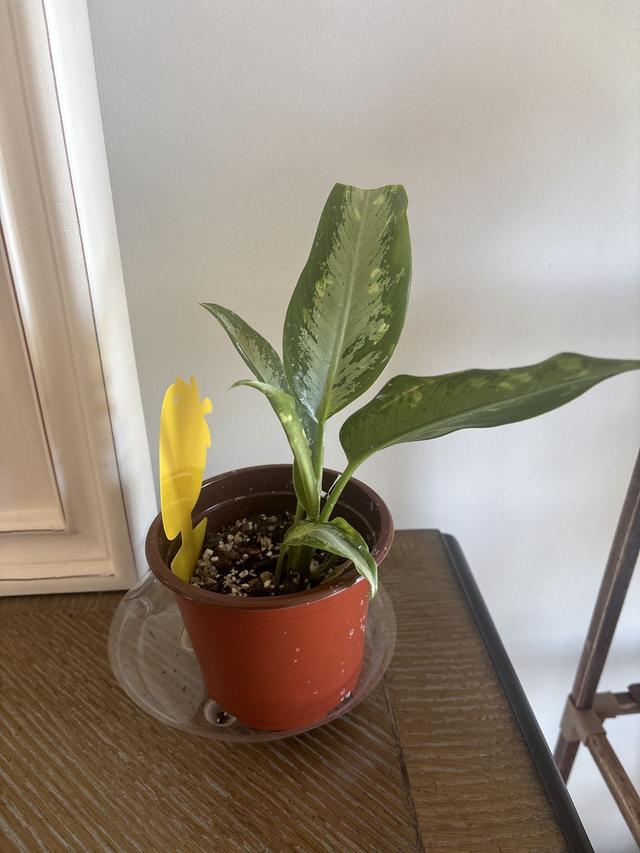
This is a variegated philodendron with long, narrow, lance-shaped leaves marked by creamy white and green marbling. It grows as a climbing aroid and does best with support, bright filtered light, and consistent moisture without staying soggy.
Safety
Toxicity information is AI-generated and may be inaccurate. Always check with a vet or doctor before relying on it around children or pets.
Perks
Basic info
- Family
- Araceae
- Genus
- Philodendron
- Plant type
- Tropical vine
- Native region
- South America
- Difficulty
- Moderate
Fun fact
Variegated leaves have less chlorophyll, so this plant often grows slower and needs brighter indirect light than its all-green relatives.
Care profile
Difficulty
Moderate
Toughness
Medium
Maintenance
Medium
Watering
Every 1-2 wks
Care tips
- 1
Give it a moss pole or stake to encourage larger, more upright leaves.
- 2
Water when the top 1-2 inches of soil are dry, then drain excess water fully.
- 3
Use a chunky, well-draining aroid mix with good aeration.
Common problems
Leaf scorch Moderate
Too much direct sun can bleach or brown the pale sections; move it to bright indirect light.
Read our leaf scorch guide →Root rot Severe
Overwatering or dense soil can rot roots; let the mix partially dry and repot into a airy aroid blend.
Read our root rot guide →Loss of variegation Mild
Low light can make new leaves greener; increase bright indirect light and prune overly green growth if needed.
History
Philodendrons come from tropical American rainforests, where they climb trees using aerial roots. Variegated cultivars became especially popular in the houseplant trade for their dramatic cream-and-green patterns and architectural leaves.
Popular questions
How often should I water this philodendron?
Water when the top layer of soil dries out, rather than on a strict schedule. In brighter light or warmer rooms it may need water more often, but always empty the saucer so the roots never sit in runoff.
Why are the leaves turning yellow or brown?
Yellowing is often caused by too much water, while brown crispy patches usually mean too much direct sun or very dry air. Check the roots and soil first, then adjust light and watering to keep conditions evenly moist but airy.
How do I propagate it?
Take a stem cutting with at least one node and one healthy leaf, then root it in water, sphagnum, or a moist propagation mix. Keep it warm and humid, and pot it up once roots are well developed.