 Easy care
 Shared by a Gardeno user
Dumb Cane
Dieffenbachia seguine
Also known as: Leopard Lily, Tropic Snow
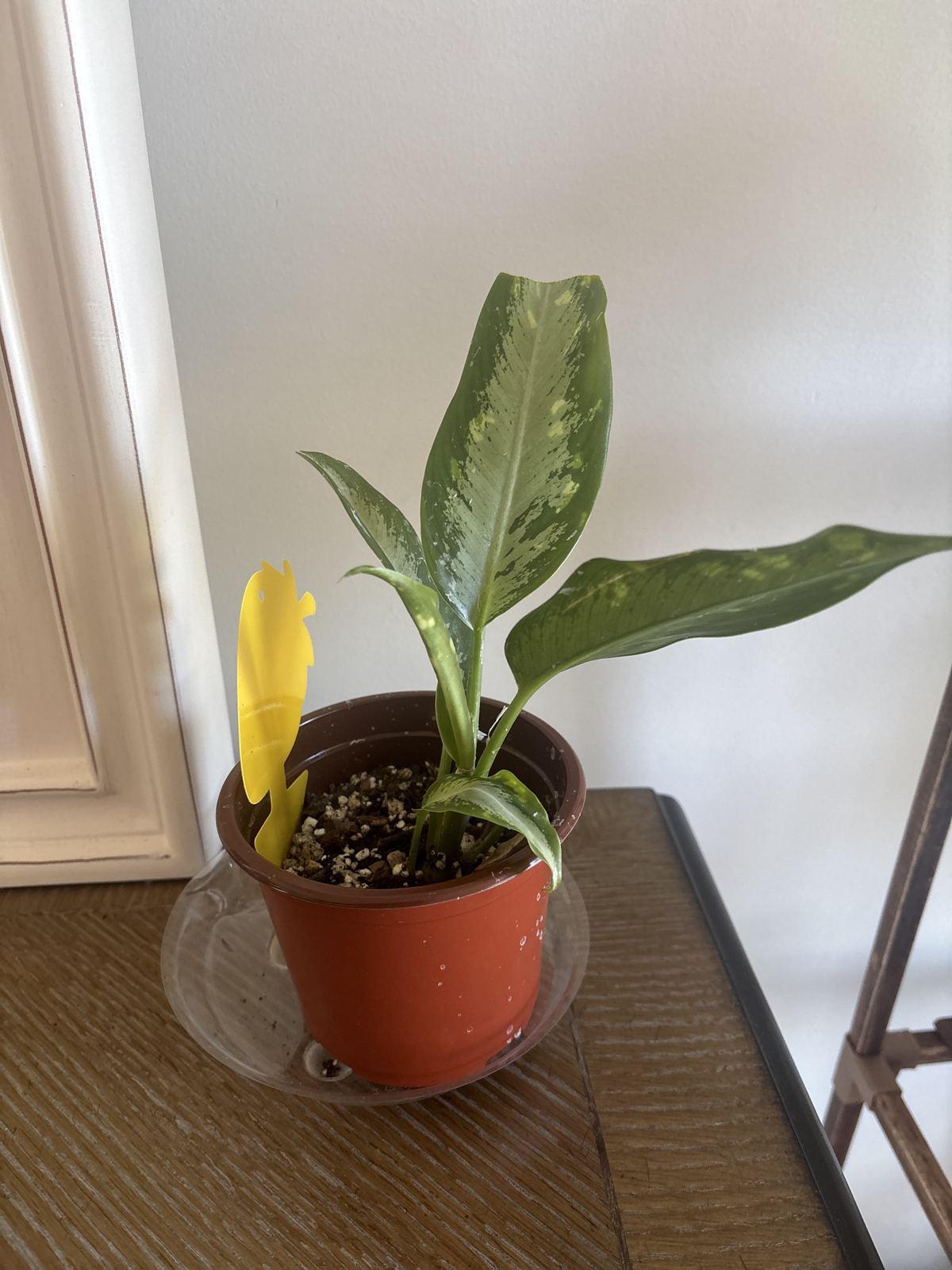
Dieffenbachia is a popular tropical houseplant known for its large, striking variegated leaves. Its foliage typically features patterns of green, cream, and yellow, making it a vibrant addition to indoor spaces. The plant grows upright, forming a bushy appearance.
Safety
Toxicity information is AI-generated and may be inaccurate. Always check with a vet or doctor before relying on it around children or pets.
Perks
Basic info
- Family
- Araceae
- Genus
- Dieffenbachia
- Plant type
- Tropical perennial
- Native region
- Tropical Americas
- Difficulty
- Easy
Fun fact
The common name "Dumb Cane" comes from the plant's sap, which can cause temporary speechlessness if ingested due to swelling of the mouth and throat.
Care profile
Difficulty
Easy
Toughness
Medium
Maintenance
Low
Watering
Every 1-2 weeks
Care tips
- 1
Water when top inch of soil is dry
- 2
Provide high humidity
- 3
Wipe leaves to remove dust
Common problems
Yellowing leaves Mild
Often caused by overwatering or underwatering. Check soil moisture and adjust watering schedule accordingly.
Read our yellow leaves guide →Brown leaf tips Mild
Indicates low humidity or inconsistent watering. Increase humidity around the plant and maintain a regular watering routine.
Read our brown leaf tips guide →Pests (Spider Mites, Mealybugs) Moderate
Inspect regularly for pests, especially on leaf undersides. Treat infestations with neem oil or insecticidal soap.
Read our spider mites guide →History
Native to the tropical rainforests of the Americas, Dieffenbachia has been cultivated as an ornamental plant for centuries. Its striking foliage made it a popular choice for Victorian-era conservatories and it remains a beloved houseplant today. The plant's toxic properties were known to indigenous peoples, who sometimes used it for various purposes.
Popular questions
How often should I water my Dieffenbachia?
Water your Dieffenbachia when the top 1-2 inches of soil feel dry to the touch. Ensure good drainage and avoid letting the plant sit in standing water, as this can lead to root rot.
Why are my Dieffenbachia leaves turning yellow?
Yellowing leaves can be a sign of either overwatering or underwatering. Check the soil moisture; if it's consistently wet, reduce watering. If it's bone dry, increase frequency. Also, ensure it's not getting too much direct sunlight.
How can I propagate my Dieffenbachia?
Dieffenbachia can be propagated through stem cuttings. Cut a section of stem with at least one node and a few leaves, let it callus for a day, then place it in water or moist potting mix until roots develop.