 Easy care
 Shared by a Gardeno user
Flaming Katy
Kalanchoe blossfeldiana
Also known as: Calandiva, Flowering Kalanchoe, Christmas Kalanchoe
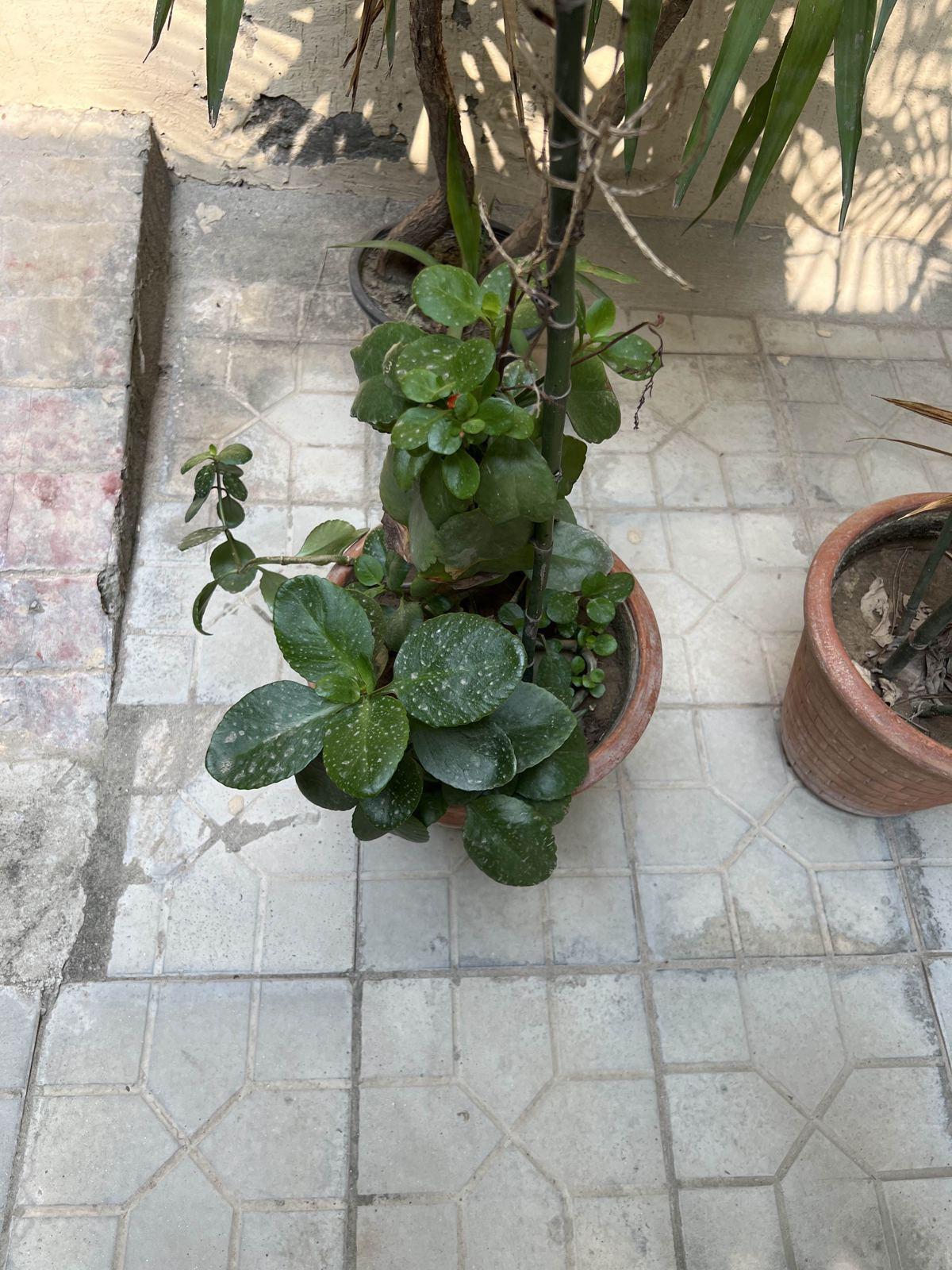
Flaming Katy is a compact succulent prized for its thick, glossy leaves and clusters of long-lasting flowers. The plant in the image appears to be a double-flowered cultivar, often sold as Calandiva, with densely layered blooms in soft pink tones.
Safety
Toxicity information is AI-generated and may be inaccurate. Always check with a vet or doctor before relying on it around children or pets.
Perks
Basic info
- Family
- Crassulaceae
- Genus
- Kalanchoe
- Plant type
- Succulent
- Native region
- Madagascar
- Difficulty
- Easy
Fun fact
It can rebloom for months when given short-day conditions with long, uninterrupted nights.
Care profile
Difficulty
Easy
Toughness
High
Maintenance
Low
Watering
Every 2-3 wks
Care tips
- 1
Let soil dry between waterings
- 2
Use a fast-draining cactus mix
- 3
Deadhead spent blooms to encourage reblooming
Common problems
Root rot Severe
Caused by overwatering or poor drainage; let the soil dry out and repot into a gritty, well-draining mix.
Read our root rot guide →Leggy growth Moderate
Usually from insufficient light; move it to a brighter spot with strong indirect light.
Read our leggy growth guide →Powdery mildew Mild
A white fungal coating can appear in damp, stagnant conditions; improve airflow and avoid wetting the leaves.
Read our powdery mildew guide →History
Kalanchoe blossfeldiana was introduced into horticulture from Madagascar and became popular worldwide as a flowering houseplant because of its reliable bloom cycles and compact size. Modern breeding has produced many colorful cultivars, including the fuller, rose-like double forms often sold under the Calandiva name.
Popular questions
How often should I water my Flaming Katy?
Water only when the top inch or two of soil is dry, then soak thoroughly and let excess drain away. In cooler or lower-light conditions, it may need water only every 2-3 weeks.
Why are the leaves dropping or turning yellow?
Yellowing or mushy leaves usually mean overwatering or a pot that holds too much moisture. Reduce watering, check that the pot has drainage holes, and make sure the plant is in bright light.
How do I propagate Kalanchoe?
The easiest way is by stem cuttings or leaf cuttings. Let the cutting callus for a day or two, then place it in a dry, well-draining succulent mix and water lightly after roots begin to form.