 Shared by a Gardeno user
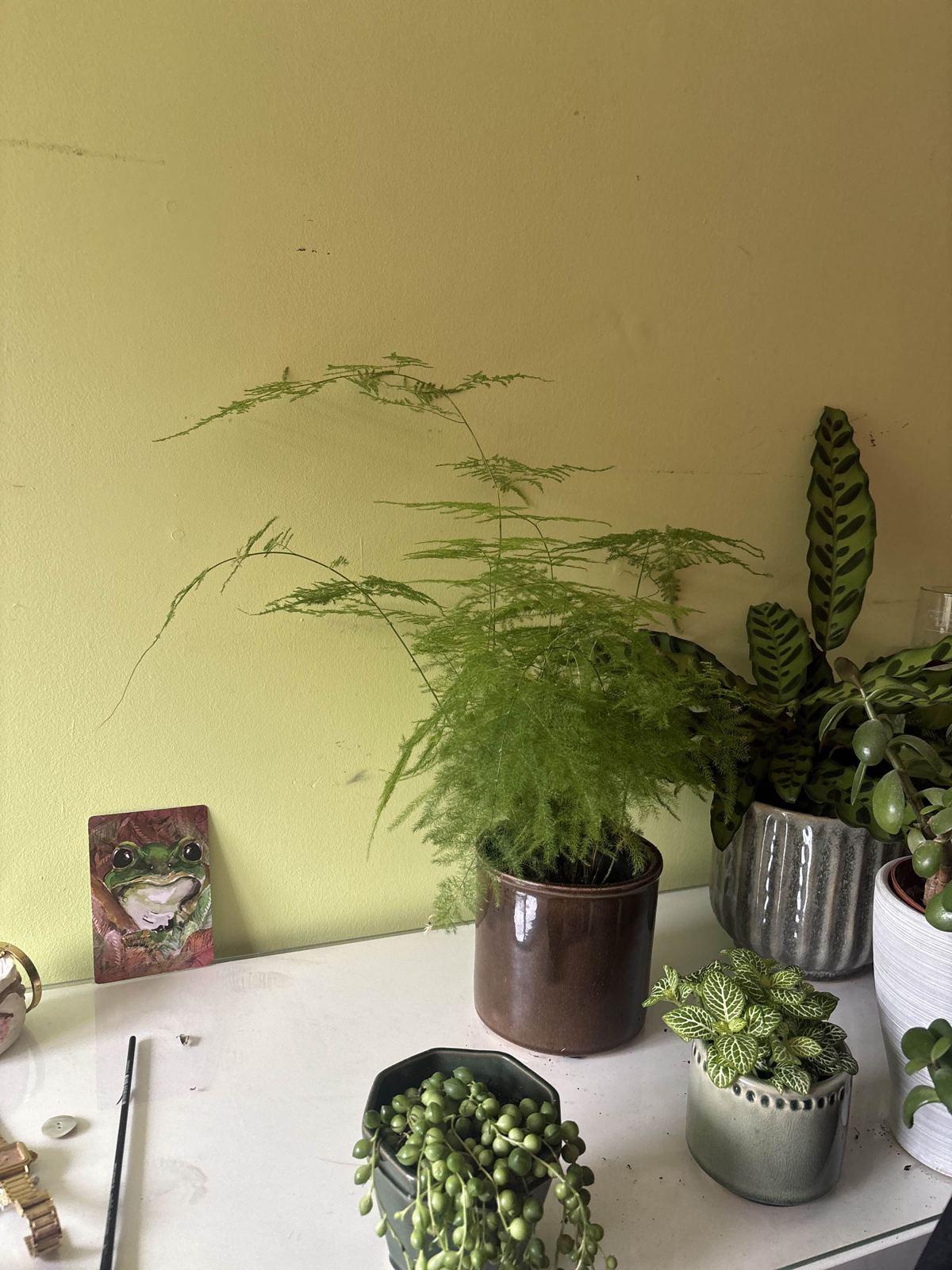
Asparagus fern
Asparagus setaceus
Also known as: Lace fern, Plumosa fern
Asparagus fern is a lacy, airy houseplant with fine, feathery cladodes that give it a soft, plume-like appearance. Despite its name, it is not a true fern, but a member of the asparagus family. It grows well indoors with steady moisture and bright, indirect light.
Safety
Toxicity information is AI-generated and may be inaccurate. Always check with a vet or doctor before relying on it around children or pets.
Perks
Basic info
- Family
- Asparagaceae
- Genus
- Asparagus
- Plant type
- Fern-like perennial
- Native region
- South Africa
- Difficulty
- Moderate
Fun fact
Its tiny leaf-like structures are actually flattened stems called cladodes.
Care profile
Difficulty
Moderate
Toughness
Medium
Maintenance
Medium
Watering
Weekly
Care tips
- 1
Keep soil lightly moist, not soggy
- 2
Provide humidity for fuller growth
- 3
Trim stems to maintain shape
Common problems
Yellowing fronds Moderate
Usually caused by overwatering or poor drainage; let the top layer dry slightly and ensure the pot drains well.
Read our yellow leaves guide →Brown tips Mild
Often a sign of dry air, underwatering, or salt buildup; increase humidity and flush the soil occasionally.
Read our brown leaf tips guide →Leggy growth Mild
Insufficient light can cause sparse, stretched stems; move it to brighter indirect light and prune back long shoots.
Read our leggy growth guide →History
Asparagus fern became popular as a decorative houseplant during the Victorian era, when delicate foliage plants were prized for ornate interiors. It has since remained a classic choice for hanging baskets and bright indoor spaces because of its soft texture and graceful growth habit.
Popular questions
How often should I water my asparagus fern?
Water when the top inch of soil feels dry, keeping the mix evenly moist but never waterlogged. In warmer or brighter conditions, it may need water about once a week, but always check the soil first because it dislikes staying soggy.
Why is my asparagus fern turning yellow or dropping needles?
Yellowing and drop are most often caused by inconsistent watering, too much direct sun, or low humidity. Move it to bright indirect light, water more consistently, and raise humidity to help it recover.
How do I propagate asparagus fern?
The easiest way is by dividing the root mass when repotting, since mature plants form tuberous roots that can be separated. Seeds are also possible, but division is much faster and more reliable for home growers.