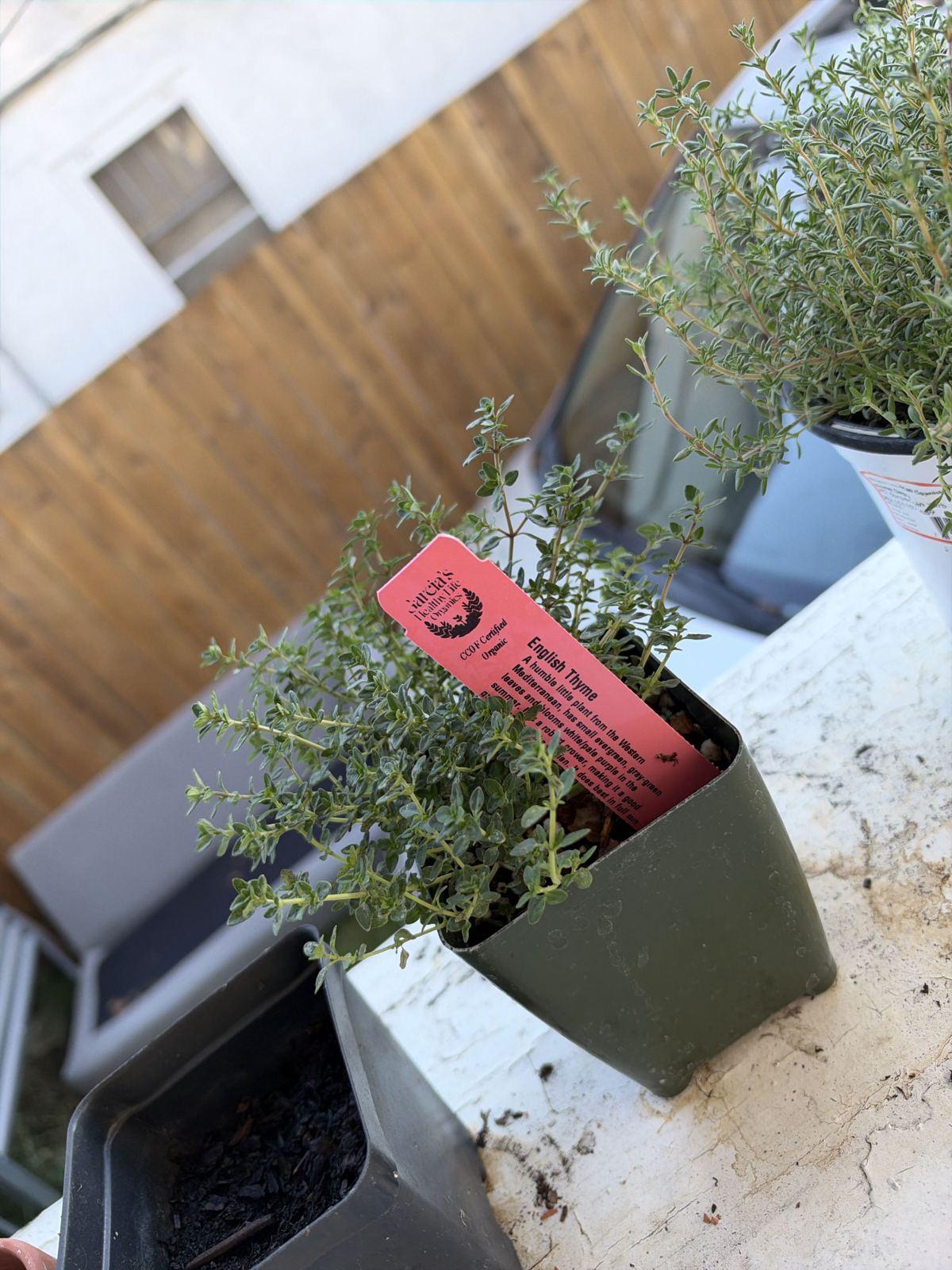
 Easy care
 Shared by a Gardeno user
English Thyme
Thymus vulgaris
Also known as: Common thyme, Garden thyme, True thyme
English thyme is a compact, aromatic culinary herb with tiny gray-green leaves and a woody growth habit. It’s valued for both cooking and ornamental use, and it produces small flowers that attract pollinators when allowed to bloom.
Safety
Toxicity information is AI-generated and may be inaccurate. Always check with a vet or doctor before relying on it around children or pets.
Perks
Basic info
- Family
- Lamiaceae
- Genus
- Thymus
- Plant type
- Herb
- Native region
- Mediterranean region
- Difficulty
- Easy
Fun fact
Thyme was traditionally used by the ancient Greeks and Romans as a symbol of courage and admiration.
Care profile
Difficulty
Easy
Toughness
High
Maintenance
Low
Watering
Weekly
Care tips
- 1
Provide excellent drainage
- 2
Let soil dry slightly between waterings
- 3
Trim regularly to keep plants compact
Common problems
Root rot Moderate
Overwatering or poorly draining soil can cause yellowing and collapse; use a gritty mix and water sparingly.
Read our root rot guide →Leggy growth Mild
Too little light makes stems stretch and thin out; move it to brighter sun and prune back lightly.
Read our leggy growth guide →Creeping insects Mild
Aphids or spider mites may appear on stressed plants; rinse foliage and treat with insecticidal soap if needed.
History
Thyme has been cultivated in the Mediterranean for centuries and spread through Europe as both a medicinal and culinary herb. It became especially popular in kitchen gardens because of its strong flavor, compact growth, and ability to thrive in poor, dry soils.
Popular questions
How often should I water English thyme?
Water only when the top inch or two of soil feels dry, since thyme prefers a drier root zone. In pots, this is often about once a week in warm weather, less often in cooler conditions.
Why is my thyme turning yellow or drooping?
Yellowing and drooping usually point to overwatering, poor drainage, or too little sun. Check that the pot drains freely, reduce watering, and place it in a brighter location.
How do I propagate English thyme?
English thyme is easiest to propagate from stem cuttings. Take a healthy non-flowering cutting, remove the lower leaves, and root it in moist, well-draining mix until new growth appears.