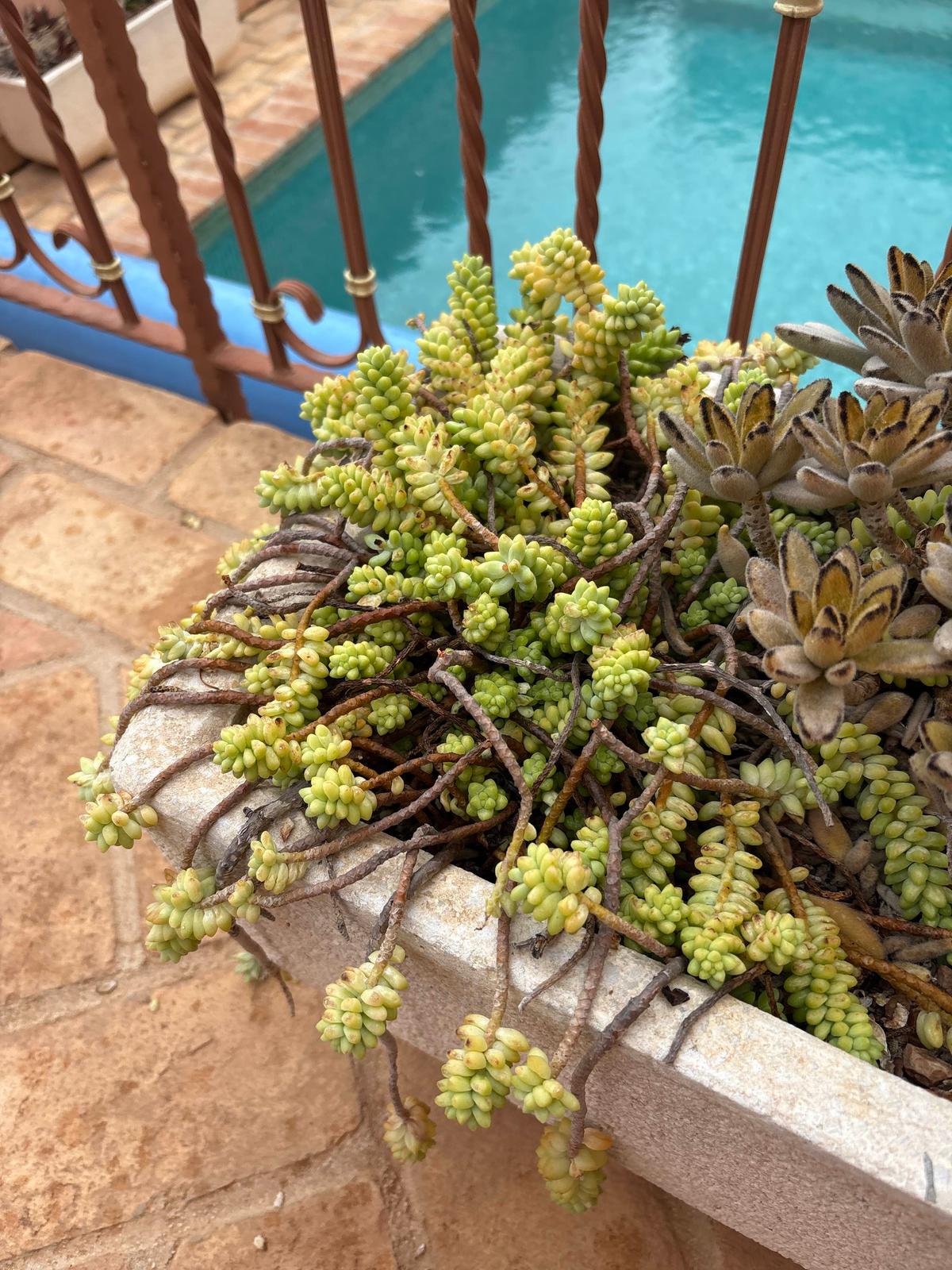
 Shared by a Gardeno user
Burro's tail
Sedum morganianum 'Burrito'
Also known as: Burrito, Donkey tail, Sedum burrito
This is a trailing succulent with dense, bead-like leaves arranged along long, cascading stems. It is prized for its sculptural look and works well in hanging planters or elevated containers where the stems can spill over the edges.
Safety
Toxicity information is AI-generated and may be inaccurate. Always check with a vet or doctor before relying on it around children or pets.
Perks
Basic info
- Family
- Crassulaceae
- Genus
- Sedum
- Plant type
- Succulent
- Native region
- Mexico
- Difficulty
- Moderate
Fun fact
Its leaves are so tightly packed that a healthy stem can look like a braided rope of tiny green beads.
Care profile
Difficulty
Moderate
Toughness
Medium
Maintenance
Low
Watering
Every 2-3 wks
Care tips
- 1
Use a fast-draining cactus mix
- 2
Water only after soil dries fully
- 3
Handle gently to avoid leaf drop
Common problems
Overwatering rot Severe
Mushy stems or yellowing leaves usually mean the roots are staying wet too long; let the soil dry completely and repot into a grittier mix if needed.
Leaf drop Moderate
Leaves fall off easily when the plant is bumped, moved, or watered too often; keep it in a stable spot and water sparingly.
Read our leaf drop guide →Sun stress Mild
Too much harsh direct sun can cause bleaching or scorched tips; give bright light with some protection during peak afternoon heat.
History
Burro's tail became popular in cultivation as a collectible hanging succulent because of its unusual trailing form. It is widely grown in warm climates and indoor succulent collections, where its cascading stems create a dramatic display.
Popular questions
How often should I water burro's tail?
Water only when the potting mix has dried out completely, which is often every 2 to 3 weeks indoors and less often in cooler weather. Soak thoroughly, then let excess water drain away; constant moisture is the fastest way to damage it.
Why are my burro's tail leaves shriveling or turning yellow?
Shriveling can mean underwatering, while yellow, translucent, or mushy leaves usually point to overwatering. Check the stems near the soil line first; if they feel soft, reduce watering and improve drainage immediately.
How do I propagate burro's tail?
The easiest method is leaf or stem cuttings: let the cut end callus for a few days, then place it on dry succulent mix. Mist very lightly at first, and wait for roots to form before resuming normal sparse watering.