 Easy care
 Shared by a Gardeno user
Common sage
Salvia officinalis
Also known as: Garden sage, Culinary sage
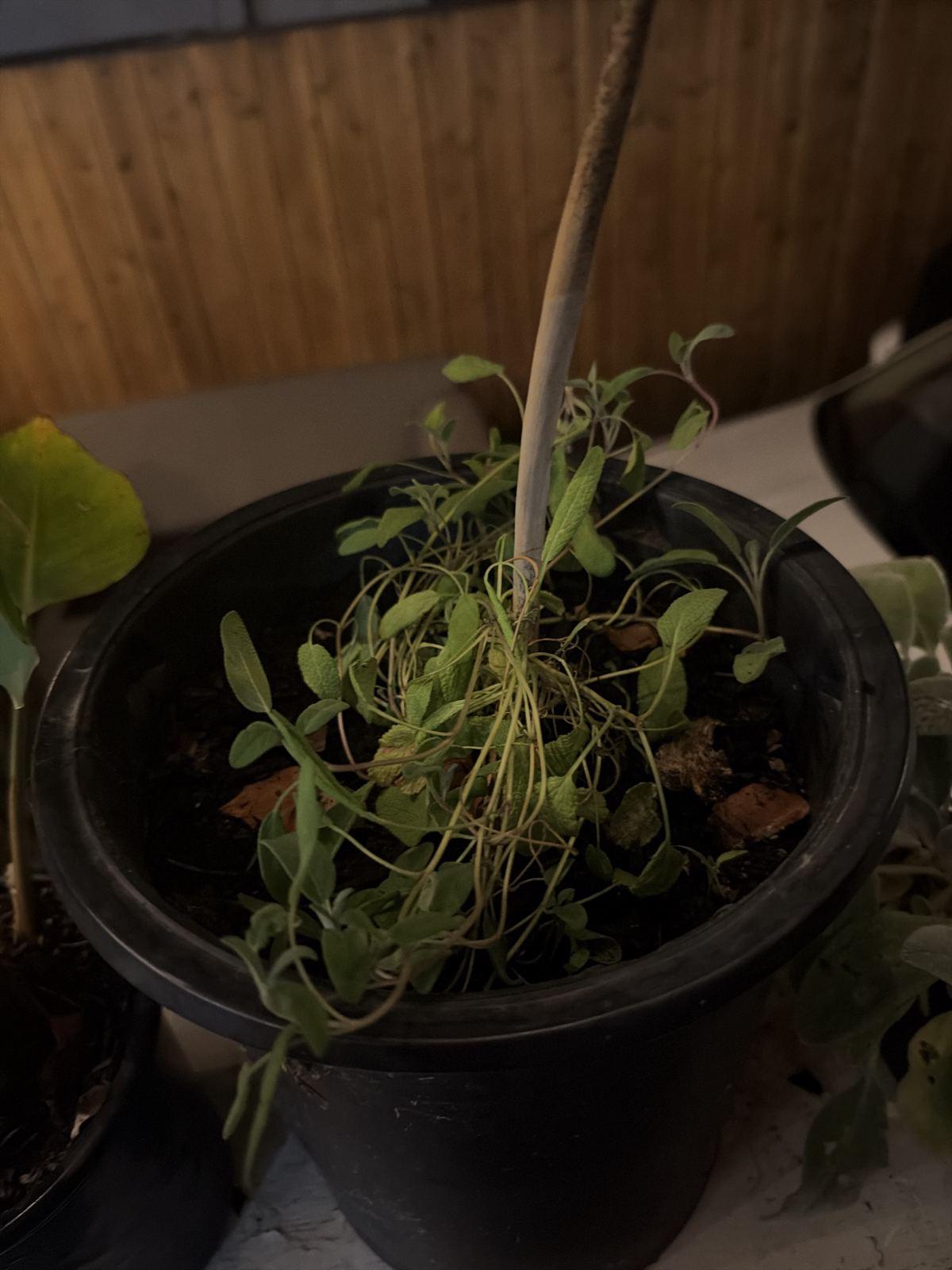
Common sage is a hardy, woody perennial herb with aromatic, wrinkled gray-green leaves and upright flower spikes. It is widely grown for cooking, pollinator-friendly blooms, and its drought-tolerant nature once established.
Safety
Toxicity information is AI-generated and may be inaccurate. Always check with a vet or doctor before relying on it around children or pets.
Perks
Basic info
- Family
- Lamiaceae
- Genus
- Salvia
- Plant type
- Herbaceous perennial
- Native region
- Mediterranean Basin
- Difficulty
- Easy
Fun fact
Sage has been cultivated for both culinary and medicinal use for centuries, and its Latin name Salvia comes from a word meaning 'to save.'
Care profile
Difficulty
Easy
Toughness
High
Maintenance
Low
Watering
Every 1-2 wks
Care tips
- 1
Plant in well-draining soil
- 2
Water sparingly after establishment
- 3
Trim back woody stems in spring
Common problems
Root rot Moderate
Leaves yellow and stems may collapse if the soil stays too wet; improve drainage and reduce watering.
Read our root rot guide →Powdery mildew Mild
A white dusty coating can appear in humid conditions; increase airflow and remove affected growth.
Read our powdery mildew guide →Woody legginess Mild
Older plants can become sparse and woody; prune lightly after flowering to encourage fresh growth.
History
Common sage is native to the Mediterranean and has been grown since ancient times as both a culinary herb and a plant associated with healing and wisdom. It spread through European herb gardens and later became a staple in kitchens worldwide, especially for savory dishes and stuffing.
Popular questions
How often should I water sage?
Water deeply, then let the soil dry out before watering again. Established sage prefers infrequent watering and often only needs attention every 1-2 weeks, depending on heat and soil drainage.
Why are my sage leaves turning yellow or crispy?
Yellowing often points to too much water or poor drainage, while crispy leaves can mean heat stress or underwatering. Check that the plant is in full sun with gritty, fast-draining soil and cut back on watering if the root zone stays damp.
How do I propagate sage?
Sage is commonly propagated from stem cuttings or by layering, and it can also be started from seed. Softwood cuttings taken in spring or early summer root best in moist, well-draining mix with bright indirect light.