 Easy care
 Shared by a Gardeno user
Elephant Bush
Portulacaria afra
Also known as: Spekboom, Dwarf Jade
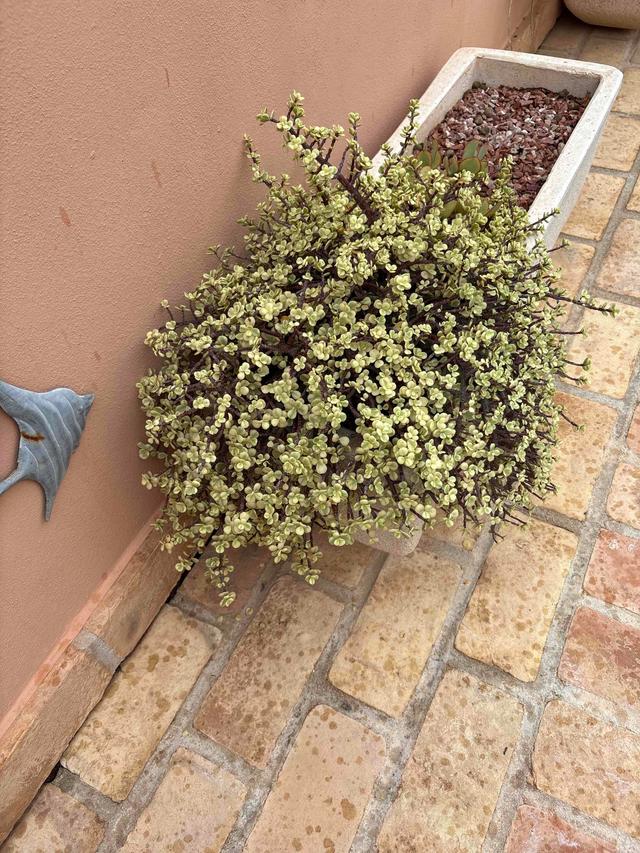
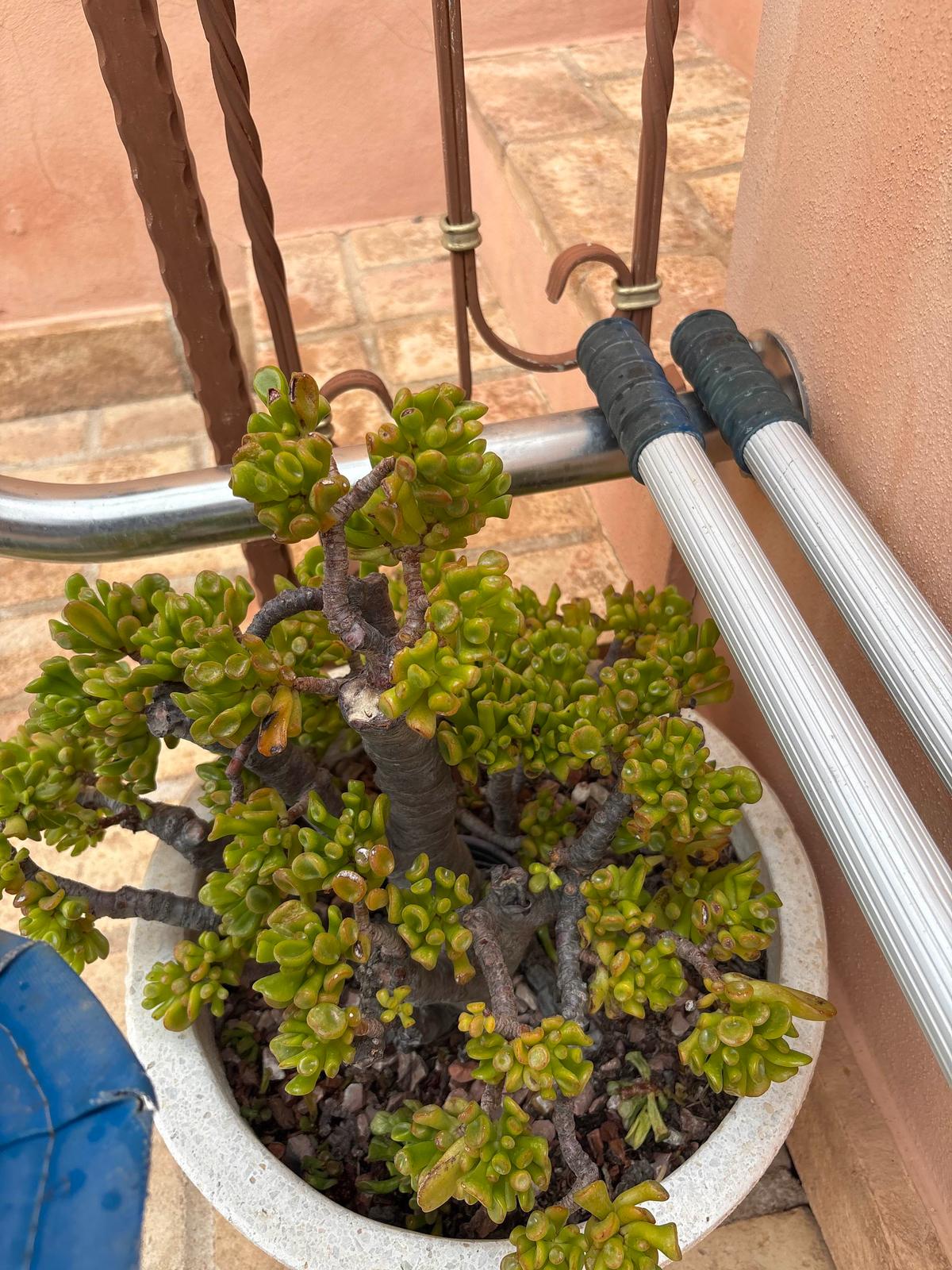
Elephant bush is a tough, branching succulent with small, round, fleshy leaves on woody stems. It is often grown in containers and bonsai-style forms because it tolerates pruning well and can become quite tree-like over time.
Safety
Toxicity information is AI-generated and may be inaccurate. Always check with a vet or doctor before relying on it around children or pets.
Perks
Basic info
- Family
- Didiereaceae
- Genus
- Portulacaria
- Plant type
- Succulent shrub
- Native region
- South Africa
- Difficulty
- Easy
Fun fact
It is one of the few succulents that can help store significant amounts of carbon, earning it a reputation as a climate-friendly plant.
Care profile
Difficulty
Easy
Toughness
High
Maintenance
Low
Watering
Every 2-3 wks
Care tips
- 1
Use very fast-draining succulent soil.
- 2
Let the soil dry out completely between waterings.
- 3
Give more sun for compact, colorful growth.
Common problems
Root rot Severe
Caused by overwatering or soggy soil; let the mix dry fully and repot into a gritty, fast-draining medium if needed.
Read our root rot guide →Leaf drop Moderate
Often happens from sudden light changes or underwatering; adjust watering gradually and keep light consistent.
Read our leaf drop guide →Mealybugs Moderate
White cottony pests may hide in leaf joints; wipe with alcohol swabs and treat with insecticidal soap if needed.
Read our mealybugs & scale guide →History
Portulacaria afra is native to South Africa, where it grows in dry scrub and rocky slopes. It has long been valued as a resilient forage plant for livestock and is also widely planted for ornamental use and erosion control.
Popular questions
How often should I water my elephant bush?
Water only when the potting mix has dried out completely, which is usually every 2-3 weeks indoors and less often in cooler months. In bright outdoor conditions, it may need slightly more frequent watering, but it should never sit in wet soil.
Why are the leaves on my elephant bush turning yellow or falling off?
Yellowing and leaf drop are most commonly caused by too much water or not enough light. Move it to a brighter spot and reduce watering; if the stems feel soft, check for root rot and repot into dry, well-draining soil.
How do I propagate elephant bush?
It is very easy to propagate from stem cuttings. Let the cut end dry and callus for a few days, then place it into dry succulent mix; water lightly only after roots begin forming.