 Easy care
 Shared by a Gardeno user
Boston ivy
Parthenocissus tricuspidata
Also known as: Japanese ivy, Japanese creeper
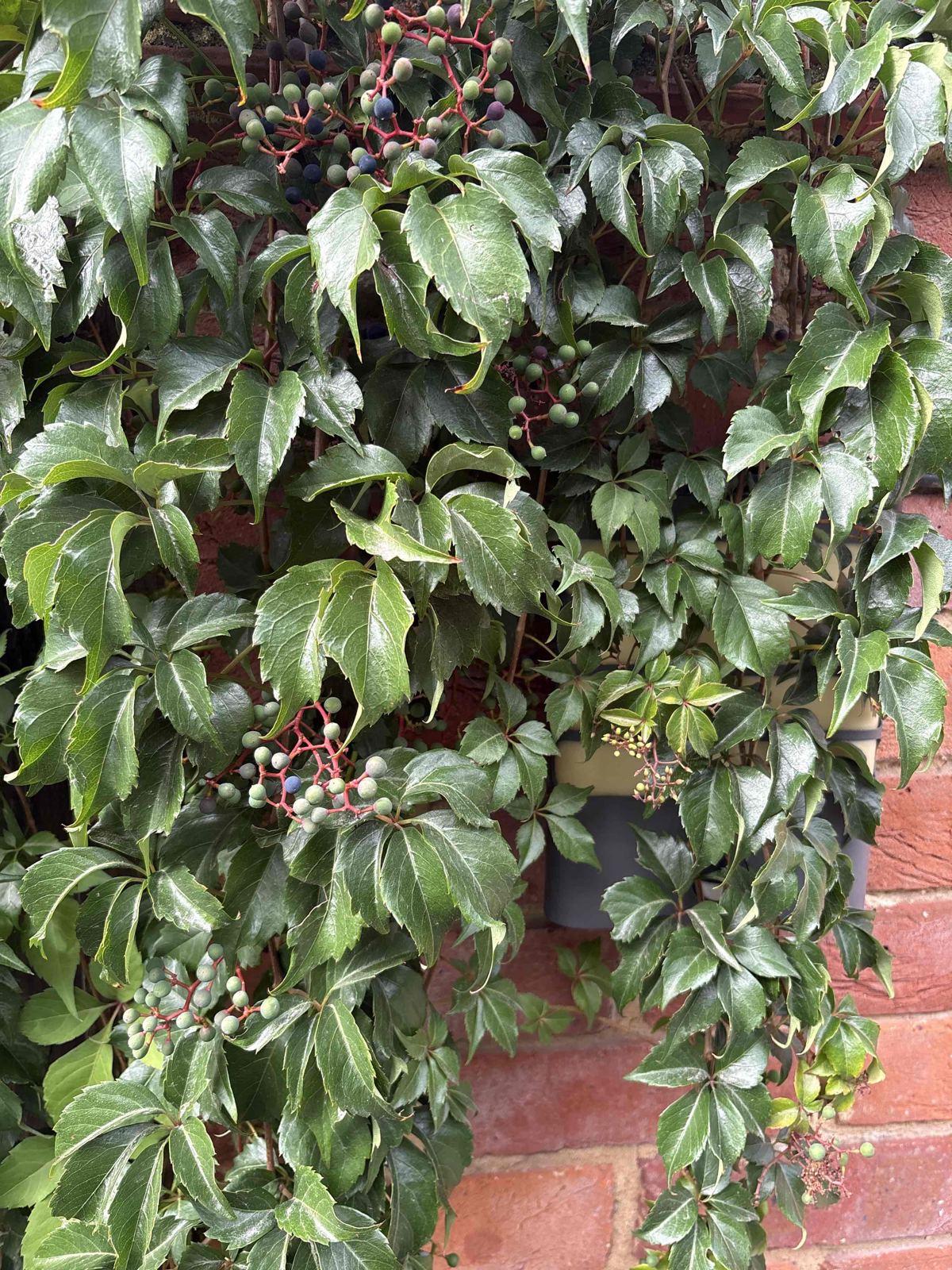
Boston ivy is a vigorous, woody climbing vine known for its glossy, lobed leaves and decorative blue-black berries. It clings to walls and fences with adhesive pads, making it a popular choice for covering masonry and adding seasonal color.
Safety
Toxicity information is AI-generated and may be inaccurate. Always check with a vet or doctor before relying on it around children or pets.
Perks
Basic info
- Family
- Vitaceae
- Genus
- Parthenocissus
- Plant type
- Deciduous vine
- Native region
- East Asia
- Difficulty
- Easy
Fun fact
Its leaves can turn brilliant red, orange, or purple in fall, creating a dramatic wall of color.
Care profile
Difficulty
Easy
Toughness
High
Maintenance
Medium
Watering
Weekly
Care tips
- 1
Plant in well-drained soil
- 2
Prune to control spread
- 3
Water deeply while establishing
Common problems
Overgrowth Moderate
This vine can spread aggressively and smother nearby plants; prune regularly to keep it in bounds.
Leaf scorch Mild
Hot, reflected sun or drought can brown leaf edges; keep soil evenly moist and avoid extreme heat stress.
Read our leaf scorch guide →Pests and mildew Mild
Aphids, scale, or powdery mildew may appear in crowded conditions; improve airflow and treat early if needed.
Read our powdery mildew guide →History
Boston ivy was introduced from East Asia and became especially popular in North America as an ornamental wall-climbing plant. It is closely associated with historic ivy-covered buildings and the classic "Ivy League" look, though it is not true ivy at all.
Popular questions
How often should I water Boston ivy?
Water newly planted Boston ivy regularly until it is established, then water when the top inch or two of soil dries out. Once mature, it is fairly drought-tolerant, but it grows best with consistent moisture during the hottest part of the year.
Why are my Boston ivy leaves turning yellow or brown?
Yellowing is often caused by overwatering, poor drainage, or low light, while brown edges usually point to drought or heat stress. Check the soil first, then adjust watering and prune for better airflow if mildew is also present.
How do I propagate Boston ivy?
Boston ivy is easiest to propagate from stem cuttings taken in late spring or summer. Place a healthy cutting in water or moist potting mix, keep it warm and humid, and roots should form within a few weeks.