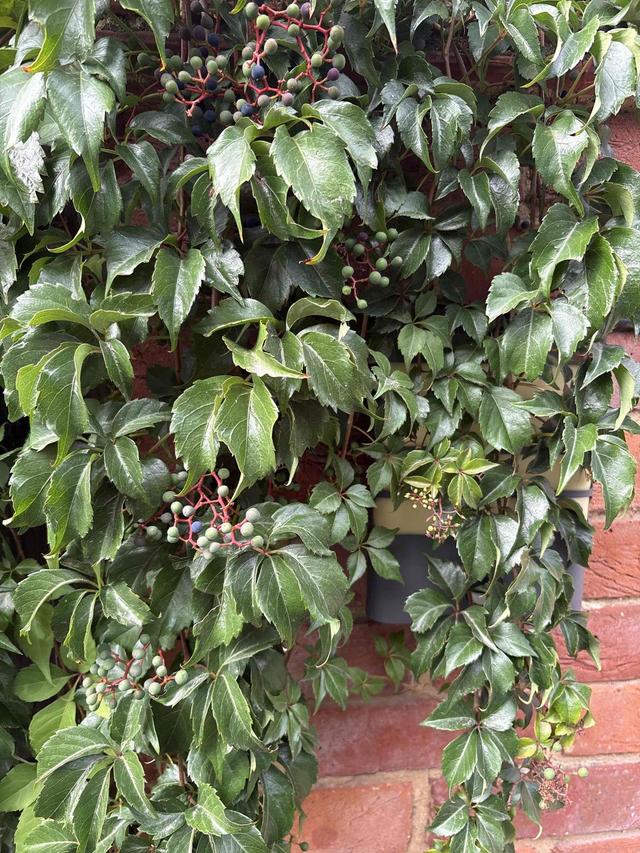
 Shared by a Gardeno user
Grapevine
Vitis vinifera
Also known as: Wine grape, Common grapevine, Table grape
Grapevines are woody climbing plants known for their broad, lobed leaves and trailing growth. They’re often trained over arbors, pergolas, and trellises, where they create dense summer shade and produce fruit when mature.
Safety
Toxicity information is AI-generated and may be inaccurate. Always check with a vet or doctor before relying on it around children or pets.
Perks
Basic info
- Family
- Vitaceae
- Genus
- Vitis
- Plant type
- Deciduous vine
- Native region
- Mediterranean region
- Difficulty
- Moderate
Fun fact
Grapevines can live and produce fruit for decades, and some of the oldest cultivated varieties have been grown for thousands of years.
Care profile
Difficulty
Moderate
Toughness
High
Maintenance
Medium
Watering
Every 1-2 wks
Care tips
- 1
Give it strong support
- 2
Prune in winter
- 3
Water deeply but infrequently
Common problems
Powdery mildew Moderate
A white, dusty coating on leaves can spread in humid, crowded conditions; improve airflow and use appropriate fungicide if needed.
Read our powdery mildew guide →Leaf curling Mild
Leaves may curl from heat stress, pests, or inconsistent watering; keep watering even and check for aphids or mites.
Poor fruit set Moderate
Too much shade or overgrown vines can reduce flowering and fruiting; prune properly and maximize sun exposure.
History
Grapevines have been cultivated since ancient times across the Mediterranean and Near East, where they became central to food, trade, and winemaking. Over centuries, people trained them on trellises and arbors for easier harvest and to create cool shaded spaces in gardens and courtyards.
Popular questions
How often should I water a grapevine?
Water deeply, then let the soil partially dry before watering again. Established vines usually do better with infrequent deep watering than with frequent shallow watering, especially if they’re planted in the ground.
Why are my grapevine leaves turning yellow or drooping?
Yellowing or drooping is often caused by overwatering, poor drainage, or nutrient imbalance. Check that the roots are not sitting in soggy soil, and make sure the vine is getting enough sun and airflow.
How do you propagate grapevines?
Grapevines are commonly propagated from hardwood cuttings taken during dormancy. Choose healthy one-year-old wood, cut sections with several nodes, and root them in a moist, well-draining medium.