 Easy care
 Shared by a Gardeno user
Oleander
Nerium oleander
Also known as: Nerium, Rosebay
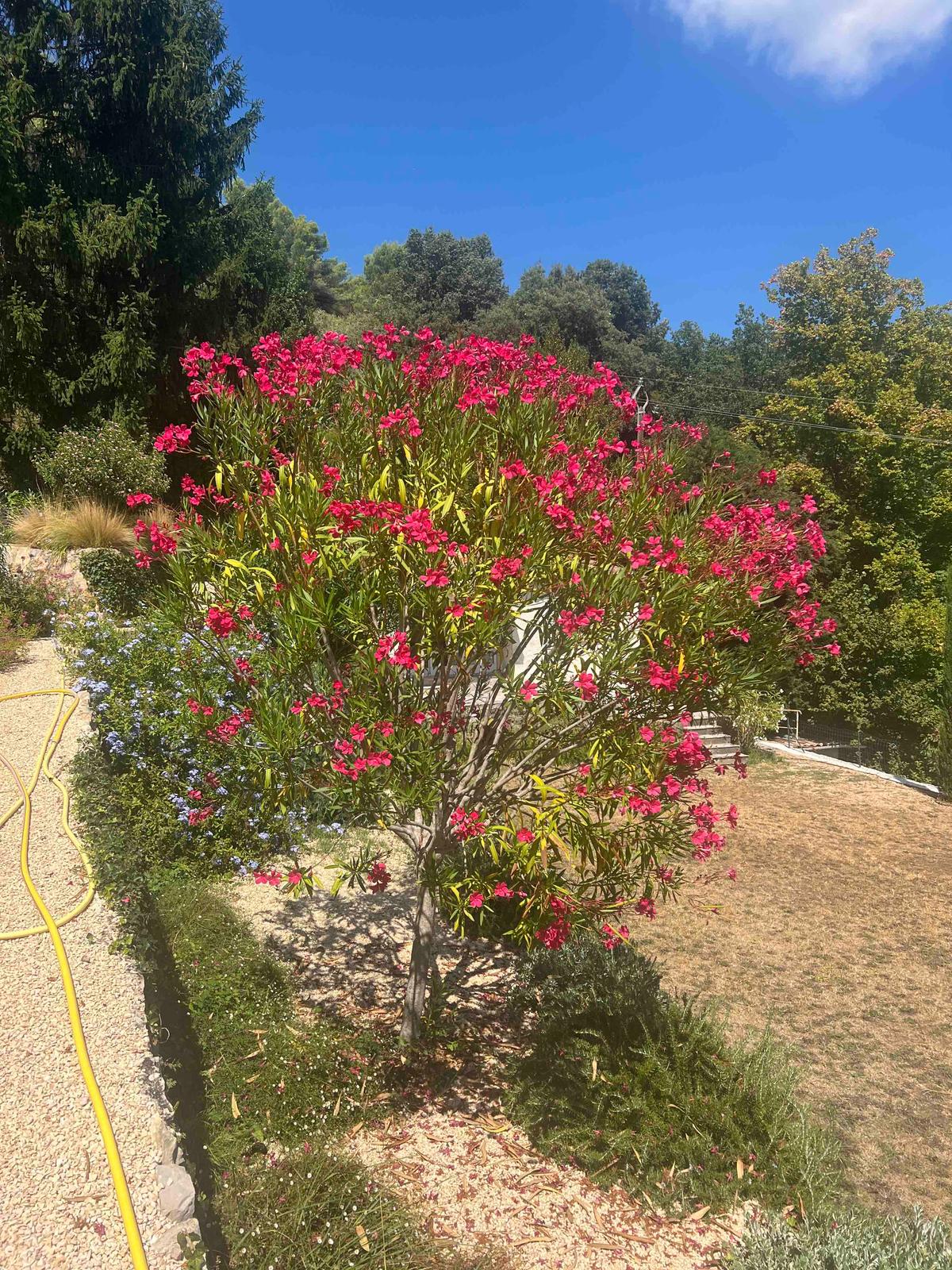
Oleander is a tough, evergreen flowering shrub or small tree with narrow, leathery leaves and showy pink blooms. It is widely used in warm-climate landscaping because it tolerates heat, drought, and poor soil very well.
Safety
Toxicity information is AI-generated and may be inaccurate. Always check with a vet or doctor before relying on it around children or pets.
Perks
Basic info
- Family
- Apocynaceae
- Genus
- Nerium
- Plant type
- Shrub or small tree
- Native region
- Mediterranean region
- Difficulty
- Easy
Fun fact
Oleander is so drought-tolerant that it is often planted along highways and coastal landscapes in hot climates.
Care profile
Difficulty
Easy
Toughness
High
Maintenance
Low
Watering
Every 1-2 wks
Care tips
- 1
Plant in well-drained soil
- 2
Prune after flowering
- 3
Water deeply but infrequently
Common problems
Scale insects Moderate
Sticky leaves or small bumps on stems may indicate scale; prune heavily infested growth and use horticultural oil if needed.
Read our mealybugs & scale guide →Leaf scorch Mild
Brown, crispy leaf edges can happen in extreme heat or drought; provide deep watering during prolonged dry spells.
Read our leaf scorch guide →Root rot Severe
Poor drainage can cause yellowing and decline; improve drainage and avoid overwatering.
Read our root rot guide →History
Oleander has been cultivated for centuries around the Mediterranean and beyond, valued for its long bloom season and ability to thrive in harsh conditions. It became especially popular in ornamental plantings in warm regions because it brings color with very little care, though its toxicity has long been recognized.
Popular questions
How often should I water oleander?
Once established, oleander prefers deep but infrequent watering rather than frequent light watering. Let the soil dry somewhat between waterings, and water more often only during extreme heat or while newly planted.
Why are my oleander leaves turning yellow?
Yellowing often points to overwatering, poor drainage, or occasional nutrient stress. Check that the soil drains well and reduce watering if it stays wet for long periods; severe yellowing can also happen from root problems.
Can oleander be propagated from cuttings?
Yes, oleander is commonly propagated from semi-hardwood cuttings taken in warm weather. Root the cuttings in a moist, well-draining medium and keep them in bright light until established.