 Shared by a Gardeno user
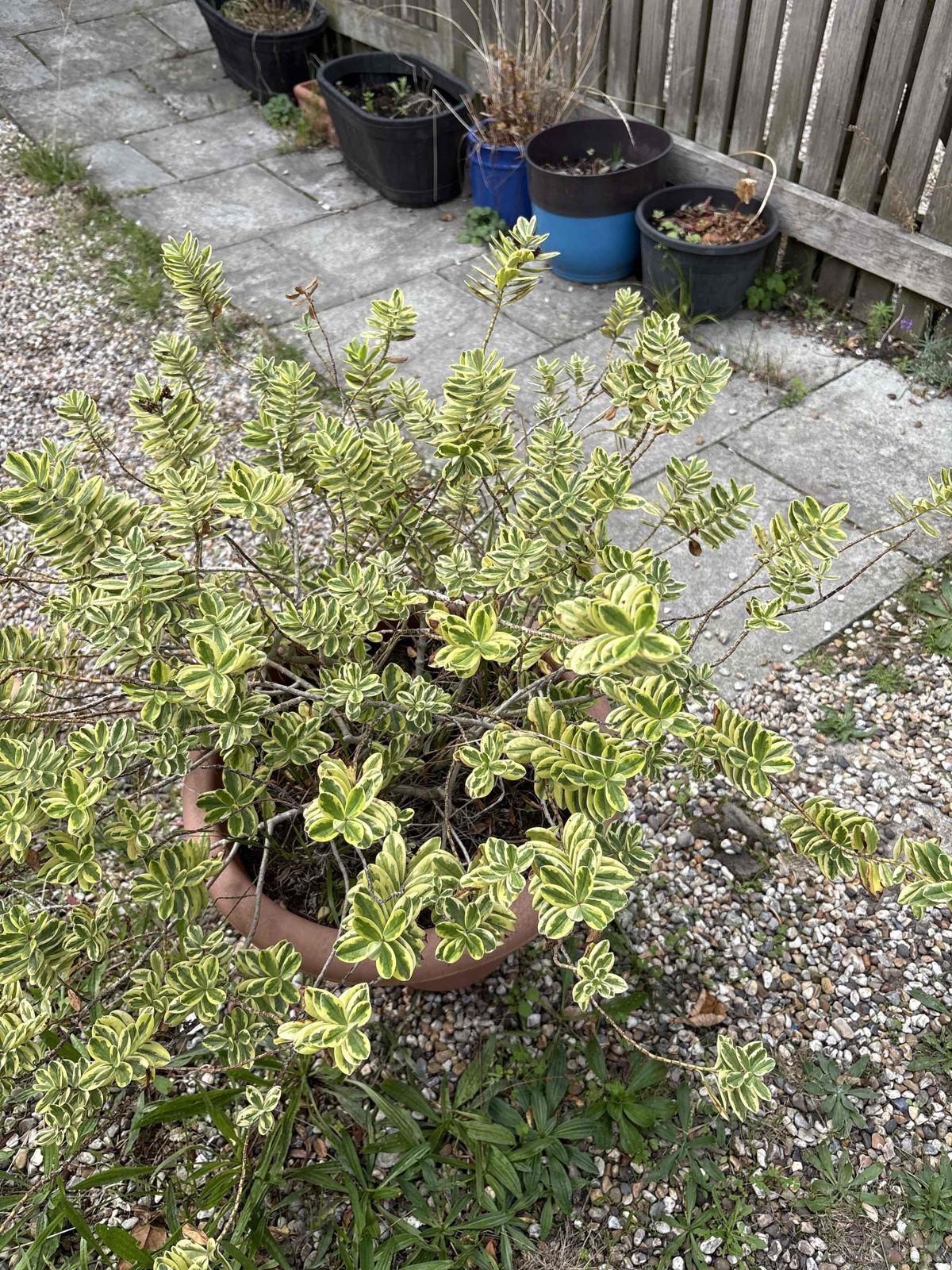
Variegated hebe
Hebe species cultivar
Also known as: Shrubby veronica, Variegated veronica
This is a compact variegated hebe, a woody evergreen shrub with small, glossy leaves edged in cream-yellow. It is often grown for its colorful foliage and tidy branching habit, especially in mild climates and containers.
Safety
Toxicity information is AI-generated and may be inaccurate. Always check with a vet or doctor before relying on it around children or pets.
Perks
Basic info
- Family
- Plantaginaceae
- Genus
- Hebe
- Plant type
- Shrub
- Native region
- New Zealand
- Difficulty
- Moderate
Fun fact
Hebes are named after the Greek goddess of youth, reflecting their evergreen, fresh-looking foliage.
Care profile
Difficulty
Moderate
Toughness
Medium
Maintenance
Low
Watering
Every 1-2 wks
Care tips
- 1
Plant in well-draining soil to prevent root rot.
- 2
Pinch back lightly after flowering to keep it dense.
- 3
Water more during hot, dry spells, but let the soil dry slightly between waterings.
Common problems
Root rot Moderate
Yellowing and decline can happen in soggy soil; improve drainage and reduce watering.
Read our root rot guide →Winter scorch Mild
Leaves may brown or drop in harsh cold or wind; protect from exposure and mulch lightly.
Read our leaf scorch guide →Aphids Mild
Tender new growth can attract aphids; rinse off pests or treat with insecticidal soap.
Read our aphids guide →History
Hebes come from New Zealand and neighboring regions, where many species evolved in cool, windy, coastal habitats. They became popular ornamental shrubs in gardens because of their evergreen habit, colorful foliage, and long flowering season.
Popular questions
How often should I water a variegated hebe?
Water deeply when the top inch or two of soil feels dry, especially for container plants. Established hebes prefer moderate watering and dislike constantly wet roots, so good drainage is more important than frequent watering.
Why are the leaves turning brown or yellow?
Brown or yellow leaves are often caused by too much water, poor drainage, or cold wind damage. Check the roots and soil first, then move the plant to a more sheltered spot and trim away damaged growth.
Can I propagate hebe from cuttings?
Yes, hebe is commonly propagated from semi-ripe cuttings in late summer. Take healthy non-flowering shoots, strip the lower leaves, and root them in a light, well-draining mix with steady moisture.