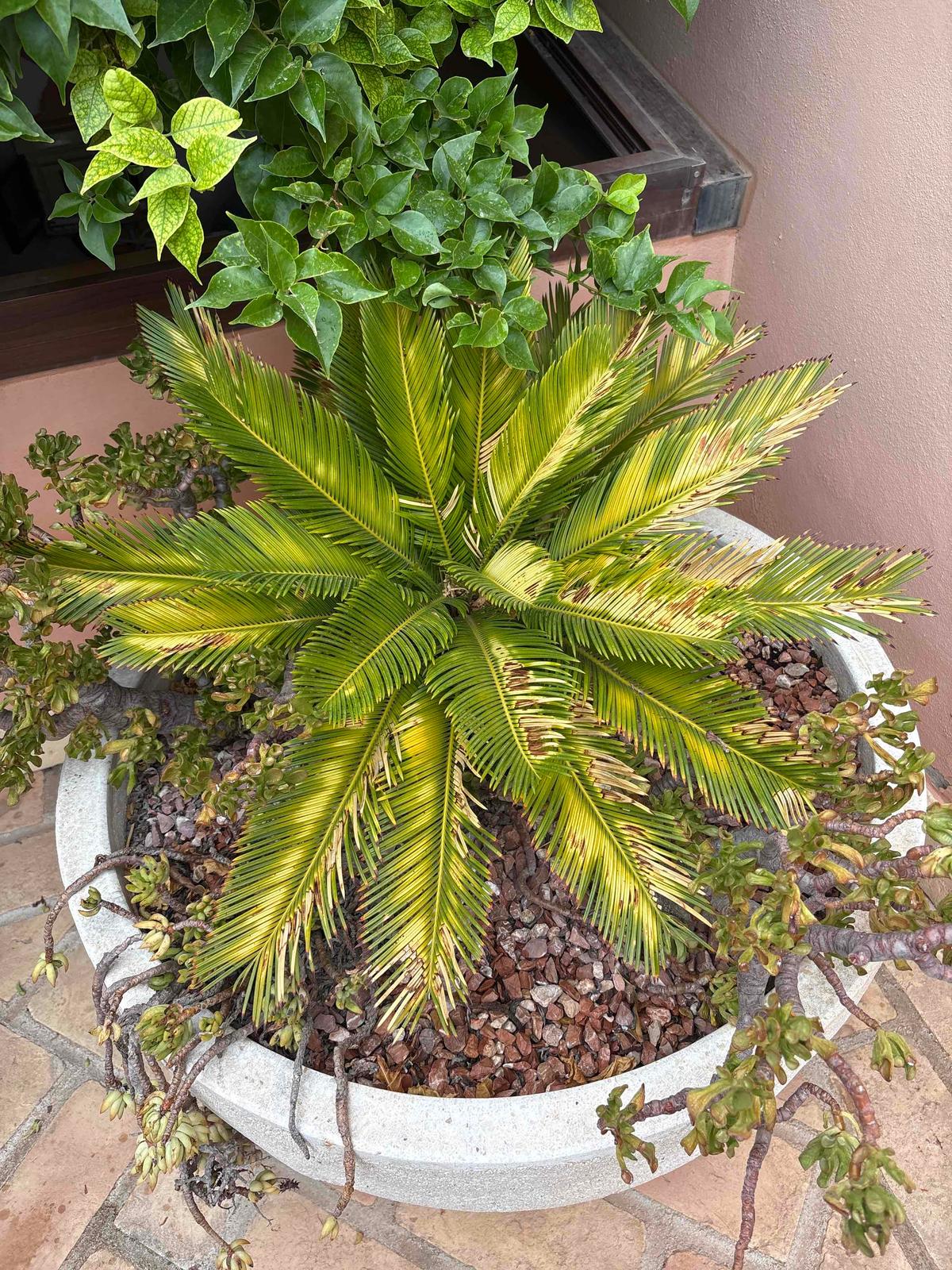
 Shared by a Gardeno user
Sago palm
Cycas revoluta
Also known as: Japanese sago palm, King sago
Sago palm is a slow-growing cycad with a stiff crown of glossy, feather-like fronds. Despite its palm-like appearance, it is not a true palm and is often used as an ornamental in warm-climate landscapes and containers.
Safety
Toxicity information is AI-generated and may be inaccurate. Always check with a vet or doctor before relying on it around children or pets.
Perks
Basic info
- Family
- Cycadaceae
- Genus
- Cycas
- Plant type
- Cycad
- Native region
- Southern Japan
- Difficulty
- Moderate
Fun fact
It is one of the oldest surviving plant lineages on Earth, predating many modern flowering plants.
Care profile
Difficulty
Moderate
Toughness
High
Maintenance
Low
Watering
Every 1-2 wks
Care tips
- 1
Use well-draining soil
- 2
Let soil dry slightly
- 3
Remove old fronds carefully
Common problems
Yellow fronds Moderate
Often caused by overwatering, poor drainage, or nutrient deficiency; improve drainage and feed lightly with a cycad/palm fertilizer.
Read our yellow leaves guide →Scale insects Moderate
Small bumps on fronds or stems can suck sap and weaken the plant; treat with horticultural oil or insecticidal soap and repeat as needed.
Read our mealybugs & scale guide →Root rot Severe
Waterlogged soil can rot the roots and crown; reduce watering and repot or replant in a gritty, fast-draining mix.
Read our root rot guide →History
Cycas revoluta has been cultivated in East Asia for centuries and became popular worldwide as an ornamental during the 19th century. Its prehistoric lineage makes it a favorite among collectors and landscape designers who want a dramatic, ancient-looking plant.
Popular questions
How often should I water a sago palm?
Water only when the soil has dried out partway, since sago palms dislike constantly wet roots. In warm weather this is often every 1-2 weeks, but less in cool or humid conditions.
Why are my sago palm fronds turning yellow?
Yellowing is commonly linked to too much water, poor drainage, or low nutrients, especially magnesium or manganese deficiencies. Check the soil first, then adjust watering and consider a cycad fertilizer if drainage is good.
How do I propagate a sago palm?
The easiest way is by removing and rooting the pups, or offsets, that form around the base of mature plants. Seeds are possible too, but they take much longer and are less common in home growing.