 Easy care
 Shared by a Gardeno user
European Fan Palm
Chamaerops humilis
Also known as: Mediterranean Fan Palm, Dwarf Fan Palm
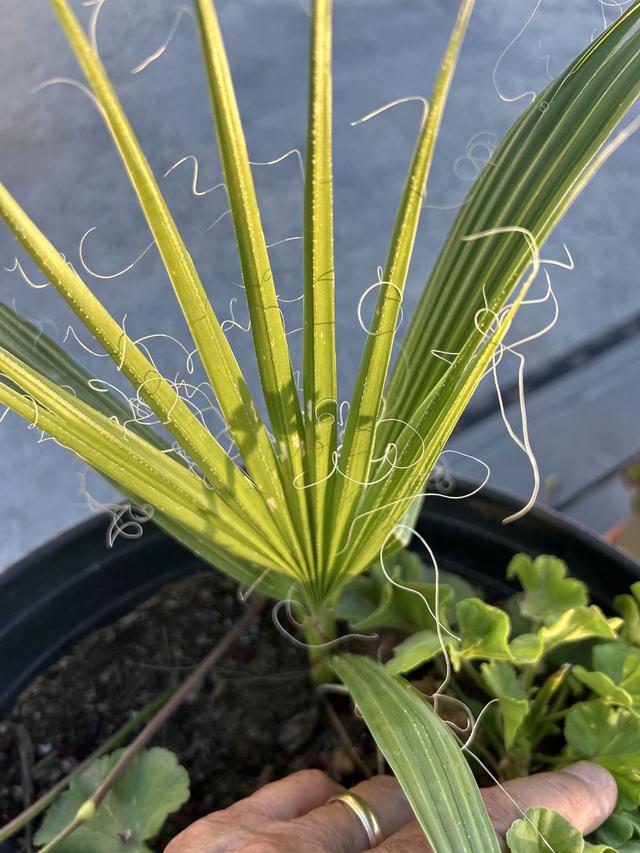
The European Fan Palm is a hardy, multi-stemmed palm known for its fan-shaped, stiff, blue-green to gray-green leaves. It's one of the most cold-hardy palms, making it popular in temperate climates. This slow-growing palm can form dense clumps over time.
Safety
Toxicity information is AI-generated and may be inaccurate. Always check with a vet or doctor before relying on it around children or pets.
Perks
Basic info
- Family
- Arecaceae
- Genus
- Chamaerops
- Plant type
- Palm
- Native region
- Mediterranean Basin
- Difficulty
- Easy
Fun fact
It is the only palm native to mainland Europe, found growing wild in the Mediterranean region.
Care profile
Difficulty
Easy
Toughness
High
Maintenance
Low
Watering
Moderately, drought tolerant
Care tips
- 1
Provide well-draining soil
- 2
Protect from extreme cold when young
- 3
Fertilize during growing season
Common problems
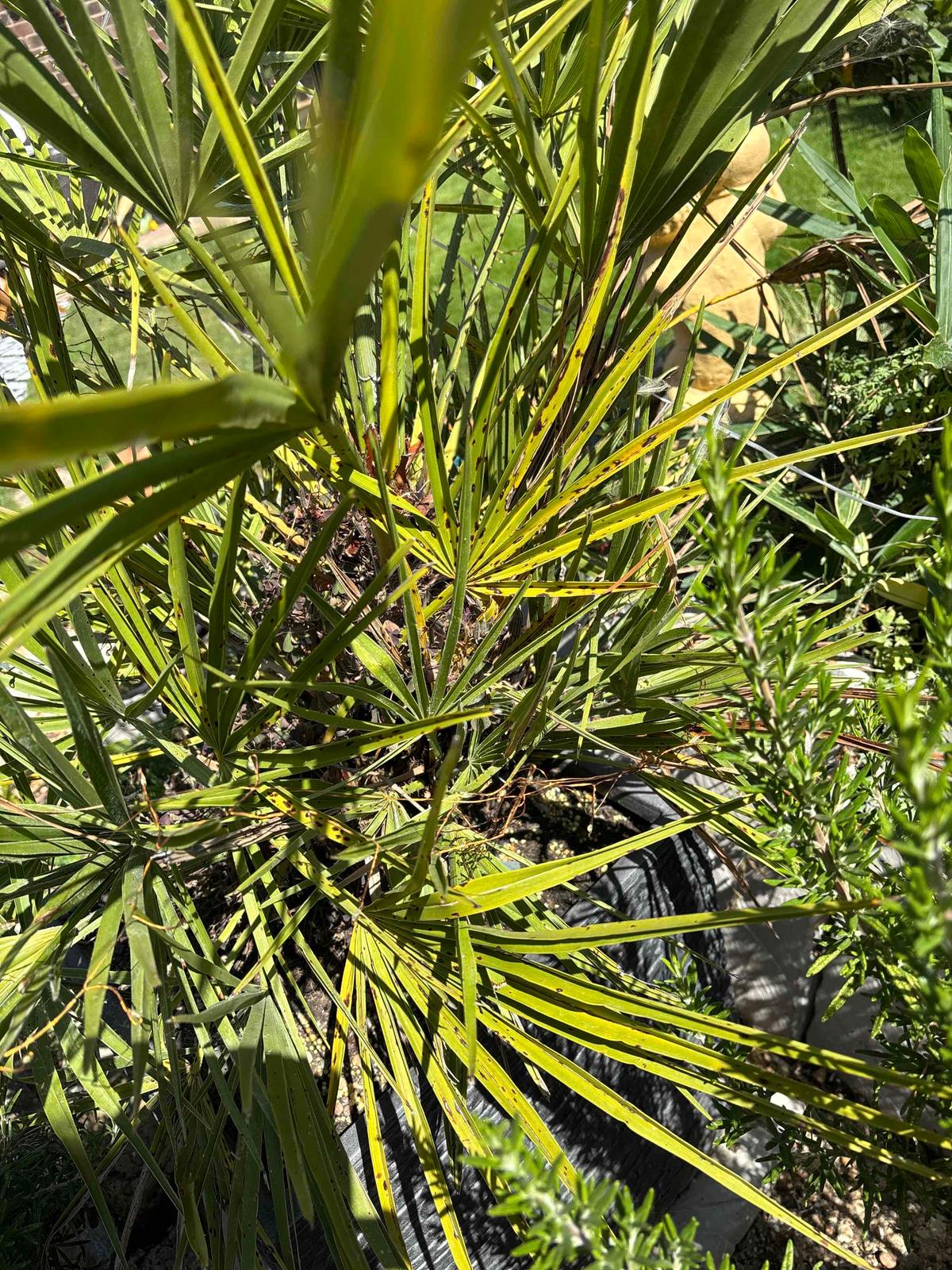
Yellowing Fronds Mild
Often caused by nutrient deficiency (e.g., magnesium, potassium) or overwatering. Ensure proper fertilization and well-draining soil.
Read our yellow leaves guide →Brown Leaf Tips Mild
Can be due to underwatering, low humidity, or salt buildup. Water deeply and consider flushing soil periodically.
Read our brown leaf tips guide →Spider Mites Moderate
Tiny pests that cause stippling and webbing. Treat with insecticidal soap or neem oil.
Read our spider mites guide →History
Native to the Mediterranean region, the European Fan Palm has been cultivated for centuries for its ornamental value and its fibers, which were traditionally used for making ropes, baskets, and brushes. Its resilience and distinctive appearance have made it a popular choice in gardens and landscapes across various climates.
Popular questions
How often should I water my European Fan Palm?
Water thoroughly when the top few inches of soil feel dry, especially during warm months. Reduce watering in winter. Ensure good drainage to prevent root rot, as they are drought-tolerant once established.
Why are the fronds of my palm turning yellow or brown?
Yellowing can indicate a nutrient deficiency (like potassium or magnesium) or overwatering. Brown tips often suggest underwatering, low humidity, or salt accumulation. Check soil moisture and consider a palm-specific fertilizer.
Can I propagate my European Fan Palm?
Yes, European Fan Palms can be propagated from seeds, though it's a slow process. They also produce suckers at the base, which can be carefully separated and replanted, offering a faster method for propagation.