 Easy care
 Shared by a Gardeno user
Australian Brush Cherry
Syzygium paniculatum
Also known as: Lilly pilly, Brush cherry
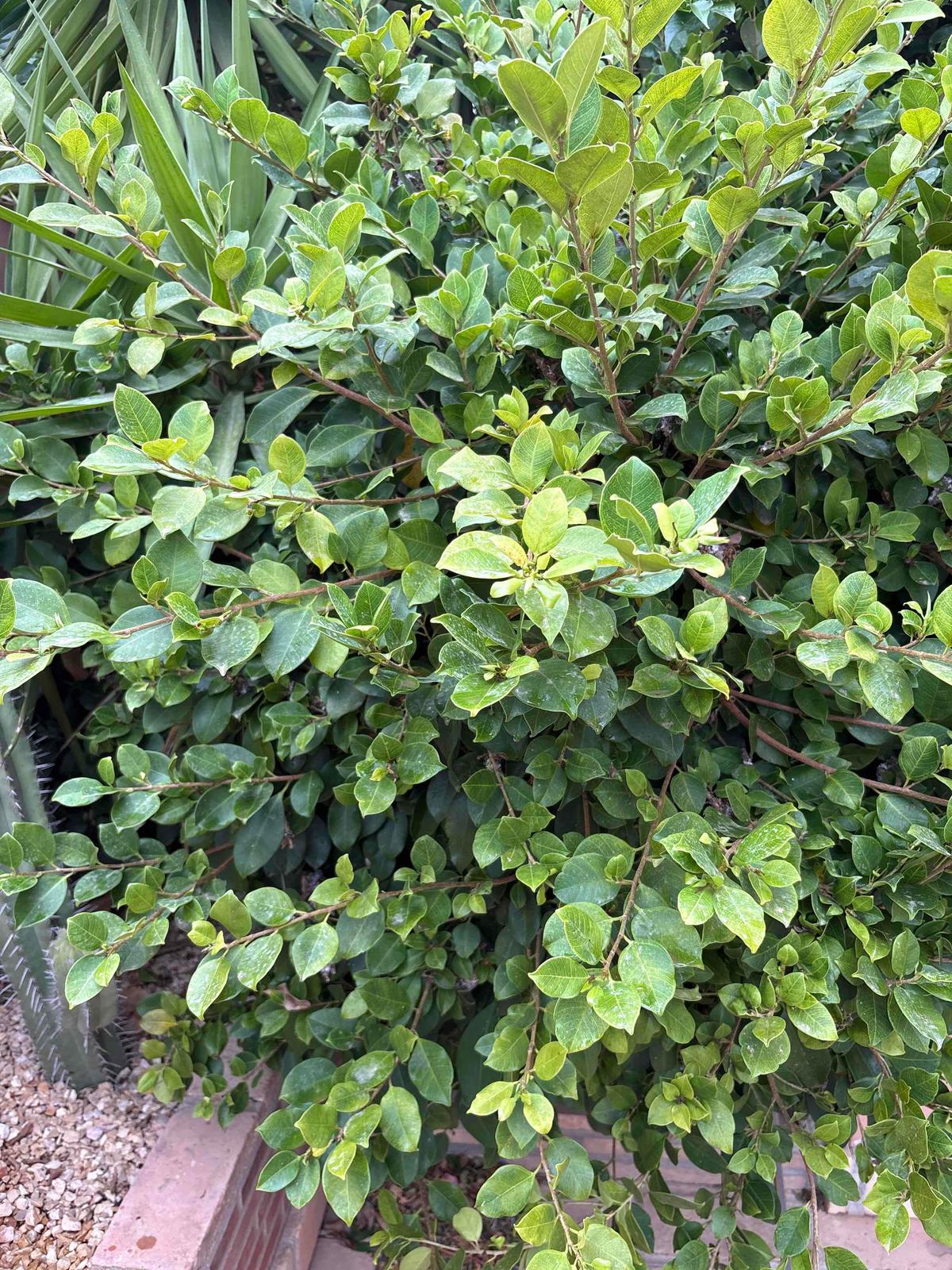
Australian brush cherry is an evergreen shrub or small tree often used as a dense hedge or topiary. It has small, opposite, glossy green leaves and attractive fresh light-green growth at the tips. In warm climates it can become a lush screen plant with a neat, formal look.
Safety
Toxicity information is AI-generated and may be inaccurate. Always check with a vet or doctor before relying on it around children or pets.
Perks
Basic info
- Family
- Myrtaceae
- Genus
- Syzygium
- Plant type
- Shrub
- Native region
- Eastern Australia
- Difficulty
- Easy
Fun fact
Its edible red to purple fruits are sometimes called lilly pilly berries.
Care profile
Difficulty
Easy
Toughness
Medium
Maintenance
Medium
Watering
Weekly
Care tips
- 1
Give it regular water while establishing, then water deeply when the topsoil dries.
- 2
Prune lightly to maintain shape and encourage dense branching.
- 3
Feed in spring with a balanced slow-release fertilizer.
Common problems
Scale insects Moderate
Sticky leaves or a dull, coated look can indicate scale; treat with horticultural oil and improve airflow.
Read our mealybugs & scale guide →Leaf spot Mild
Spots on leaves usually come from excess moisture on foliage; water at the base and remove badly affected leaves.
Yellowing leaves Moderate
Often caused by poor drainage or nutrient deficiency; check soil moisture and feed if needed.
Read our yellow leaves guide →History
Syzygium paniculatum is native to coastal eastern Australia and has long been valued there as a hardy evergreen for hedges and windbreaks. Over time it became popular in ornamental landscaping around the world because it responds well to pruning and maintains a tidy, formal silhouette.
Popular questions
How often should I water an Australian brush cherry?
Water regularly during the first year so the root system establishes well, then switch to deep watering when the top few inches of soil dry out. In hot weather or sandy soil, it may need more frequent watering, while established shrubs in cooler conditions can go longer between soakings.
Why are the leaves turning yellow or dropping?
Yellowing is commonly linked to overwatering, poor drainage, or a nutrient shortage. Make sure the soil drains well, reduce watering if the ground stays wet, and consider a balanced fertilizer in spring if the plant looks generally pale.
How do I propagate brush cherry?
It is usually propagated from semi-hardwood cuttings taken in warm weather. Use a moist, well-draining propagation mix, keep the cutting humid, and place it in bright indirect light until roots form.