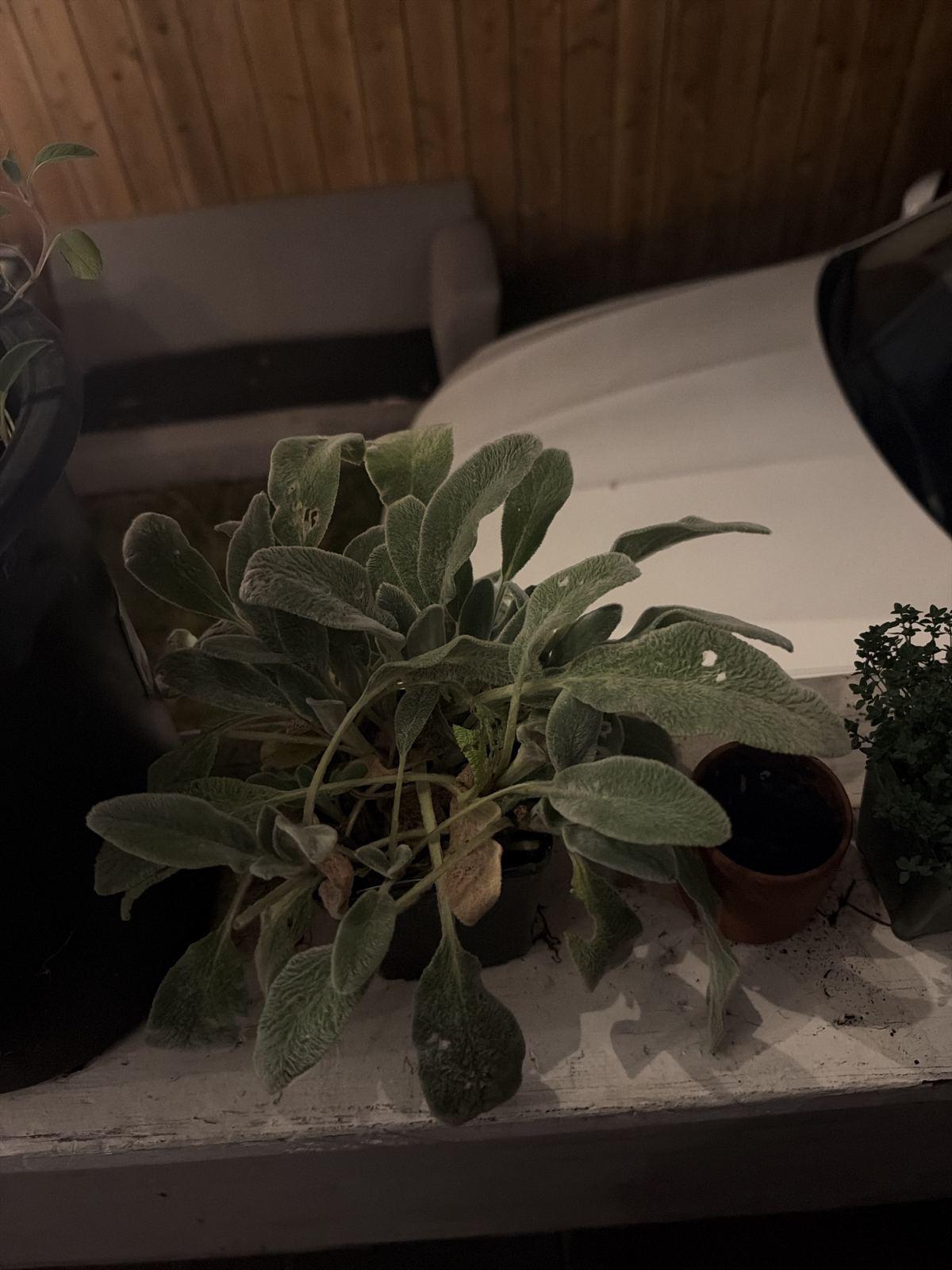
 Easy care
 Shared by a Gardeno user
Lamb's ear
Stachys byzantina
Also known as: Woolly betony, Betony, Stachys
Lamb's ear is a low-growing perennial known for its soft, fuzzy silver-green leaves that feel like a lamb's ear. It forms a dense, spreading clump and is often grown as a groundcover or ornamental edging plant.
Safety
Toxicity information is AI-generated and may be inaccurate. Always check with a vet or doctor before relying on it around children or pets.
Perks
Basic info
- Family
- Lamiaceae
- Genus
- Stachys
- Plant type
- Perennial
- Native region
- Turkey, Armenia, Iran
- Difficulty
- Easy
Fun fact
Its velvety leaves were historically used by children as a natural bandage substitute because they are so soft and absorbent.
Care profile
Difficulty
Easy
Toughness
High
Maintenance
Low
Watering
Every 1-2 wks
Care tips
- 1
Plant in well-draining soil to prevent crown rot.
- 2
Water sparingly once established; it prefers drier conditions.
- 3
Remove damaged leaves and trim after flowering to keep it tidy.
Common problems
Crown rot Severe
Too much moisture around the base can cause rot; improve drainage and reduce watering.
Powdery mildew Moderate
A white, dusty coating can appear in humid, crowded conditions; increase airflow and avoid wetting the foliage.
Read our powdery mildew guide →Leaf browning Mild
Older or damaged leaves may brown from excess moisture or rough handling; trim them off and keep the plant drier.
Read our brown leaf tips guide →History
Lamb's ear has long been cultivated as an ornamental for its striking texture and silvery color. Native to parts of the Middle East, it became a popular cottage-garden plant in Europe and North America for borders, rock gardens, and soft-textured groundcover.
Popular questions
How often should I water lamb's ear?
Water newly planted lamb's ear regularly until it establishes, then reduce watering significantly. It prefers soil that dries out between waterings, and overwatering is one of the quickest ways to damage it.
Why are my lamb's ear leaves turning brown or mushy?
Brown, mushy leaves usually point to too much moisture or poor drainage, especially around the crown. Remove damaged foliage, let the soil dry more between waterings, and consider moving it to a sunnier, better-drained spot.
How do I propagate lamb's ear?
The easiest way is by division in spring or fall: dig up a clump and separate healthy sections with roots attached. It can also root from stem cuttings in some cases, but division is usually faster and more reliable.