 Shared by a Gardeno user
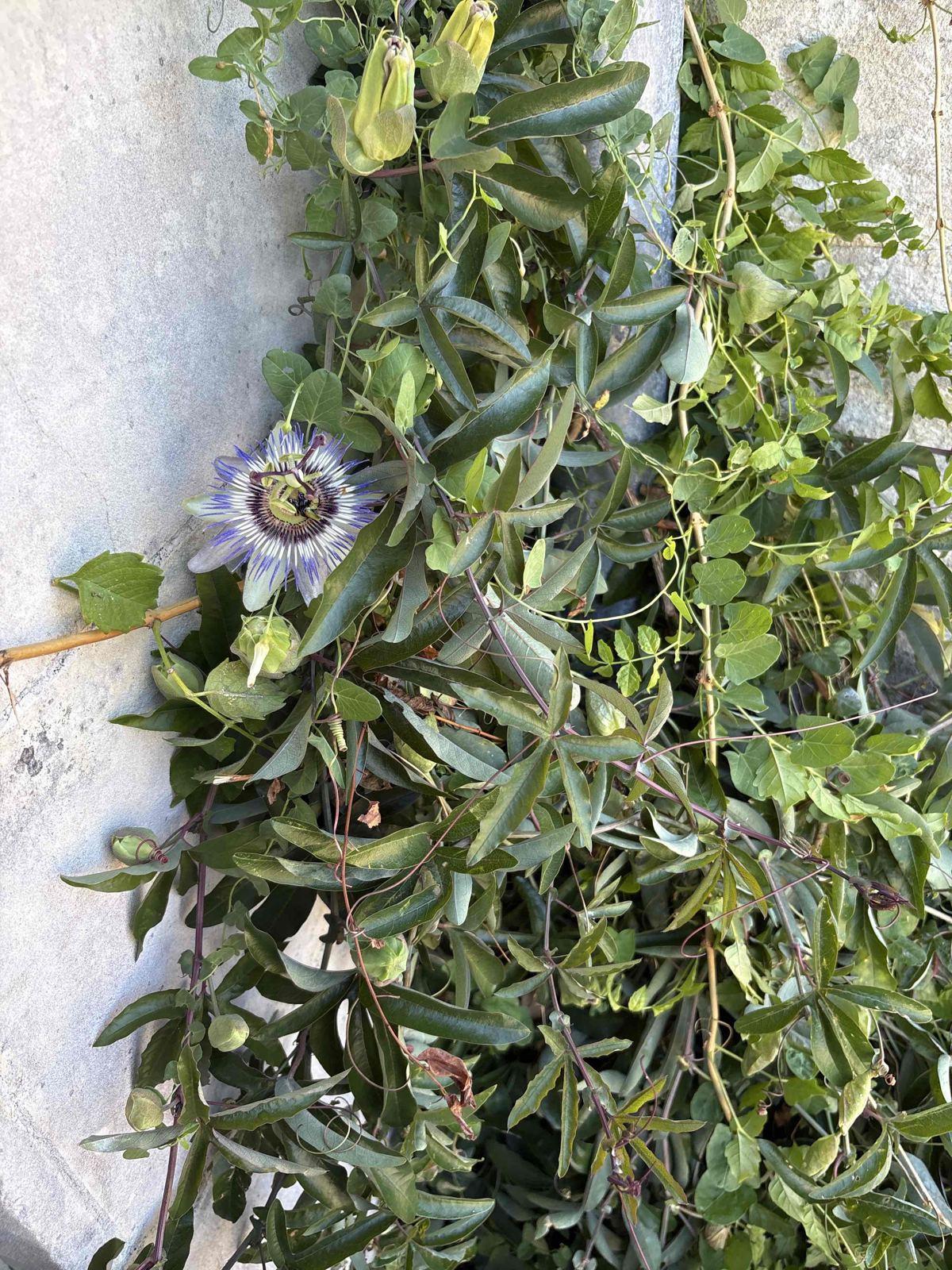
Blue passionflower
Passiflora caerulea
Also known as: Blue crown passionflower, Common passionflower
Blue passionflower is a vigorous climbing vine with distinctive five-lobed leaves, curling tendrils, and highly ornate flowers with blue, white, and purple filaments. It is often grown on fences, trellises, and walls for its fast growth and showy blooms, and it can produce orange-yellow egg-shaped fruits after flowering.
Safety
Toxicity information is AI-generated and may be inaccurate. Always check with a vet or doctor before relying on it around children or pets.
Perks
Basic info
- Family
- Passifloraceae
- Genus
- Passiflora
- Plant type
- Tropical vine
- Native region
- South America
- Difficulty
- Moderate
Fun fact
Its flower structure inspired the name 'passionflower' because early Christian missionaries saw symbols of the Passion of Christ in its parts.
Care profile
Difficulty
Moderate
Toughness
Medium
Maintenance
Medium
Watering
Weekly
Care tips
- 1
Provide a sturdy trellis or fence support
- 2
Water deeply, then let topsoil dry slightly
- 3
Prune regularly to control spread and encourage blooming
Common problems
Aphids Mild
Small clustered insects can distort new growth and flowers; rinse off with water or treat with insecticidal soap.
Read our aphids guide →Leaf spot Moderate
Fungal spotting may appear in humid or crowded conditions; improve airflow and remove affected leaves.
Yellowing leaves Mild
Often caused by overwatering or poor drainage; reduce watering and make sure the soil drains well.
Read our yellow leaves guide →History
Passionflowers were named by Spanish missionaries in the Americas who associated the flower's intricate anatomy with symbols of the Passion of Christ. Passiflora caerulea became especially popular in ornamental gardening because it combines exotic-looking blooms with unusually hardy growth for a passion vine.
Popular questions
How often should I water blue passionflower?
Water it about once a week during active growth, or more often in very hot, dry weather. The soil should stay lightly moist but never soggy, because constantly wet roots can lead to decline.
Why are my passionflower leaves turning yellow or dropping?
Yellowing is commonly caused by overwatering, poor drainage, or insufficient sun. Check that the soil dries slightly between waterings and that the plant gets plenty of bright light and airflow.
How do I propagate blue passionflower?
It is usually propagated from softwood or semi-ripe stem cuttings, which root well in a moist, well-draining mix. You can also grow it from seed, but seedlings may take longer to flower and may not come true to the parent plant.