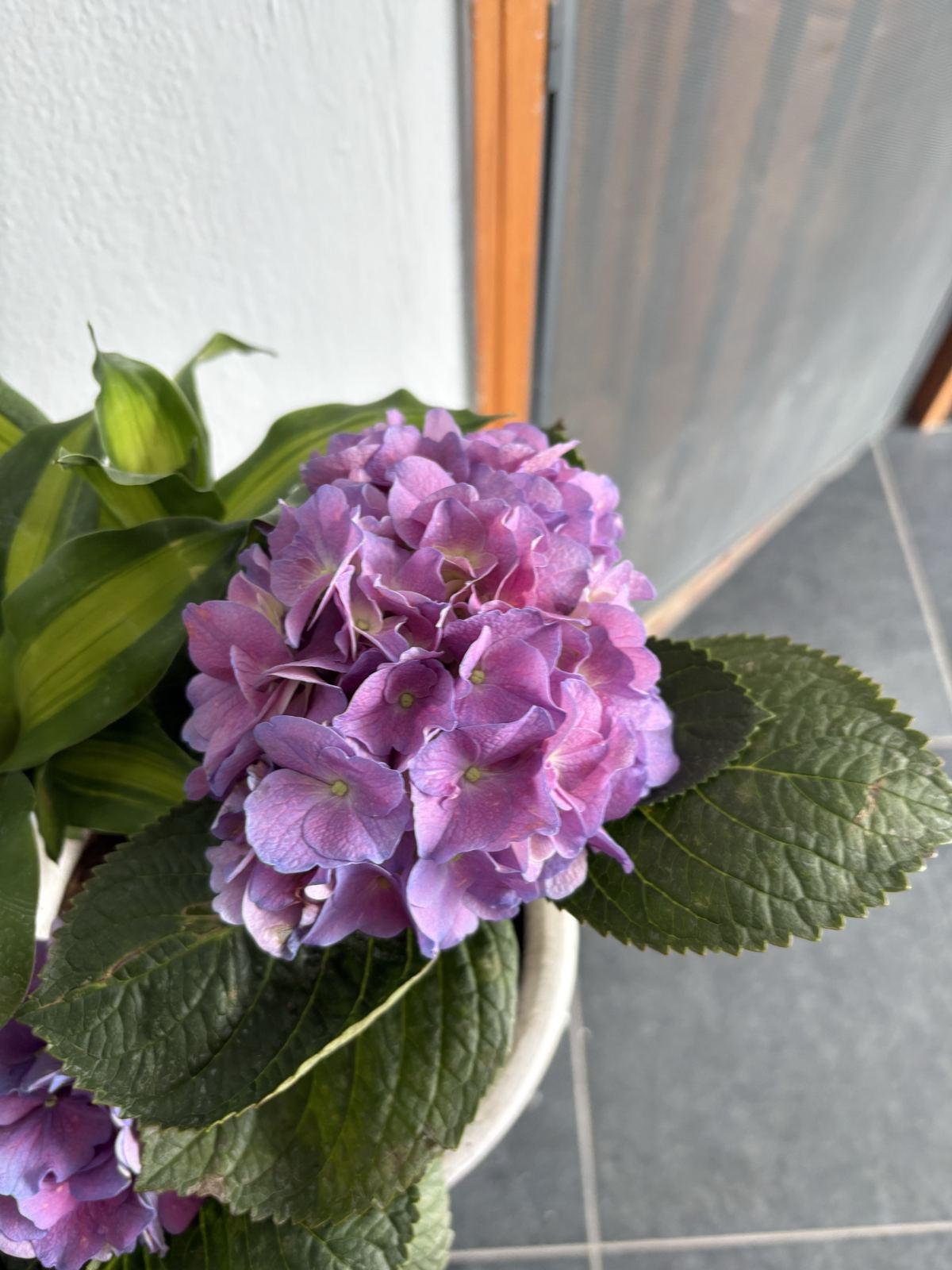
 Shared by a Gardeno user
Bigleaf Hydrangea
Hydrangea macrophylla
Also known as: Mophead Hydrangea, French Hydrangea
Bigleaf hydrangea is a popular flowering shrub known for its large, mophead blooms that can be pink, blue, purple, or white depending on soil chemistry. It has broad, serrated leaves and is widely grown as a garden ornamental or potted patio plant.
Safety
Toxicity information is AI-generated and may be inaccurate. Always check with a vet or doctor before relying on it around children or pets.
Perks
Basic info
- Family
- Hydrangeaceae
- Genus
- Hydrangea
- Plant type
- Shrub
- Native region
- Japan
- Difficulty
- Moderate
Fun fact
Flower color can shift with soil pH, with acidic soils often producing blue flowers and alkaline soils often producing pink flowers.
Care profile
Difficulty
Moderate
Toughness
Medium
Maintenance
Medium
Watering
Weekly
Care tips
- 1
Keep soil evenly moist
- 2
Provide morning sun
- 3
Prune after flowering
Common problems
Leaf scorch Moderate
Brown, crispy leaf edges can happen in hot sun or dry soil; move it to brighter shade and water consistently.
Read our leaf scorch guide →Powdery mildew Mild
A white coating on leaves is usually caused by poor airflow; improve spacing and avoid wetting the foliage.
Read our powdery mildew guide →Bud loss Moderate
Flower buds may drop after cold snaps or pruning at the wrong time; protect from late frost and prune only after blooming.
History
Hydrangea macrophylla was brought from Japan into European gardens in the 18th century and quickly became a favorite ornamental shrub. Its dramatic blooms and variable flower color made it especially prized in Victorian-era horticulture and later in modern landscaping.
Popular questions
How often should I water a bigleaf hydrangea?
Water deeply whenever the top inch of soil starts to dry out, especially during warm weather or when grown in a pot. This plant dislikes drying out completely, but it also needs well-draining soil so the roots do not stay soggy.
Why are my hydrangea leaves drooping or turning yellow?
Drooping usually points to heat stress or underwatering, while yellowing can come from overwatering, poor drainage, or nutrient issues. Check the soil first: if it is dry, water thoroughly; if it stays wet, reduce watering and improve drainage.
Can I propagate hydrangea from cuttings?
Yes, hydrangeas are commonly propagated from softwood or semi-hardwood cuttings taken during the growing season. Use a clean cutting with a few leaves, remove the lower leaves, and root it in moist potting mix or water until roots form.