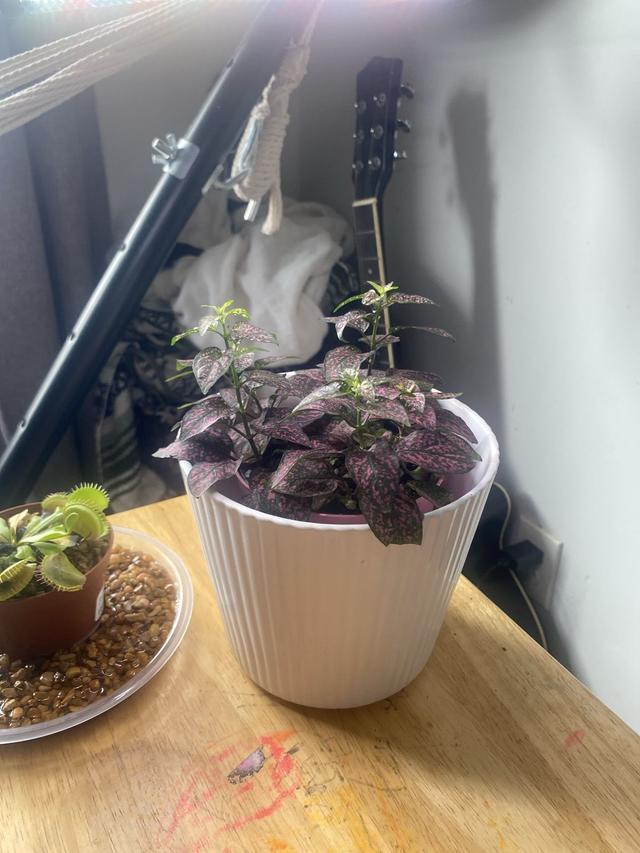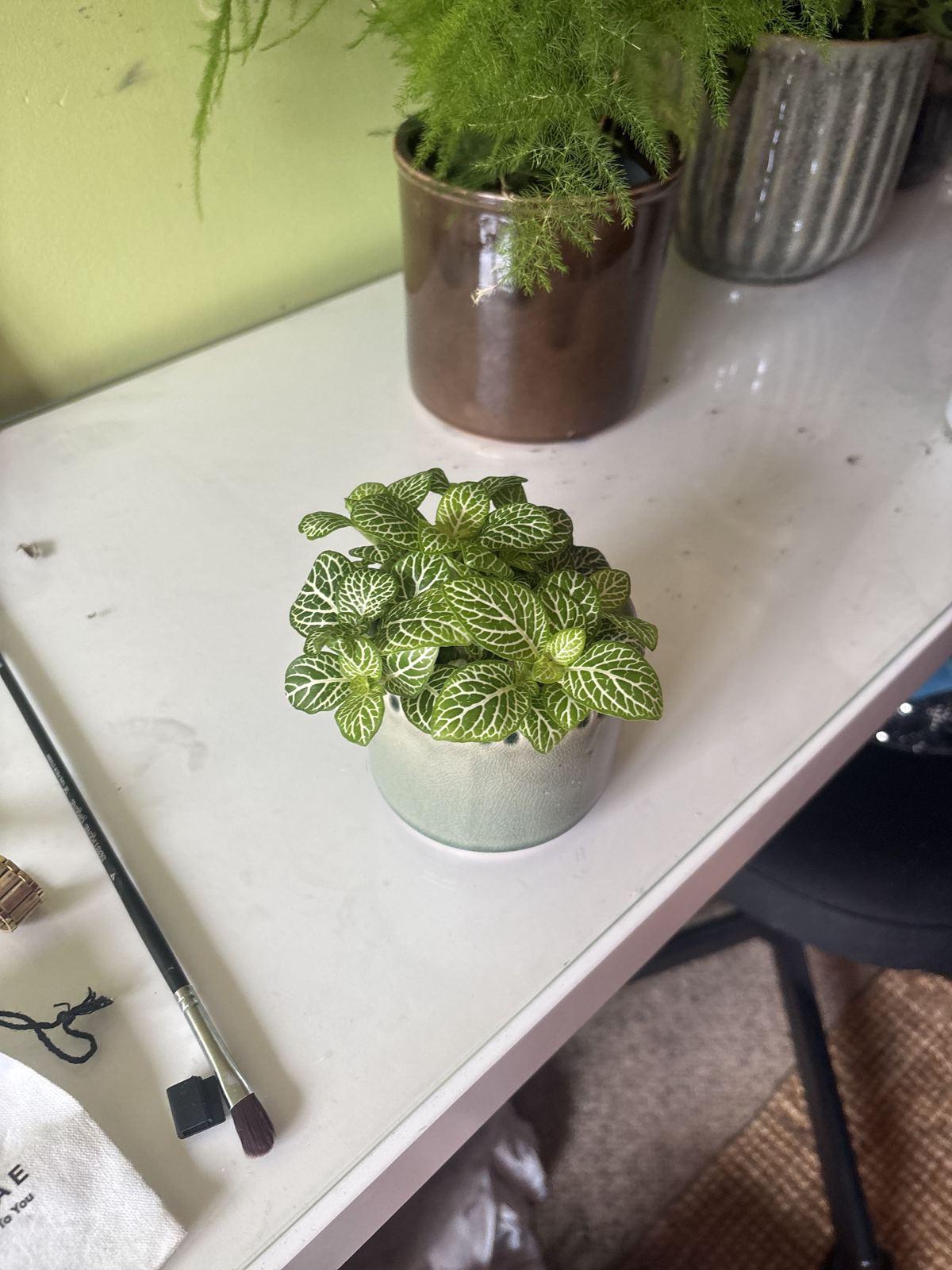
 Shared by a Gardeno user
Nerve plant
Fittonia albivenis
Also known as: Mosaic plant, Fittonia
Nerve plant is a compact tropical houseplant grown for its dramatic netted leaf veins, which can be pink, red, or white against deep green foliage. It prefers consistently moist soil, warm temperatures, and high humidity, and it may wilt quickly if it dries out. It usually rebounds fast after watering if caught early.
Safety
Toxicity information is AI-generated and may be inaccurate. Always check with a vet or doctor before relying on it around children or pets.
Perks
Basic info
- Family
- Acanthaceae
- Genus
- Fittonia
- Plant type
- Perennial
- Native region
- Peru and other parts of South America
- Difficulty
- Moderate
Fun fact
It can dramatically collapse when thirsty, then perk back up within hours after watering.
Care profile
Difficulty
Moderate
Toughness
Medium
Maintenance
Medium
Watering
Weekly
Care tips
- 1
Keep soil evenly moist, not soggy
- 2
Provide high humidity for best growth
- 3
Avoid direct sun to prevent leaf scorch
Common problems
Wilting Moderate
Usually caused by underwatering or low humidity; water promptly and increase humidity.
Leaf scorch Mild
Too much direct sun can bleach or burn the leaves; move it to bright indirect light.
Read our leaf scorch guide →Root rot Severe
Overwatering or poor drainage can rot roots; use a fast-draining mix and let the top layer dry slightly.
Read our root rot guide →History
Fittonia was named in honor of the 19th-century botanists Elizabeth and Sarah Mary Fitton. Native to the humid forests of South America, it became popular as a decorative terrarium and windowsill plant because of its vivid veining and compact habit.
Popular questions
How often should I water my nerve plant?
Water when the top of the soil just starts to feel slightly dry, but don't let it dry out completely. It likes evenly moist soil, especially in bright indoor conditions where it can dry faster.
Why is my nerve plant drooping or collapsing?
Drooping is most often a thirst signal, especially if the leaves feel limp rather than mushy. Water thoroughly and let excess drain; if the plant doesn't recover, check for root rot or excessive heat and sun.
How do I propagate nerve plant?
The easiest way is stem cuttings placed in moist soil or water. Take a cutting with a few nodes, keep it warm and humid, and roots usually form fairly quickly.