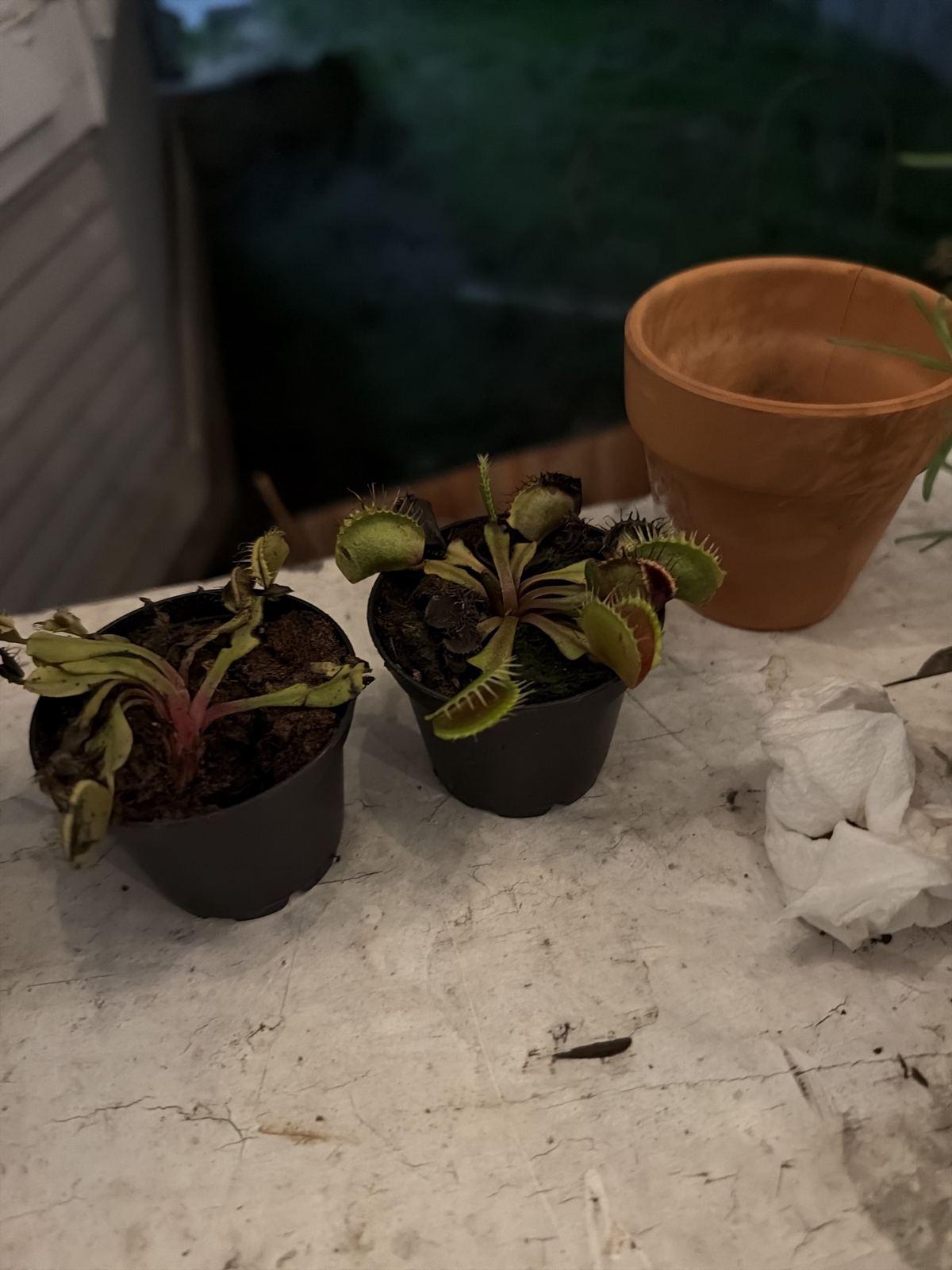
 Shared by a Gardeno user
Venus flytrap
Dionaea muscipula
Also known as: Venus flytrap, Venus's flytrap
The Venus flytrap is a small carnivorous plant known for its hinged traps that snap shut on insects. It thrives in bright light, nutrient-poor conditions, and consistently damp soil using mineral-free water.
Safety
Toxicity information is AI-generated and may be inaccurate. Always check with a vet or doctor before relying on it around children or pets.
Perks
Basic info
- Family
- Droseraceae
- Genus
- Dionaea
- Plant type
- Carnivorous perennial
- Native region
- Southeastern United States
- Difficulty
- Moderate
Fun fact
Each trap can only close a limited number of times before it stops working.
Care profile
Difficulty
Moderate
Toughness
Medium
Maintenance
Medium
Watering
Keep moist
Care tips
- 1
Use distilled or rain water only
- 2
Keep in a sunny window or under grow lights
- 3
Never fertilize or use standard potting soil
Common problems
Trap browning Mild
Old traps naturally die back, but rapid browning can come from poor water quality or too little light; use distilled water and increase sun exposure.
Weak, stretched growth Moderate
Insufficient light causes long, floppy leaves and weak traps; move it to stronger direct light or a grow light.
Read our leggy growth guide →Root rot Severe
Stagnant, overly wet conditions in the wrong soil can rot the roots; repot into sphagnum peat/perlite mix and keep the pot airy.
Read our root rot guide →History
Native to the wet, acidic bogs of the Carolinas, the Venus flytrap was first described scientifically in the 18th century and became one of the world’s most famous carnivorous plants. It has long fascinated botanists and plant collectors because of its rapid snap-trap movement, which is rare in the plant kingdom.
Popular questions
How often should I water a Venus flytrap?
Keep the soil consistently damp, never dry, and avoid letting it sit in nutrient-rich tap water. The safest approach is to keep the pot in a tray with a small amount of distilled or rain water, refilling as needed when the tray starts to dry.
Why are my Venus flytrap traps turning black or dying?
Some trap loss is normal, especially after a trap has been triggered a few times or after flowering. If many traps are blackening at once, the most common causes are low light, poor water quality, or mineral-heavy soil; improve light and switch to distilled water.
How do I propagate a Venus flytrap?
The easiest method is division of mature clumps during repotting, separating small offsets with roots attached. It can also be grown from seed, but seedlings are slow and require patience.