 Easy care
 Shared by a Gardeno user
Japanese Holly Fern
Cyrtomium falcatum
Also known as: House Holly Fern, Fish-tail Fern
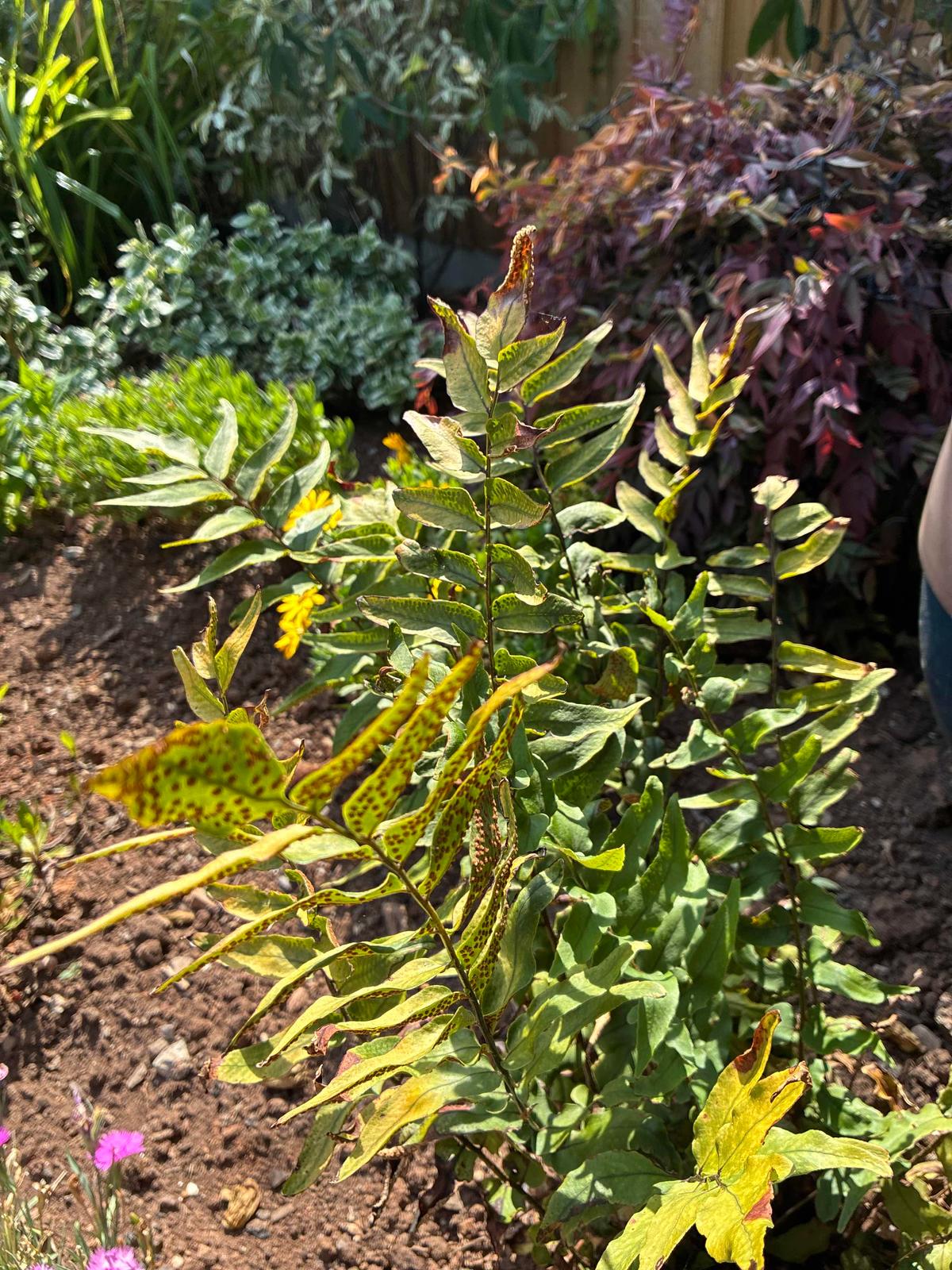
The Japanese Holly Fern is an evergreen fern known for its glossy, dark green, leathery fronds that resemble holly leaves. It forms an attractive clump, adding texture and year-round interest to shaded garden areas. Its distinctive sori on the underside of the fronds are a key identifying feature.
Safety
Toxicity information is AI-generated and may be inaccurate. Always check with a vet or doctor before relying on it around children or pets.
Perks
Basic info
- Family
- Dryopteridaceae
- Genus
- Cyrtomium
- Plant type
- Fern
- Native region
- East Asia
- Difficulty
- Easy
Fun fact
Despite its common name, the Japanese Holly Fern is not related to true hollies (Ilex species) but gets its name from the similar appearance of its leaflets.
Care profile
Difficulty
Easy
Toughness
High
Maintenance
Low
Watering
Keep moist
Care tips
- 1
Provide consistent moisture, especially in dry periods.
- 2
Plant in well-draining, rich soil.
- 3
Protect from harsh winter winds in colder climates.
Common problems
Yellowing Fronds Mild
Often due to overwatering, poor drainage, or nutrient deficiency. Ensure well-draining soil and proper watering.
Read our yellow leaves guide →Brown Edges Moderate
Caused by low humidity, underwatering, or excessive direct sun. Increase humidity and maintain consistent soil moisture.
Read our brown leaf tips guide →Pests (Scale/Mealybugs) Mild
Can occur, especially indoors. Treat with insecticidal soap or horticultural oil.
Read our mealybugs & scale guide →History
Native to East Asia, including Japan, Korea, China, and parts of India, the Japanese Holly Fern has been cultivated for centuries for its ornamental value. It was introduced to Western horticulture in the 19th century and quickly became a popular choice for shaded gardens and as a houseplant due to its robust nature and attractive foliage.
Popular questions
How often should I water my Japanese Holly Fern?
Japanese Holly Ferns prefer consistently moist soil but not waterlogged conditions. Water thoroughly when the top inch of soil feels dry to the touch, typically every 1-2 weeks depending on environmental conditions. Reduce watering slightly in winter.
Why are the fronds of my Japanese Holly Fern turning yellow or brown?
Yellowing fronds can indicate overwatering or poor drainage, while brown tips or edges often point to underwatering, low humidity, or too much direct sunlight. Assess your watering schedule, ensure good drainage, and consider misting or relocating the plant to a shadier spot.
Can I propagate my Japanese Holly Fern?
Yes, Japanese Holly Ferns can be propagated by dividing the rhizomes in spring or by collecting and sowing spores. Division is generally easier for home gardeners; carefully separate a section of the rhizome with fronds and roots, and replant it.