 Shared by a Gardeno user
Chinese wisteria
Wisteria sinensis
Also known as: Chinese glycine, Wisteria vine
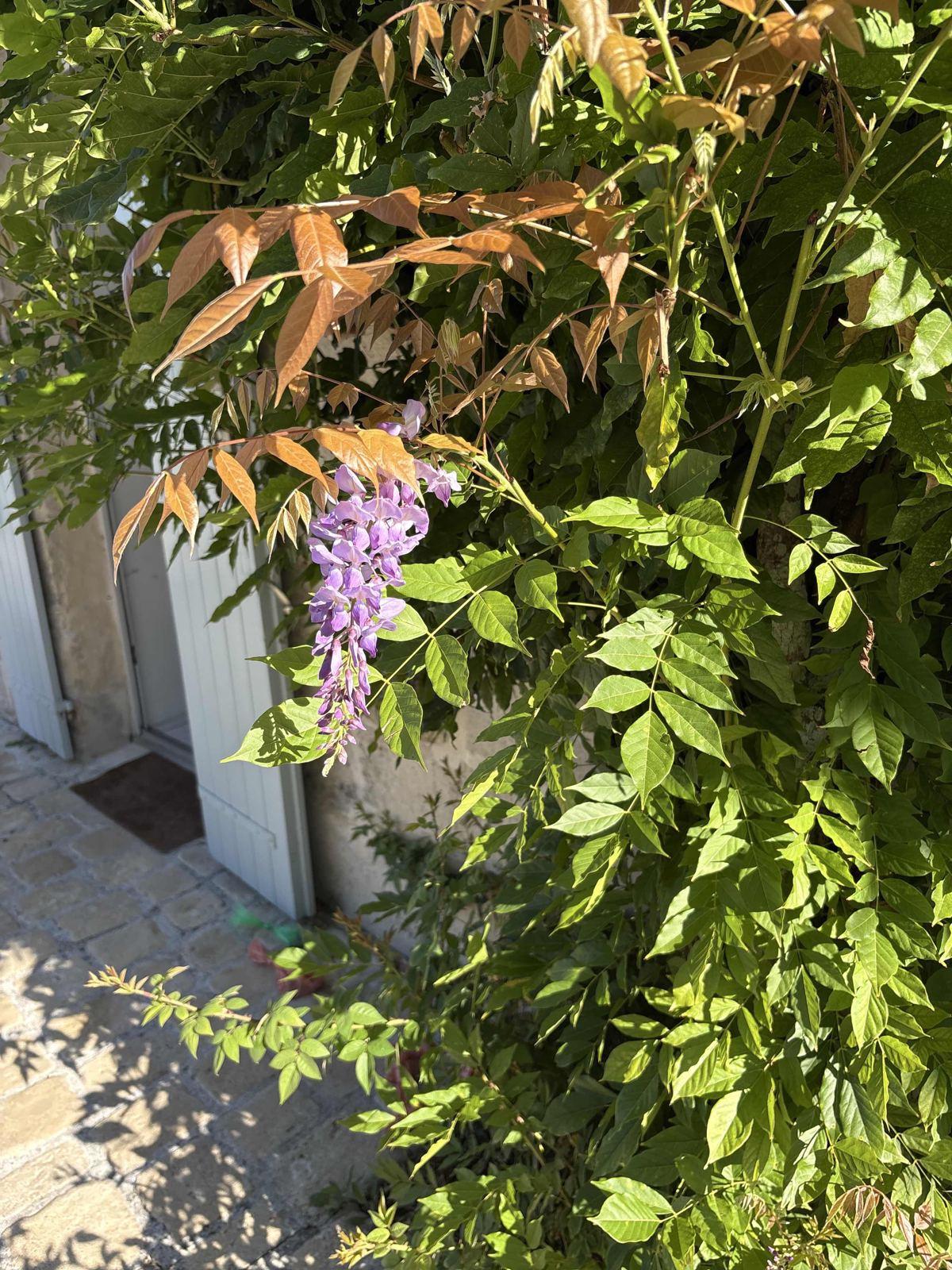
Chinese wisteria is a vigorous woody vine known for its cascading clusters of fragrant purple flowers and attractive compound leaves. It can quickly cover pergolas, fences, and walls, creating a dramatic ornamental display in spring.
Safety
Toxicity information is AI-generated and may be inaccurate. Always check with a vet or doctor before relying on it around children or pets.
Perks
Basic info
- Family
- Fabaceae
- Genus
- Wisteria
- Plant type
- Flowering vine
- Native region
- China
- Difficulty
- Moderate
Fun fact
Wisteria can live for decades and its twisting stems get so strong they can crush weak supports.
Care profile
Difficulty
Moderate
Toughness
High
Maintenance
High
Watering
Every 1-2 wks
Care tips
- 1
Provide strong support
- 2
Prune twice yearly
- 3
Water deeply when young
Common problems
Overgrowth Severe
Can become invasive and overwhelming; prune aggressively in summer and winter to keep it in bounds.
Few flowers Moderate
Too much shade or excess nitrogen reduces blooming; move to full sun and avoid high-nitrogen fertilizer.
Aphids Mild
Sap-sucking insects may cluster on new growth; blast off with water or use insecticidal soap if needed.
Read our aphids guide →History
Chinese wisteria was introduced from East Asia as an ornamental vine and quickly became prized for its dramatic spring blooms. In many gardens it has also become notorious for its aggressive growth, making pruning an important part of its cultural reputation.
Popular questions
How often should I water Chinese wisteria?
Water young plants deeply about every 1-2 weeks, especially during hot, dry weather. Once established, it is fairly drought-tolerant and usually only needs supplemental watering during prolonged dry spells.
Why are my wisteria leaves yellowing or the vine not blooming well?
Yellow leaves can come from poor drainage, inconsistent watering, or nutrient imbalance, while poor flowering is often caused by too much shade or too much fertilizer. Give it full sun, avoid high-nitrogen feed, and prune on schedule to encourage blooms.
How do I propagate wisteria?
Wisteria is usually propagated by layering, hardwood cuttings, or grafting rather than seed for reliable flowering traits. Layering is often easiest: bend a flexible stem to the ground, cover a section with soil, and wait for roots to form before separating it.