 Easy care
 Shared by a Gardeno user
Purslane
Portulaca oleracea
Also known as: Common Purslane, Little Hogweed, Verdolaga
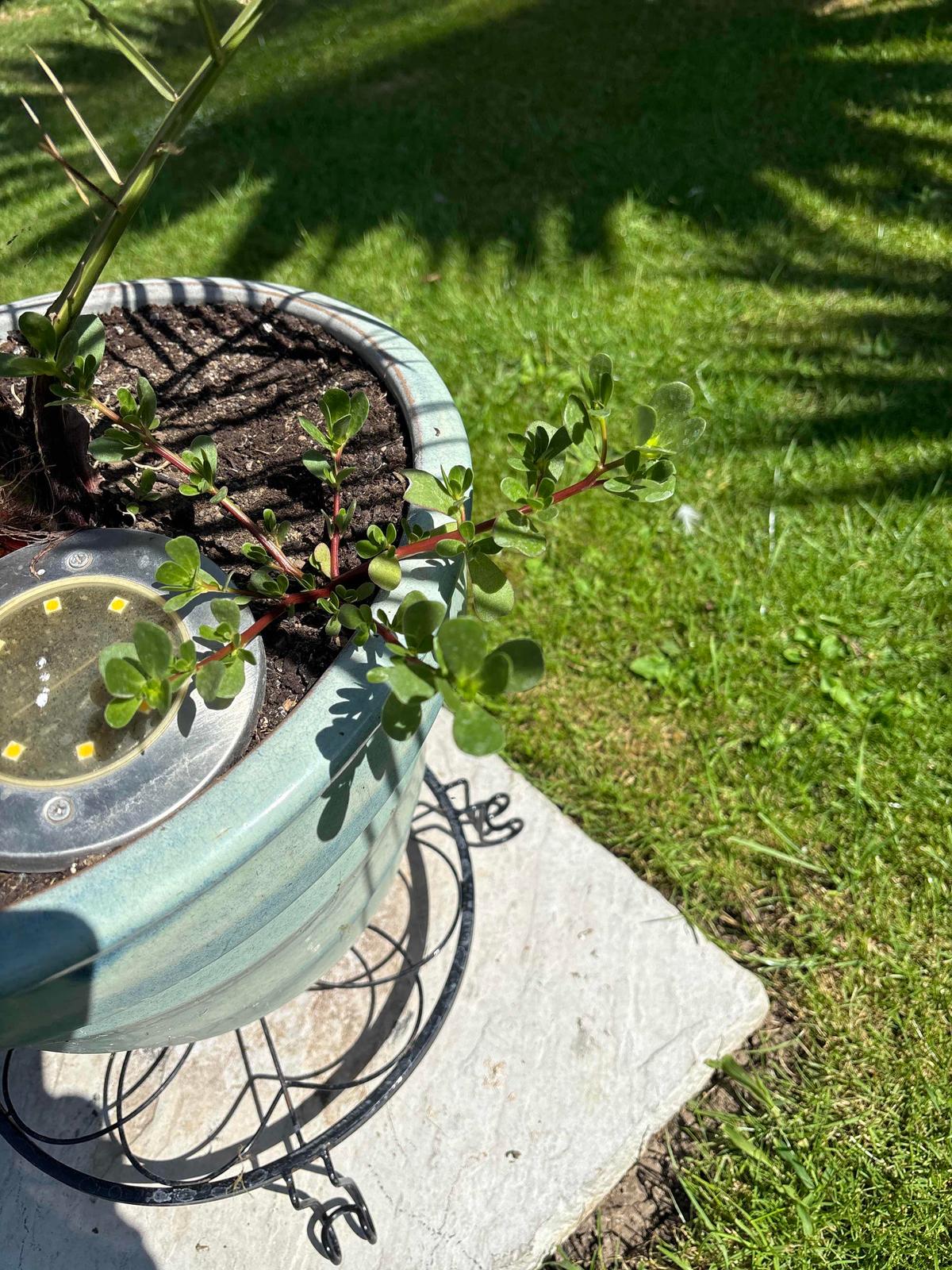
Purslane is a low-growing, spreading succulent plant known for its fleshy, paddle-shaped leaves and reddish stems. It often grows as a weed but is also cultivated for its edible qualities. This resilient plant thrives in hot, dry conditions.
Safety
Toxicity information is AI-generated and may be inaccurate. Always check with a vet or doctor before relying on it around children or pets.
Perks
Basic info
- Family
- Portulacaceae
- Genus
- Portulaca
- Plant type
- Succulent
- Native region
- Globally naturalized
- Difficulty
- Easy
Fun fact
Purslane is one of the richest plant sources of Omega-3 fatty acids, making it a highly nutritious edible weed.
Care profile
Difficulty
Easy
Toughness
High
Maintenance
Low
Watering
Infrequent, Drought tolerant
Care tips
- 1
Provide full sun exposure for best growth.
- 2
Allow soil to dry out between waterings.
- 3
Harvest leaves regularly to encourage new growth.
Common problems
Overwatering Moderate
Yellowing leaves and root rot can occur with too much water. Ensure well-draining soil and allow it to dry out.
Pests (Aphids) Mild
Aphids can sometimes infest new growth. Spray with insecticidal soap or strong water stream.
Read our aphids guide →Lack of Sun Mild
Leggy growth and fewer flowers if not enough sunlight. Move to a brighter location.
History
Purslane has been consumed for thousands of years, with archaeological evidence found in ancient Greek and Roman sites. It was brought to the Americas by early European settlers and quickly naturalized, becoming a common "weed" in gardens and fields worldwide. Its resilience and nutritional value have made it a staple in various traditional cuisines.
Popular questions
How often should I water my Purslane?
Purslane is a succulent and prefers drier conditions. Water thoroughly when the top inch or two of soil feels dry to the touch, then allow it to dry out again before the next watering. Overwatering can lead to root rot.
Why is my Purslane looking leggy and not flowering?
Leggy growth and a lack of flowers usually indicate insufficient sunlight. Purslane thrives in full sun, needing at least 6-8 hours of direct sunlight daily. Move your plant to a brighter location to encourage compact growth and abundant blooms.
Can I propagate Purslane from cuttings?
Yes, Purslane is incredibly easy to propagate from stem cuttings. Simply snip a healthy stem segment, remove the lower leaves, and place it directly into moist soil or water. Roots typically form within a week or two, and the plant will quickly establish itself.