 Easy care
 Shared by a Gardeno user
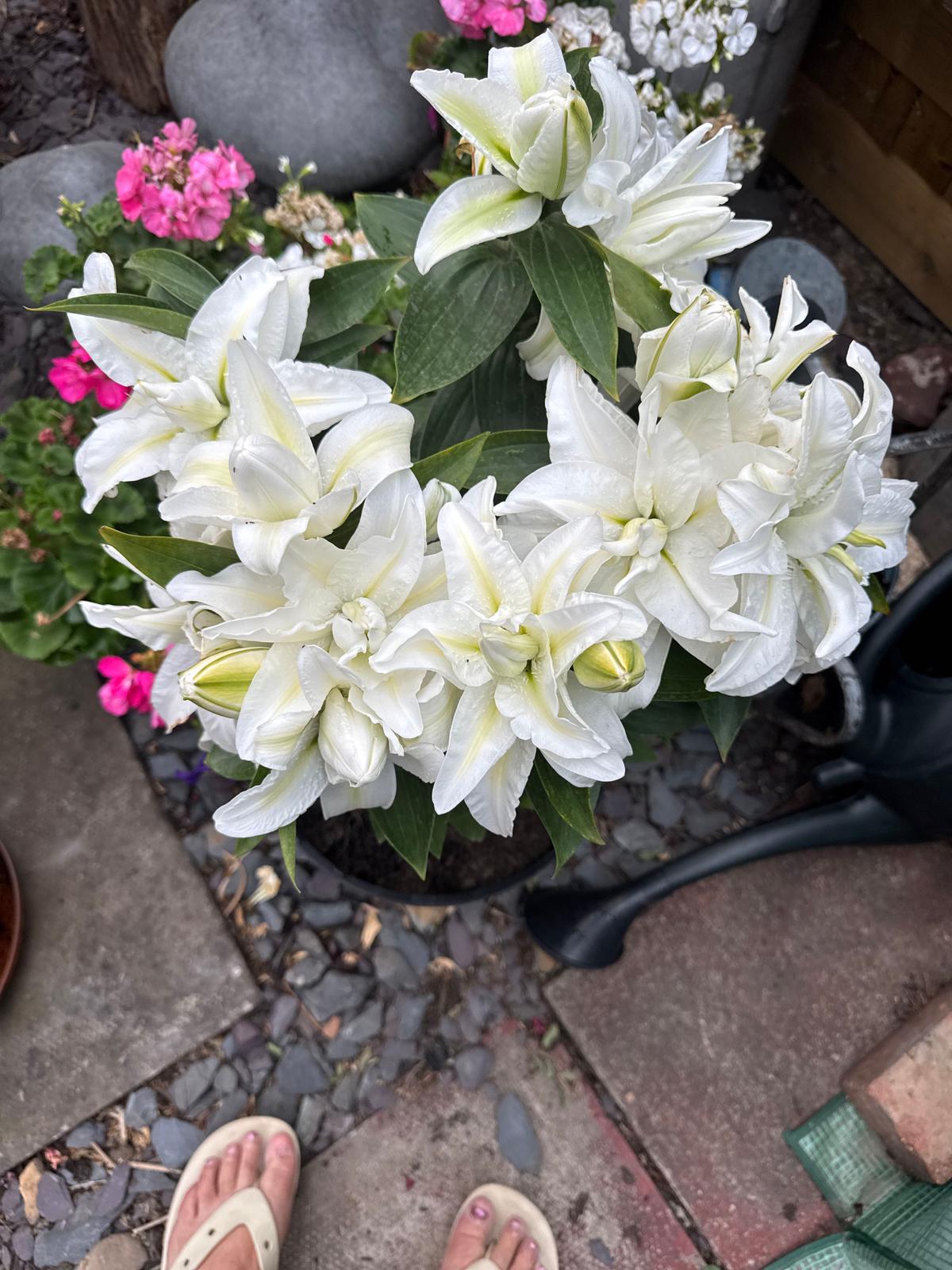
Double Oriental Lily
Lilium (Oriental Group)
Also known as: Double Lily, Pollen-free Lily, Oriental Double Lily
Double Oriental Lilies are known for their large, fragrant, and multi-petaled blooms, offering a lush, opulent appearance. Unlike single lilies, their double flowers lack pollen, making them a great choice for allergy sufferers and preventing pollen stains. These stunning perennials bring elegance and a strong, sweet fragrance to any garden or floral arrangement.
Safety
Toxicity information is AI-generated and may be inaccurate. Always check with a vet or doctor before relying on it around children or pets.
Perks
Basic info
- Family
- Liliaceae
- Genus
- Lilium
- Plant type
- Perennial
- Native region
- Asia
- Difficulty
- Easy
Fun fact
Double Oriental Lilies are often preferred for bouquets because they don't produce pollen, which eliminates the risk of staining clothes or furniture and can be better for those with pollen allergies.
Care profile
Difficulty
Easy
Toughness
Medium
Maintenance
Medium
Watering
Weekly
Care tips
- 1
Plant bulbs in well-draining soil in a sunny location.
- 2
Water regularly, especially during dry periods, keeping the soil consistently moist but not waterlogged.
- 3
Deadhead spent flowers to encourage more blooms and prevent seed formation, but leave foliage until it yellows naturally.
Common problems
Aphids Mild
Small insects that cluster on new growth and buds, sucking sap. Spray with insecticidal soap or a strong jet of water to dislodge them.
Read our aphids guide →Botrytis Blight Moderate
Fungal disease causing brown spots on leaves and flowers, especially in humid conditions. Ensure good air circulation and remove affected parts; consider a fungicide if severe.
Lily Beetle Moderate
Bright red beetles that can defoliate plants quickly. Hand-pick beetles and larvae regularly, or use appropriate organic pesticides.
History
Lilies have a rich history, cultivated for thousands of years in various cultures for their beauty and medicinal properties. Oriental Lilies, specifically, originated from Japan and were introduced to the Western world in the 19th century. The development of double-flowered varieties is a more recent horticultural achievement, bred for their enhanced petal count and often pollen-free characteristics, making them even more desirable for ornamental use.
Popular questions
How often should I water my Double Oriental Lily?
Double Oriental Lilies prefer consistently moist soil, especially during their active growing and blooming periods. Water deeply once a week, or more frequently during hot, dry spells, ensuring the soil doesn't become waterlogged. Reduce watering after flowering as the foliage begins to yellow.
Why are the leaves on my lily turning yellow?
Yellowing leaves can indicate several issues. It might be overwatering or poor drainage, leading to root rot. Alternatively, it could be a nutrient deficiency, especially nitrogen, or simply the natural process of the plant preparing for dormancy after flowering. Check soil moisture and consider a balanced fertilizer if it's not post-bloom yellowing.
How can I propagate Double Oriental Lilies?
Double Oriental Lilies are typically propagated from bulbs or bulb scales. In late summer or early autumn, carefully dig up the main bulb and separate any offsets (smaller bulbs) that have formed. You can also gently remove individual scales from the main bulb and plant them in moist sand or vermiculite to encourage new bulblets to form.