 Easy care
 Shared by a Gardeno user
Common Boxwood
Buxus sempervirens
Also known as: European box, Common box
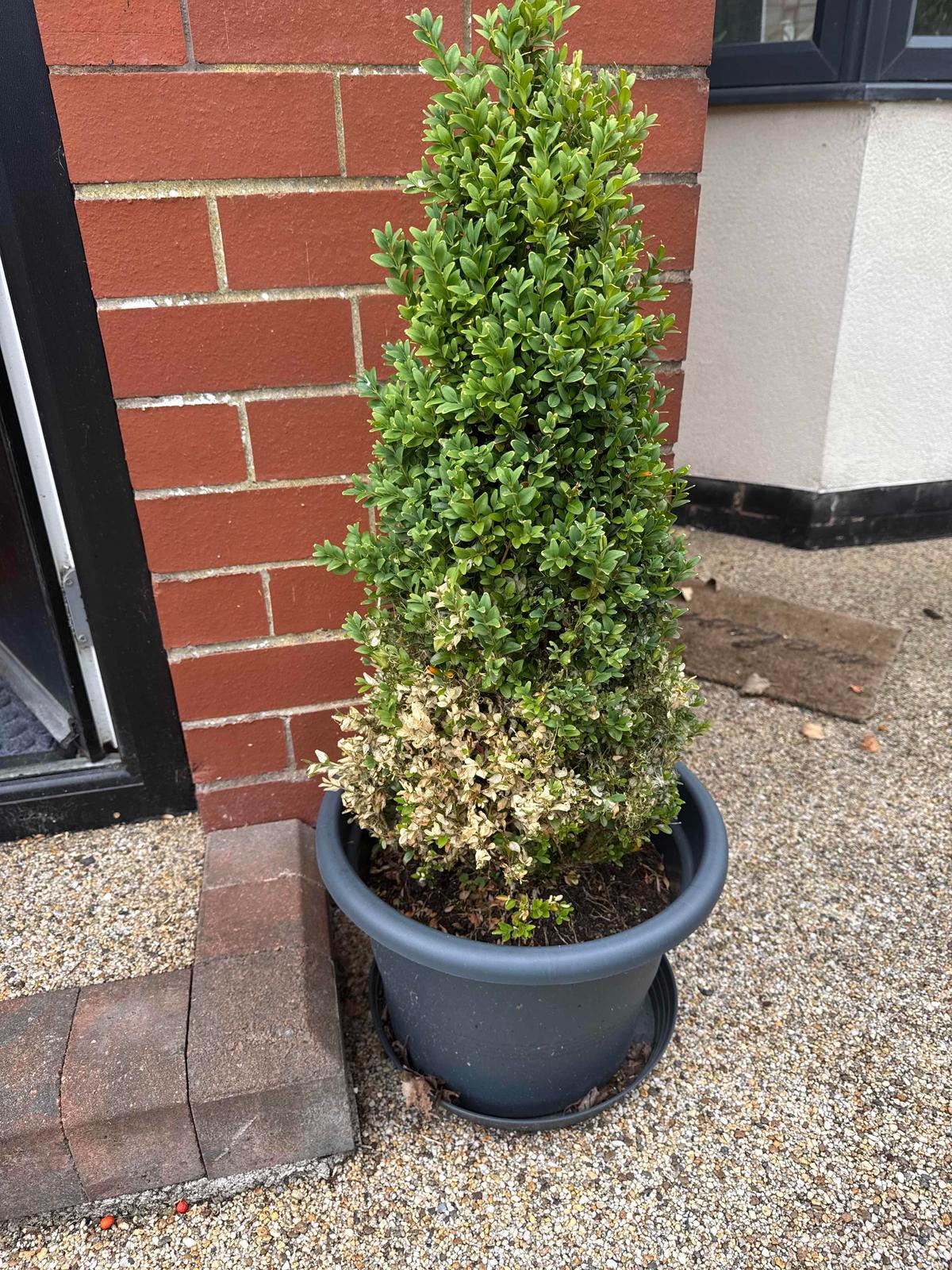
Common boxwood is a dense, evergreen shrub valued for its small, glossy leaves and tidy form. It is widely used in formal hedges, borders, and topiary because it responds well to pruning and can stay compact for many years.
Safety
Toxicity information is AI-generated and may be inaccurate. Always check with a vet or doctor before relying on it around children or pets.
Perks
Basic info
- Family
- Buxaceae
- Genus
- Buxus
- Plant type
- Shrub
- Native region
- Europe, North Africa, western Asia
- Difficulty
- Easy
Fun fact
Boxwood wood is so dense and fine-grained that it was once prized for carving, engraving, and musical instruments.
Care profile
Difficulty
Easy
Toughness
High
Maintenance
Medium
Watering
Every 1-2 wks
Care tips
- 1
Plant in well-drained soil to prevent root problems.
- 2
Prune lightly after new growth flushes to maintain shape.
- 3
Water deeply during hot, dry spells, especially when newly planted.
Common problems
Boxwood blight Severe
Leaves may brown and drop quickly; remove infected material, improve airflow, and avoid overhead watering.
Winter bronzing Moderate
Foliage can turn orange-brown in cold, windy weather; protect from harsh exposure and keep roots well watered before winter.
Leafminer or mites Moderate
Leaves may look stippled, curled, or damaged; inspect closely and treat early with appropriate horticultural controls.
Read our spider mites guide →History
Boxwood has been cultivated for centuries in European gardens, especially in formal parterres and clipped hedges. Its reputation for neatness and longevity made it a classic plant in monastery gardens, estate landscapes, and later in ornamental garden design worldwide.
Popular questions
How often should I water boxwood?
Water deeply when the top few inches of soil dry out, usually every 1-2 weeks for established plants and more often for newly planted shrubs. During hot, windy weather, boxwood may need extra watering to avoid stress, but it should never sit in soggy soil.
Why are my boxwood leaves turning brown?
Browning can come from drought stress, winter burn, poor drainage, or boxwood blight. Check the soil moisture, remove dead growth, and make sure the plant has good airflow and well-drained soil.
Can I propagate boxwood from cuttings?
Yes, boxwood is commonly propagated from semi-hardwood cuttings taken in summer or early fall. Use a sterile cutting, rooting hormone, and a moist, well-draining medium for the best results.