 Easy care
 Shared by a Gardeno user
Broad-leaved dock
Rumex obtusifolius
Also known as: Butter dock, Curly dock
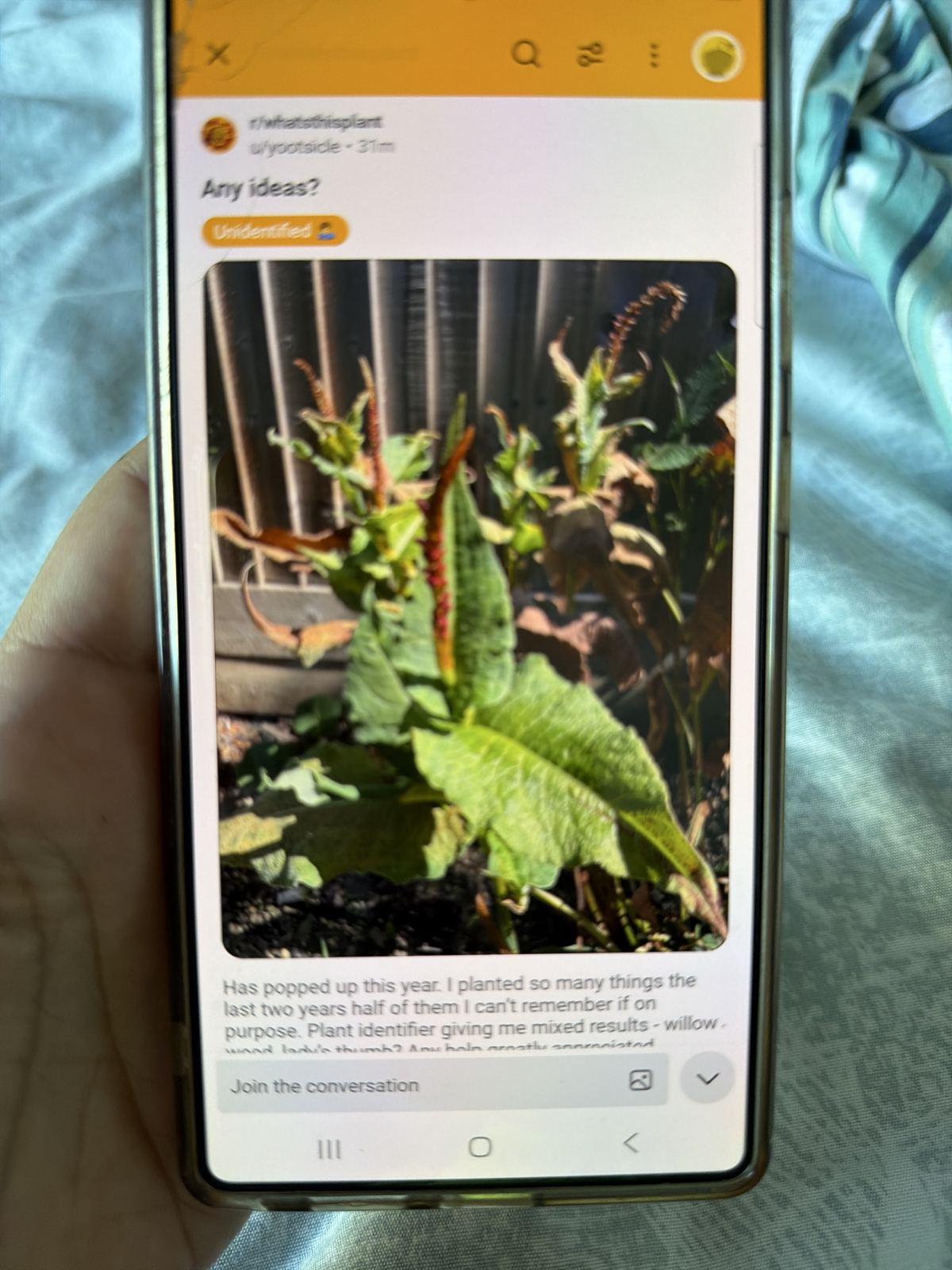
Broad-leaved dock is a tough, upright perennial weed with large, wavy basal leaves and tall reddish-brown flower/seed spikes. It often appears in disturbed soil, lawns, and garden beds, where it can spread aggressively if left unchecked.
Safety
Toxicity information is AI-generated and may be inaccurate. Always check with a vet or doctor before relying on it around children or pets.
Perks
Basic info
- Family
- Polygonaceae
- Genus
- Rumex
- Plant type
- Perennial
- Native region
- Europe and Western Asia
- Difficulty
- Easy
Fun fact
Its leaves are a classic example of a plant using a large taproot and broad foliage to quickly dominate open ground.
Care profile
Difficulty
Easy
Toughness
High
Maintenance
Low
Watering
Weekly
Care tips
- 1
Grow in moist, fertile soil
- 2
Remove flower stalks before seeding
- 3
Dig out the deep taproot thoroughly
Common problems
Aggressive spread Severe
It can reseed heavily and become invasive in gardens; cut flower stalks early and remove the root to prevent return.
Taproot regrowth Moderate
Small root pieces can resprout after weeding; dig deeply and lift the whole crown when possible.
Leaf miner damage Mild
Leaves may show tunnels or blotches from larvae; remove badly affected leaves and keep the plant clean and vigorous.
History
Broad-leaved dock has long been a common wild plant across Europe and Asia and later spread widely with agriculture and disturbed soils. In some traditions it has been used as a spring green or folk remedy, though gardeners usually know it best as a persistent weed.
Popular questions
How often should I water broad-leaved dock?
If you're growing it intentionally, keep the soil evenly moist while it establishes, then water about weekly in dry weather. Once mature, it tolerates periods of dryness much better than many garden plants.
Why are the leaves yellowing or getting holes?
Yellowing can come from poor drainage, nutrient imbalance, or age, while holes are often caused by chewing insects or slugs. Improve soil conditions, remove damaged foliage, and check the undersides of leaves for pests.
How do you propagate broad-leaved dock?
It commonly propagates by seed, which is why removing flower spikes before they mature is important. Mature plants can also be divided by digging up the crown and root, but be careful: any root fragments left behind can regrow.