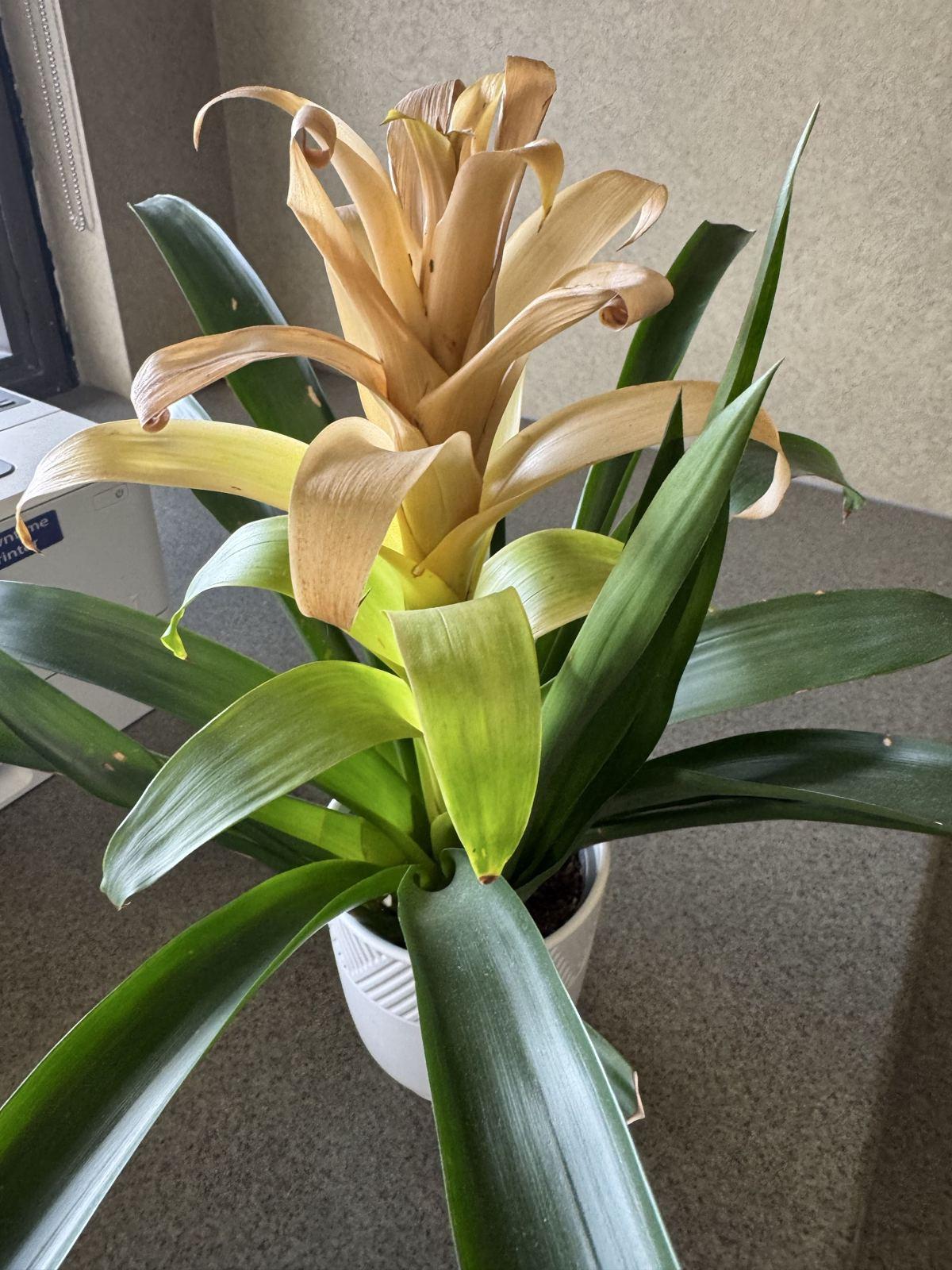
 Shared by a Gardeno user
Guzmania bromeliad
Guzmania lingulata
Also known as: Scarlet star, Indoor bromeliad
Guzmania bromeliads are tropical houseplants prized for their long-lasting, colorful bracts and smooth strap-like leaves. The bright orange central display in the photo is made of bracts, not true flowers, and the plant grows from a central rosette that slowly produces offsets after blooming.
Safety
Toxicity information is AI-generated and may be inaccurate. Always check with a vet or doctor before relying on it around children or pets.
Perks
Basic info
- Family
- Bromeliaceae
- Genus
- Guzmania
- Plant type
- Tropical epiphyte
- Native region
- Central and South America
- Difficulty
- Moderate
Fun fact
A Guzmania can bloom for months, and after flowering the mother plant usually produces baby offsets called pups.
Care profile
Difficulty
Moderate
Toughness
Medium
Maintenance
Medium
Watering
Weekly
Care tips
- 1
Keep water in the central cup and refresh it regularly
- 2
Use bright indirect light to prevent leaf scorch
- 3
Plant in a fast-draining bromeliad mix
Common problems
Crown rot Severe
Stagnant water in the central cup can rot the plant; empty and refresh the cup regularly and use clean water.
Leaf browning Moderate
Brown tips often come from low humidity, mineral-heavy water, or too much direct sun; raise humidity and use filtered water.
Read our brown leaf tips guide →Faded color Mild
Bracts naturally fade after blooming, but weak light can reduce color intensity; move it to brighter indirect light.
History
Guzmanias are native to the tropical forests of Central and South America, where many species grow as epiphytes on trees rather than in soil. They became popular in houseplant and florist trade for their dramatic, long-lasting bracts and relatively easy indoor culture compared with many other tropical bloomers.
Popular questions
How often should I water a Guzmania bromeliad?
Keep a small amount of water in the central cup and refresh it about once a week so it stays clean and oxygenated. Water the potting mix lightly only when it is nearly dry, since soggy roots can rot.
Why are the leaves or flower bracts turning brown?
Browning is usually caused by dry air, direct sun, or minerals in tap water. Trim off fully brown parts, move the plant to brighter indirect light, and use filtered or rainwater if possible.
How do I propagate a Guzmania bromeliad?
Propagation is usually done by separating the pups that form around the base after the mother plant finishes blooming. Wait until each pup is about one-third to one-half the size of the parent, then remove it with some roots attached and pot it up separately.